
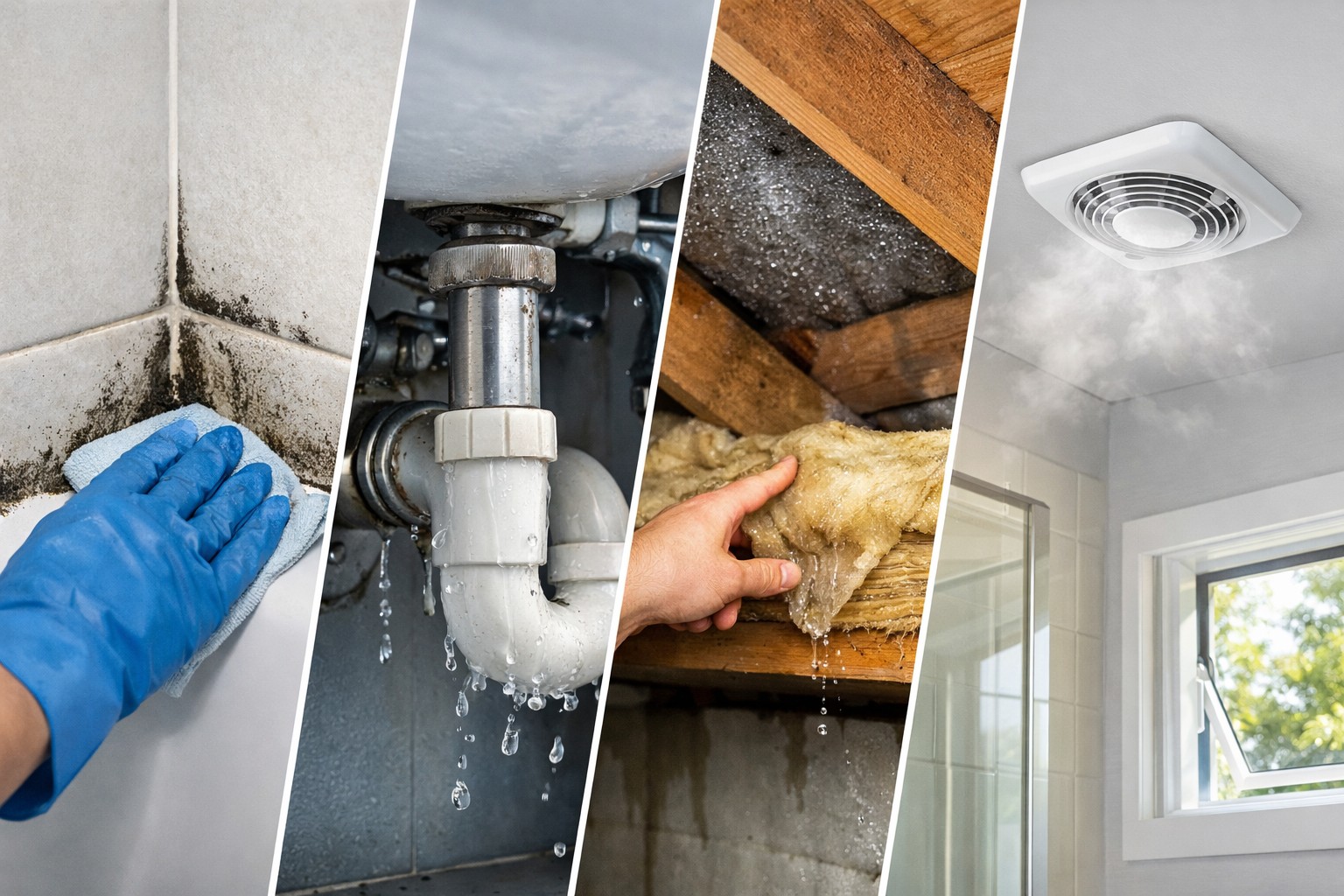
The bathroom is a unique ecosystem within an apartment, where two major microbial growth factors combine: high humidity and stable heat. Many homeowners struggle for years with dark patina on the intertile joints, not realizing that the problem lies in basic violations of the operation of the room.
Hidden causes of fungus
Specific conditions are required for the active reproduction of mold spores. If the wall surface remains wet for more than a few hours, the risk of infection increases many times over. The main catalysts include:
-
Poor ventilation. If the exhaust duct is clogged with dust or blocked by neighbors, moist air stagnates, creating a greenhouse effect.
-
Permanent condensation. The temperature difference between the steam and the cold walls causes water droplets to precipitate, which penetrate deep into the porous structure of the grout.
-
Leaky joints. Micro cracks between the bathtub and the wall are the perfect place for standing water to accumulate, where fungus develops in total darkness.
-
Laundry drying. Hanging wet clothes indoors dramatically increases the humidity level, which a standard extractor hood cannot cope with.
-
Plumbing leaks. Even a small leaky faucet or pipe behind a false wall keeps dampness constant and invisible to the eye.
How to prevent spores
Controlling the effects without addressing the root cause will only have a temporary effect. It is important to create an environment in which microclimate will be unfavorable for fungal life.
-
Regular ventilation. Leave the bathroom door ajar after showering for at least 15-20 minutes.
-
Forced extraction. Installing a fan with a humidity sensor helps to effectively remove steam as soon as it occurs.
-
Antiseptic treatment. When repairing it is necessary to use primers and grouts with fungicidal additives.
-
Temperature maintenance. A properly functioning towel warmer helps keep surfaces dry and prevents icy corners in winter.
Fungus is a threat not only to the interior, but also to human health, provoking allergic reactions and respiratory diseases. Timely control of humidity levels and quality air exchange are the only reliable ways to get rid of this problem for good.
About the Author