
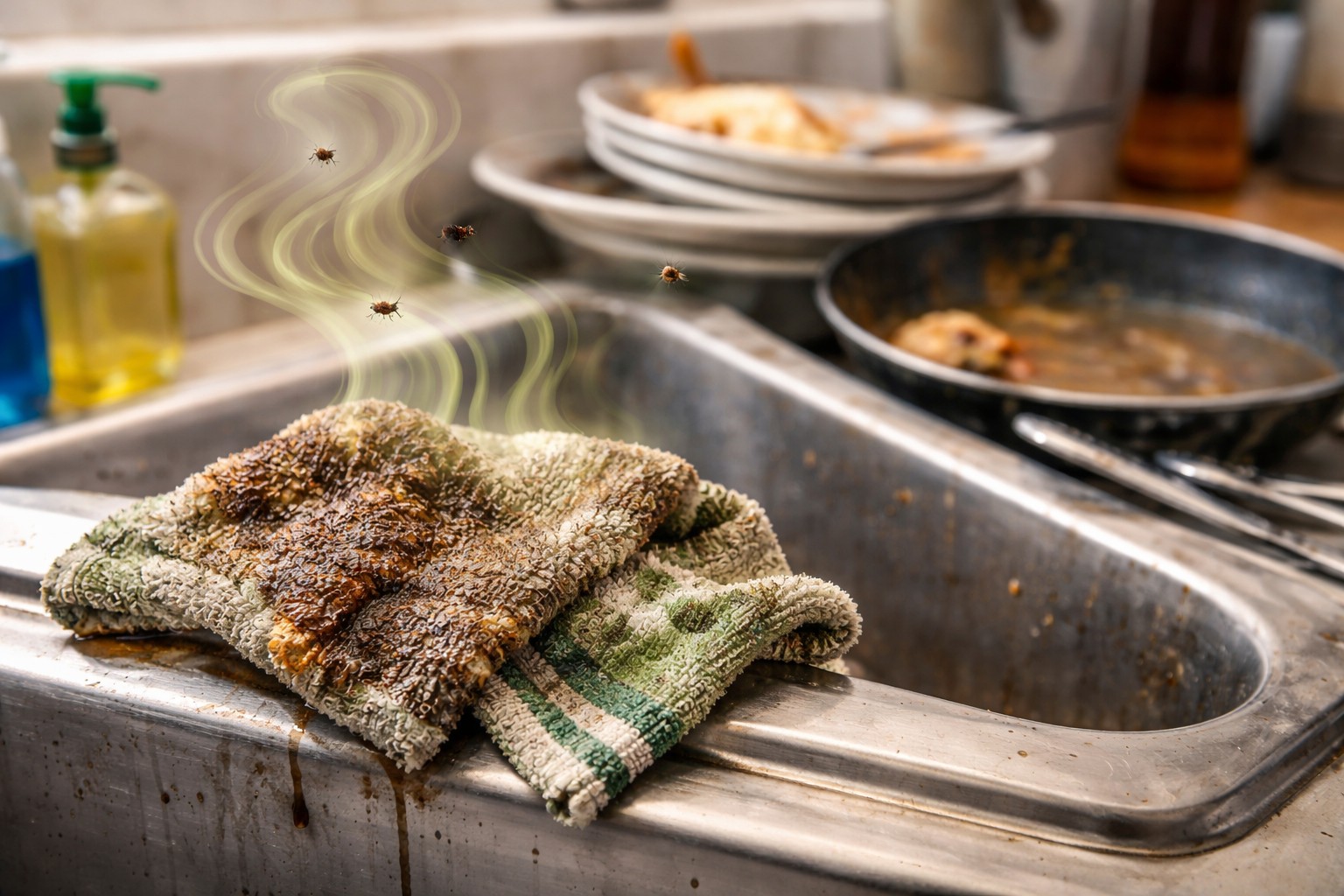
The problem of unpleasant odor from kitchen cloths is familiar to almost everyone who spends time in the kitchen. Often, even after a thorough rinse, the cloth begins to emit a pungent, sour or musty odor the very next morning. The main reason lies not in the quality of the material itself, but in the biological processes that are activated in the structure of the fibers.
Ideal environment for microorganisms
A kitchen napkin is a real incubator for bacteria и fungi. During the cleaning process, the fabric absorbs tiny particles of organic matter: grease, protein, juice residue and crumbs. When this cocktail is supplemented with a constant humidity and room temperature, the process of rapid reproduction of microbes starts. It is the products of their activity, not the dirt itself, that are the source of the peculiar odor.
Mistakes in care and storage
Most often odor is caused by improper usage habits:
-
Leaving the rag crumpled in the sink prevents air circulation.
-
Poor rinsing of detergents creates a sticky film that holds the contaminants inside the pile.
-
Using the same cloth to wipe both the dining table and cutting boards promotes cross-contamination of microflora.
-
Keeping cloths wet for too long causes mold to grow deep into the thread structure.
How to prevent stink
To keep kitchen textiles fresher for longer, you need to radically change your approach to hygiene. It is important to rinse the fabric thoroughly in hot water after each use and spread it out completely to dry. Materials from microfiber dry faster than natural cotton, which gives them an advantage in the fight against dampness. Regular disinfection in a vinegar solution or heating a damp cloth in the microwave for a minute is also effective.
Timely replacement of rags and keeping them dry will ensure that there are no foreign odors in the kitchen.
About the Author