
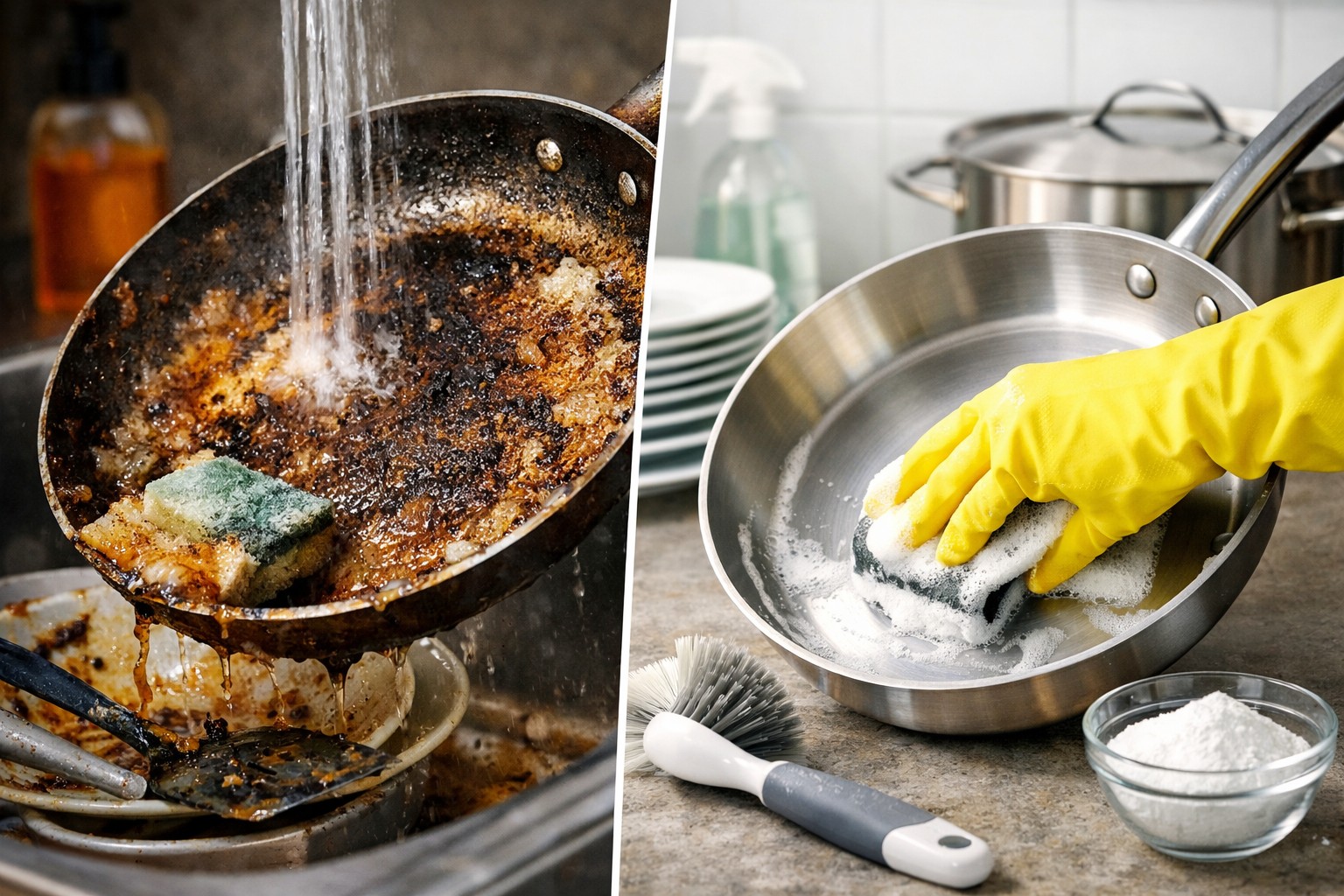
A clean kitchen is not only a matter of aesthetics, but also of hygiene. Over time, pans, baking trays and pots and pans develop a dense brown patinathat cannot be removed with normal dishwashing detergent. This stale grease и fouling are caused by the constant heating of oil residue, which turns into a tough polymer film. You don’t have to buy expensive chemicals to restore the pristine shine of your cookware, as effective solutions are often at your fingertips.
Proven home methods
The use of improvised means allows you to gently remove contaminants without damaging the surface of the metal or enamel. The most effective components are considered:
-
Baking soda и hydrogen peroxide. Mixing these ingredients to the state of a thick porridge creates a powerful reagent. The composition is applied to the soiled areas and left for 15-30 minutes. This is an excellent way to clean the outer walls of enameled dishes.
-
Mustard powder. It has a natural ability to break down fat molecules. It can be used as a mild abrasive for daily maintenance or soak pans in it after frying.
-
Household soap и stationery glue. An old Soviet method, which is still considered “heavy artillery”. Boiling dishes in a large tank with the addition of grated soap and silicate glue allows you to completely remove even a layer of many years old black soot.
-
Citric acid. Ideal for removing limescale and light grease layer from stainless steel, returning the metal to its characteristic shine.
Professional chemistry and safety
If folk methods fail to cope, specialized methods can help. grease removers alkaline-based. Such products work quickly, literally dissolving dirt before your eyes. However, the use of aggressive compositions requires strict adherence to the rules:
-
Work only with thick rubber gloves to protect the skin on your hands.
-
Ensure good ventilation of the room to avoid inhalation of caustic vapors.
-
Avoid contact with alkaline agents on aluminum products, as they may darken and deteriorate.
Material Features
When choosing a cleaning method, it is important to consider what your cookware is made of. Cast iron frying pans are not afraid of harsh brushing and scorching, whereas non-stick coating requires the most delicate handling without the use of abrasives. For glass molds soaking in a solution of baking soda is the best way to gently peel off stuck-on food residues without scratching.
Regular maintenance and the timely removal of even small drops of oil prevent soft deposits from turning into hard to remove crusts. The right cleaning method preserves the structure of the material and significantly extends the life of your favorite kitchen utensils.
About the Author