
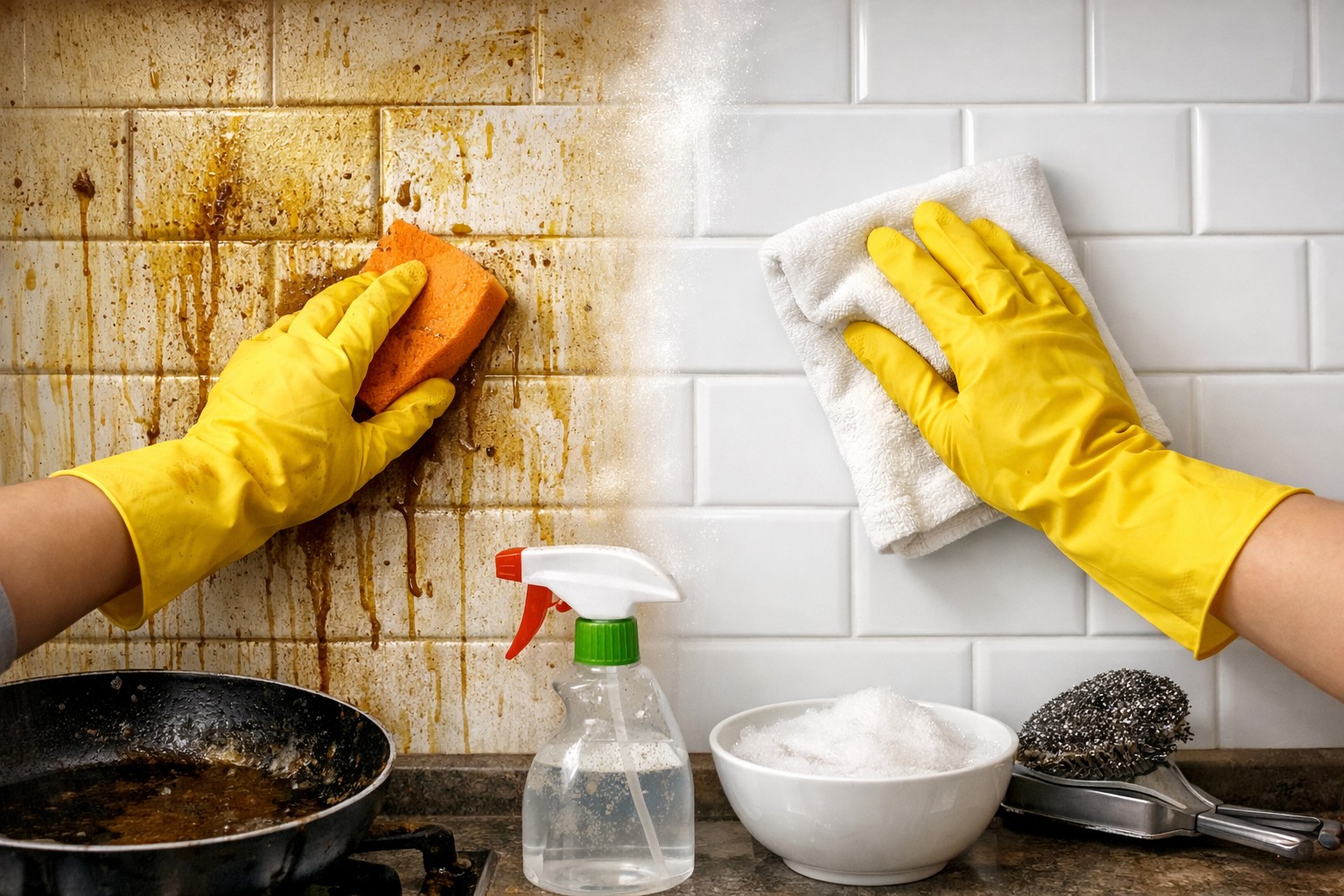
Cleanliness in the kitchen starts with the working area, which takes the brunt of the cooking. Drops of hot oil and sticky deposits eventually turn into a hard crust that is difficult to remove with ordinary water. To restore the surfaces to their original luster, it’s important to choose the right product. grease removerThe material of your apron is the material of your apron.
Effective home methods
Many people prefer to use improvised components that are safe for health and are always at hand. They perfectly cope with fresh and medium soiling without damaging the surface structure.
-
Baking soda and mustard powder. A mixture of these ingredients in a one-to-one ratio creates a mild abrasive that breaks down lipid compounds.
-
Household soap. Grated and diluted in warm water to the state of a thick porridge, it is able to dissolve even a thick layer of soot.
-
Naphtha. Ideal for glass and glossy surfaces, as it leaves no streaks and gives a mirror-like shine.
-
Citric acid. The concentrated solution helps neutralize the alkaline environment of grease and effectively removes lime scale around the faucet.
Cleaning characteristics of different materials
The choice of method depends directly on what the apron is made of. An incorrectly chosen composition can ruin an expensive coating or leave unremovable stains.
-
Ceramic tile. The most unpretentious material. For it can be used as professional chemistryand steam cleaners. Particular attention should be paid to tile joints, where the most bacteria accumulate.
-
Tempered glass (skinnels). Requires a delicate approach. Never use metal brushes as they leave micro-scratches. Alcohol-based sprays and microfiber cloths work best.
-
Plastic panels. Very sensitive to aggressive solvents and high temperatures. Mild dishwashing gels and warm water are ideal for them.
-
Natural stone. The porous material absorbs grease quickly. Only specialized PH-neutral cleaning agents are suitable for cleaning to prevent the stone from breaking down.
Regular maintenance of the kitchen area avoids the accumulation of complex dirt and significantly extends the life of the finishing materials. The use of protective screens and timely wiping of the surface after each cooking helps to maintain perfect order in the house. A clean apron becomes not only a matter of hygiene, but also an important element of aesthetic comfort in the interior of a modern kitchen.
About the Author