
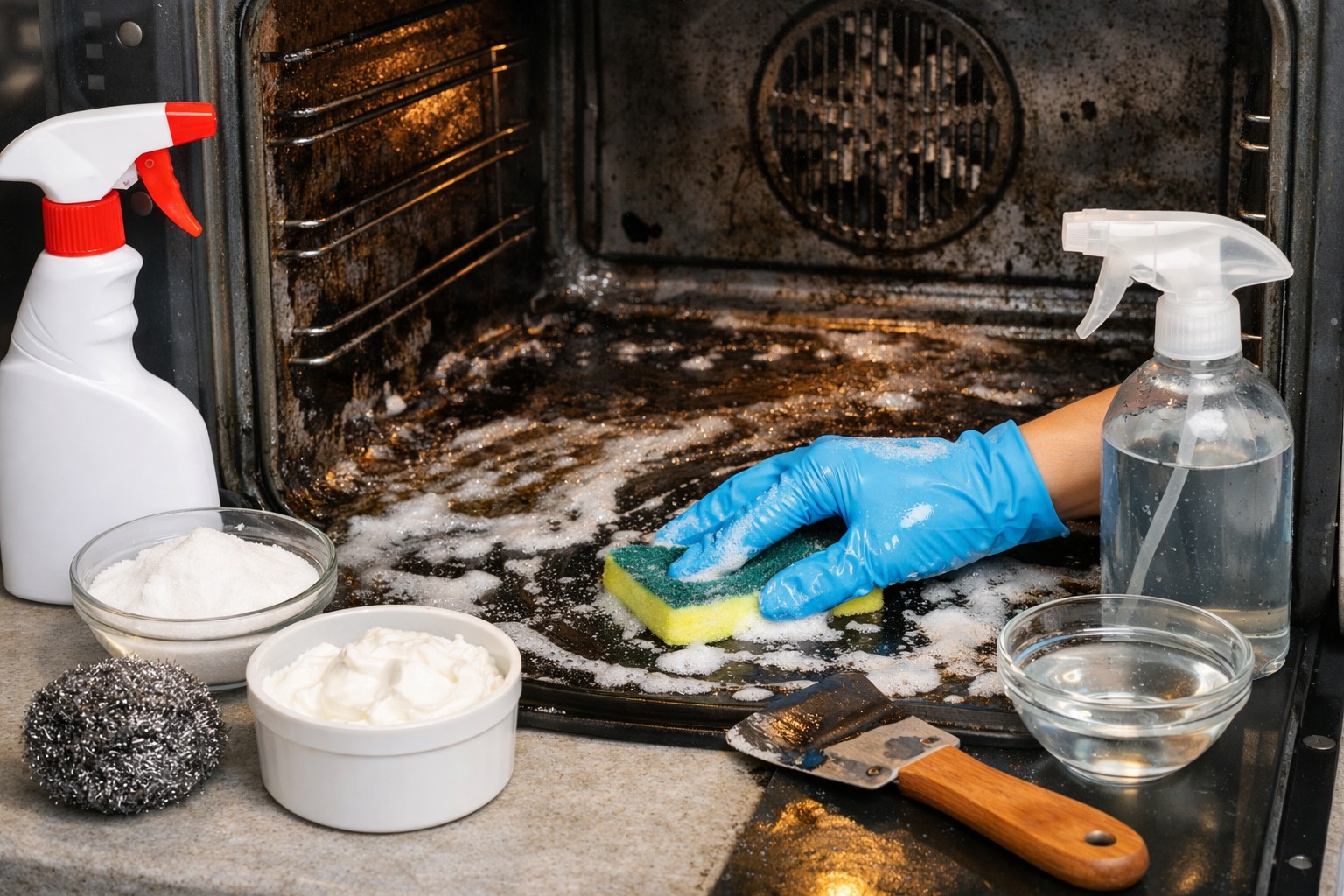
A clean oven is not only a matter of aesthetics, but also a guarantee of quality cooking without extraneous odors and smoke. Over time, a dense layer of fat accumulates on the walls, which begins to burn when heated, releasing harmful substances. You don’t have to buy expensive chemicals to restore the appliances to their original appearance, as effective remedies are often already at hand.
Proven folk methods
The most popular way to deal with stale plaque is to use baking soda. It has a mild abrasive effect and is able to break down fatty compounds without damaging the enamel. To clean, prepare a porridge by mixing baking soda with a small amount of water and apply it to dirty surfaces. After a few hours, the composition will darken, having absorbed the dirt, after which it can be easily washed off with a damp sponge.
Another powerful tool is table vinegar. Its acidic environment perfectly copes with limescale and grease residues. If the dirt is fresh, it is enough to wipe the walls with a napkin soaked in vinegar. For more serious cases, a combination of baking soda and vinegar works effectively: their interaction produces carbon dioxide gas, which literally “lifts” dirt from the surface.
Cleaning with steam and citric acid
Method steam bath or hydrolysis is considered the most gentle for modern ovens. Pour water into a deep baking tray and add a sachet to it citric acid Or the juice of one lemon. Turn the oven on to a temperature of about 100 degrees for 30-40 minutes. The hot steam softens the stuck drops of grease, and citric acid neutralizes unpleasant odors. After the procedure is complete, it is enough to wipe the inner walls with a soft cloth.
Working with heavy soiling
In cases where the grease has turned into a thick brown soot, it helps to ammonia. This is a radical but very effective method. Nashatyr is applied to the walls (with gloves and open windows) and left overnight. By morning, even the most stubborn soot is softened and removed with an ordinary detergent.
For cleaning windows and hard-to-reach places it is convenient to use laundry soap. It is grated, dissolved in hot water and applied to the problem areas. The soap’s high alkaline content allows it to quickly dissolve organic food residues without harming sealing rubbers and metal parts.
Regular maintenance and removing small splashes immediately after cooking can keep your oven clean for a long time without the use of aggressive products. The use of simple household cleaners helps to maintain hygiene in the kitchen and prolongs the life of the appliances. The right cleaning method depends on the degree of soiling and the type of oven interior coating.
About the Author