
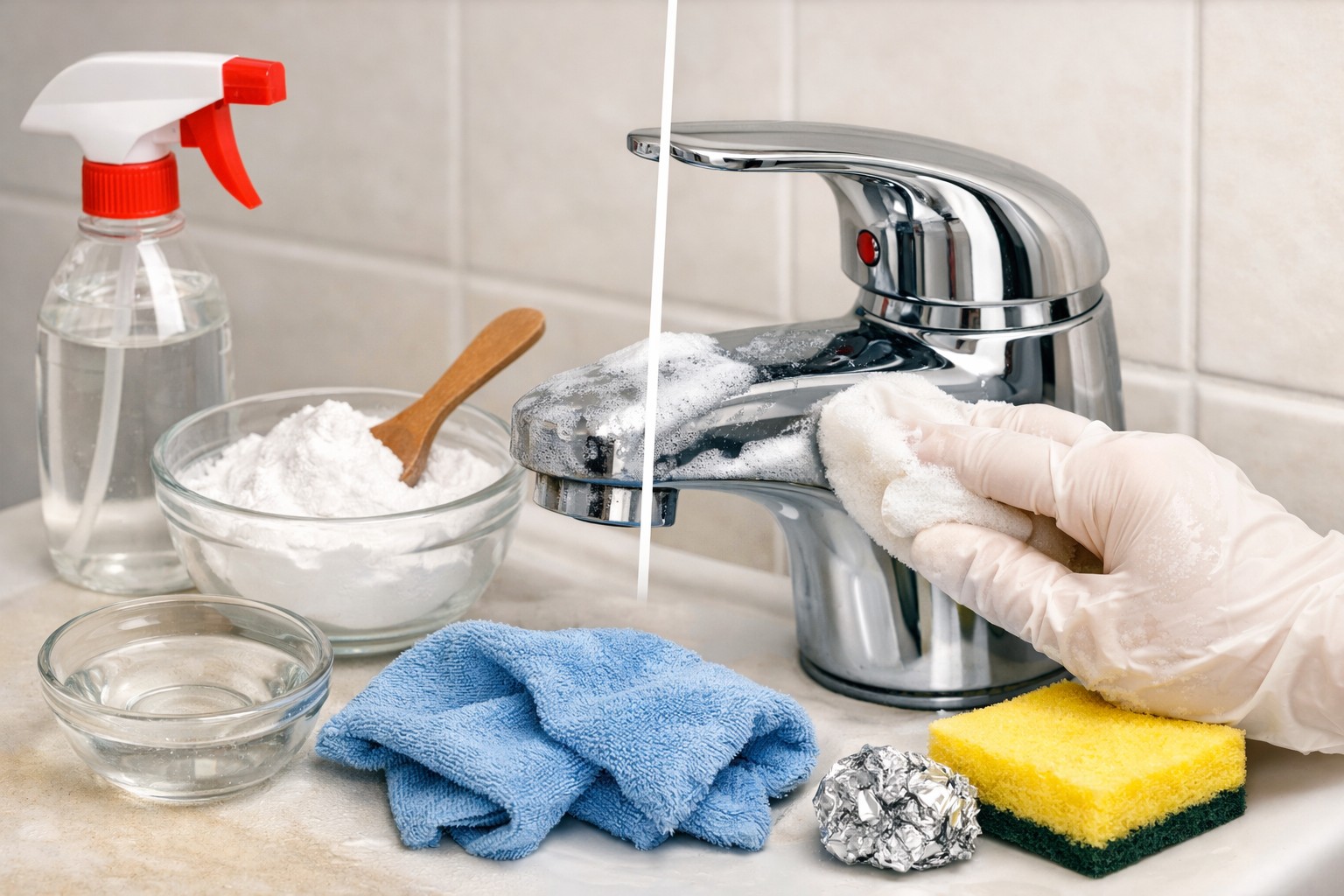
Cleanliness of sanitary ware in the bathroom and kitchen determines the overall appearance of the interior. Lime scale and soap scum can spoil the impression of even the most expensive repair. To restore radiant shineYou don’t have to buy aggressive chemicals that can damage the chrome plating.
Why does plaque appear on faucets
The main cause of metal tarnishing is hard water. Calcium and magnesium salts settle on the surface, forming a hard crust. If not done in time plaque removalIf the aerator is removed, it penetrates deeper into the coating structure, causing corrosion and permanent damage to the aerator.
Proven methods for gentle cleaning
There are several effective methods that can gently dissolve dirt without the use of abrasives:
-
Citric acid solution. This is the safest option for most modern coatings. Simply dilute the powder in warm water and wipe the faucet with a soft cloth.
-
Table vinegar. The acid effectively breaks down water stone. For strong dirt, you can make a “compress”: soak a rag in vinegar, wrap it around the faucet and leave it for 15-20 minutes.
-
Household soap. Helps get rid of fresh grease stains and toothpaste marks without leaving scratches.
-
Baking soda. Used in the form of a porridge for spot cleaning hard-to-reach places, such as joints with the sink.
Secrets to maintaining results
To keep your faucet clean for as long as possible, it’s important to follow the rules of care. The main enemy of metal is moisture, so wiping dry after each use prevents new stains from appearing.
-
Use only soft sponges or cloths made of microfiber.
-
Avoid products containing chlorine and hydrochloric acid.
-
Do not use metal brushes that create micro-scratches.
Regular preventive maintenance takes much less time than fighting old deposits. The right choice of cleaning agent and careful attitude allow you to preserve the original appearance of the sanitary ware for a long time. With proper care, even an old faucet will look as good as new.
About the Author