
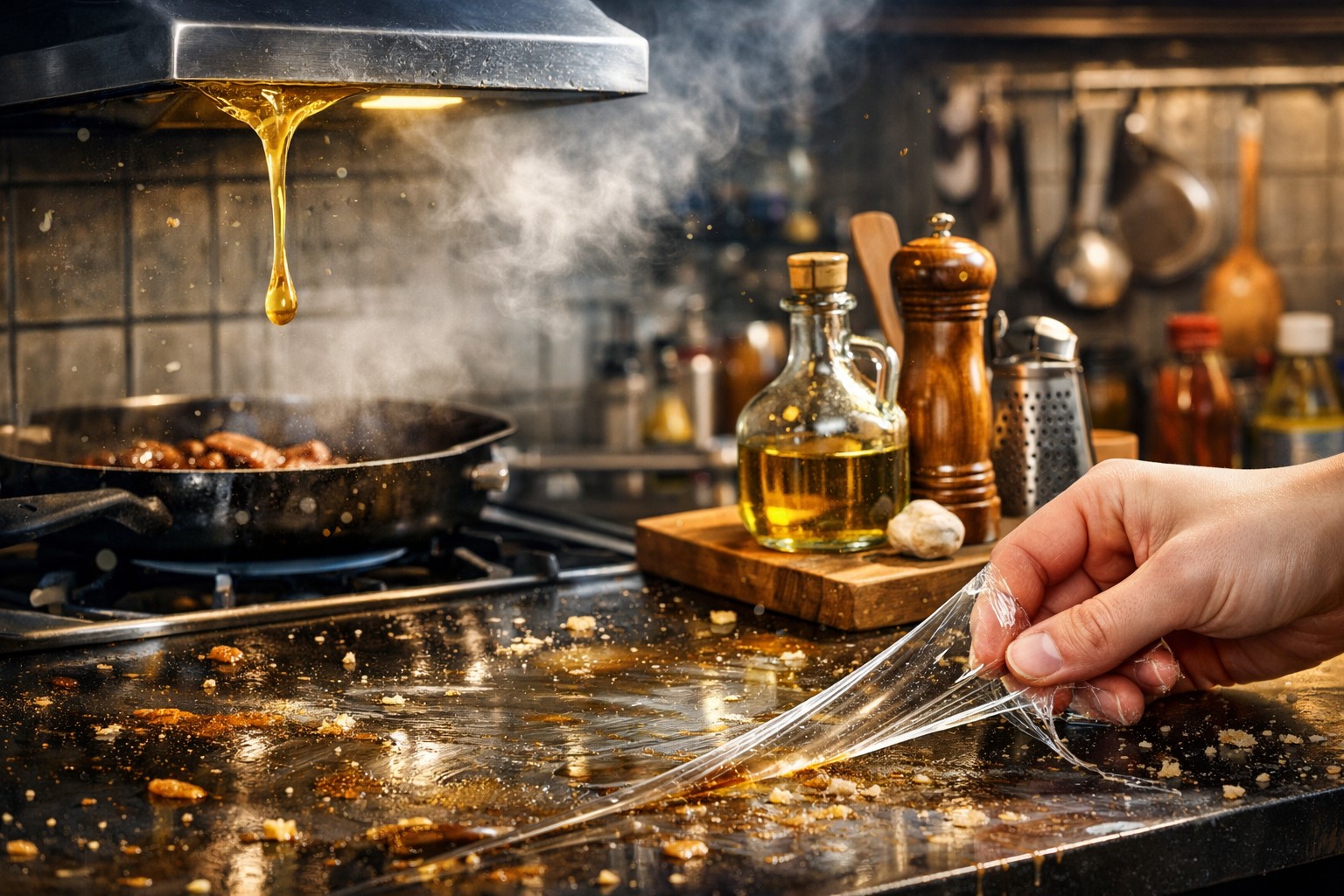
You do a general cleaning, and a week later the cabinets become unpleasant to the touch again. This phenomenon is familiar to anyone who spends time at the stove. The sticky residue is not just dust, it is complex cocktail of grease, soot and household fumeswhich over time turns into a real “polymer” film. If the causes are not addressed in time, ordinary wiping with a cloth will no longer work and surfaces will have to be literally scraped off.
Main sources of contamination
The main culprit of stickiness is the following cooking fat. When frying or braising, tiny droplets of oil rise into the air along with the steam. These particles settle on every available surface, from the worktop to the tops of the cupboards. Over time, when exposed to oxygen and heat, the fat oxidizes and solidifies into a dense substance.
There are several factors that accelerate this process:
-
Poor ventilation. If the extractor hood is not working at full capacity or you forget to turn it on, the grease suspension is not removed from the room, but remains inside, gently settling on the furniture.
-
Gas stove. The combustion products of domestic gas contain specific resinous substances that mix with steam and dust to create that characteristic dark coating.
-
Increased humidity. Steam from boiling pans softens the existing layer of grease, causing it to penetrate deeper into the structure of porous materials such as wood or cheap laminated particleboard.
-
Ordinary dust. It acts as a “bonding agent”. Dust particles adhere to fresh oil droplets, creating a strong multi-layered cake that is extremely difficult to clean without aggressive chemicals.
How to prevent plaque
Fighting the consequences is always more difficult than prevention. The cleanliness of the kitchen depends directly on the habits and quality of the appliances. To minimize the appearance of sticky layerIt is worth paying attention to the technical condition of the cooking area.
-
Regular cleaning of the extractor hood filters. Clogged grids no longer catch grease, and it spreads freely throughout the room.
-
Using lids when frying. Special mesh screens allow steam to escape but keep oil splatters inside the pan.
-
Daily wiping of fronts. Fresh deposits can be easily removed with a regular microfiber, while stale deposits require alkaline solutions.
Special attention should be paid to hard-to-reach places. Cabinet tops, which are out of sight, are often the main accumulator of dirt. Professional cleaners recommend covering them with paper or parchment, which can simply be replaced as they get dirty, eliminating the need for grueling scrubbing at height.
Keeping the kitchen clean requires a systematic approach, where proper ventilation and timely removal of fresh grease drips play a key role in maintaining the aesthetic appearance of the furniture.
About the Author