
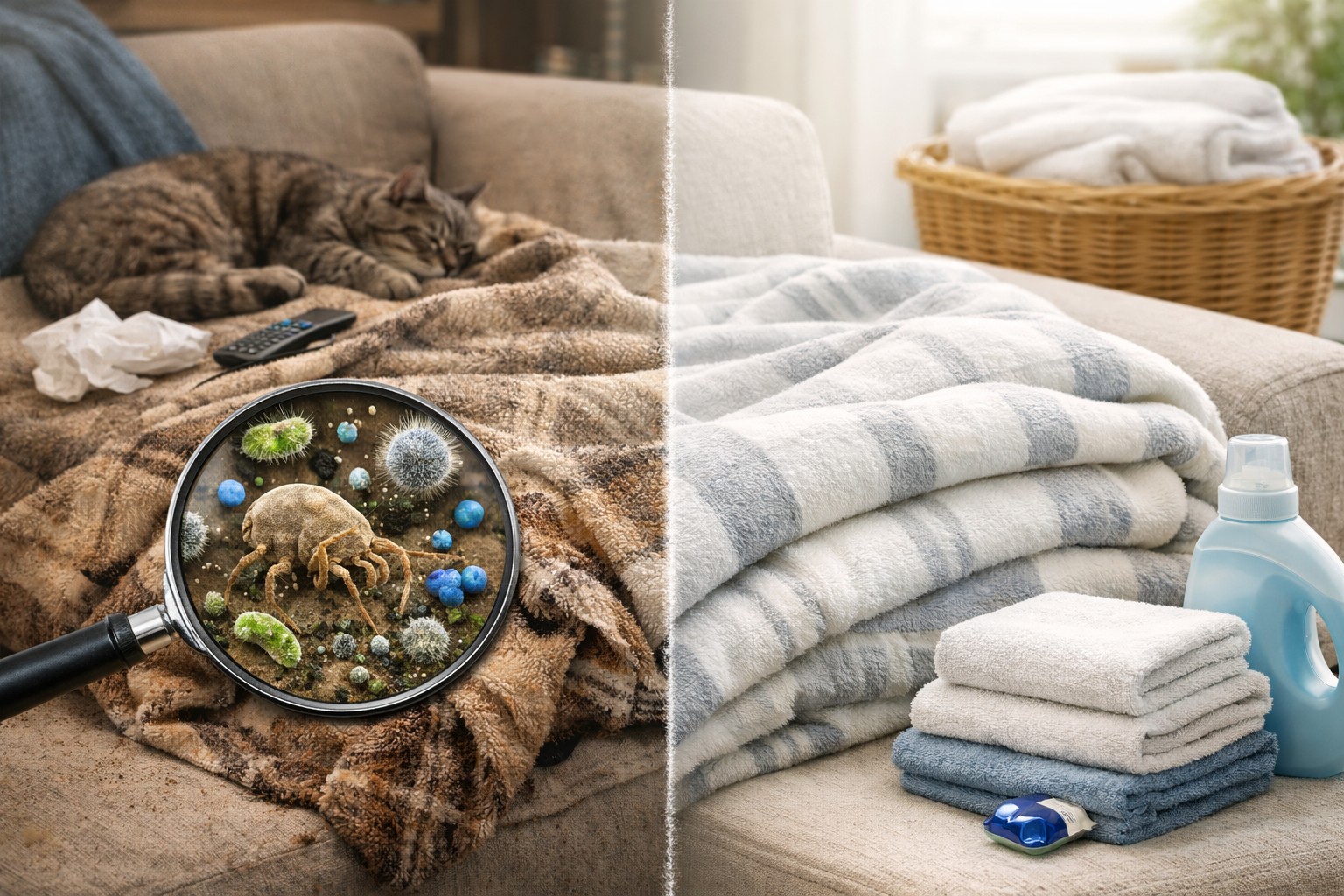
Soft plaid is associated with home coziness, warmth and evening relaxation. However, this item of interior decoration is one of the most effective dust collectors and pollution in the home. Regular maintenance of textiles is not only a matter of aesthetics, but also the key to maintaining a healthy atmosphere in the living space.
Hidden threats in fabric fibers
Even if the cape looks clean, there are processes going on inside the pile that are invisible to the eye. Plaids, especially those made of natural wool or voluminous synthetics, trap tiny particles that can have a negative impact on well-being.
-
Dust mites actively reproduce in home textiles, feeding on keratinized skin particles.
-
Household allergensAllergens such as pollen from the street or pet hair are deposited deep in the fabric structure.
-
Organic microparticles and skin sebum oxidize over time, providing a medium for bacterial growth.
Preservation of material structure and properties
Washing helps not only to freshen things up, but also to extend their life. Over time, the fibers become clogged with dust, stiff and lose their structure. breathability.
-
Cleansing restores thermoregulationallowing the material to retain heat better.
-
Removing dirt prevents premature wear and thinning of the threads.
-
Proper care preserves the softness of the pile and the original color of the product.
Sleep and rest hygiene
Because plaid often comes into contact with exposed areas of the body, its cleanliness directly affects the condition of the skin. The accumulation of sweat and skin grease on the fabric can provoke irritations. Clean textiles provide hygienic safety during a daytime nap or reading a book on the sofa. Regular damp treatment gets rid of foreign odors that are inevitably absorbed into the fibers during use.
To maintain optimal cleanliness, it is recommended to wash the plaid at least once a season, taking into account the manufacturer’s recommendations on the product label.
About the Author