
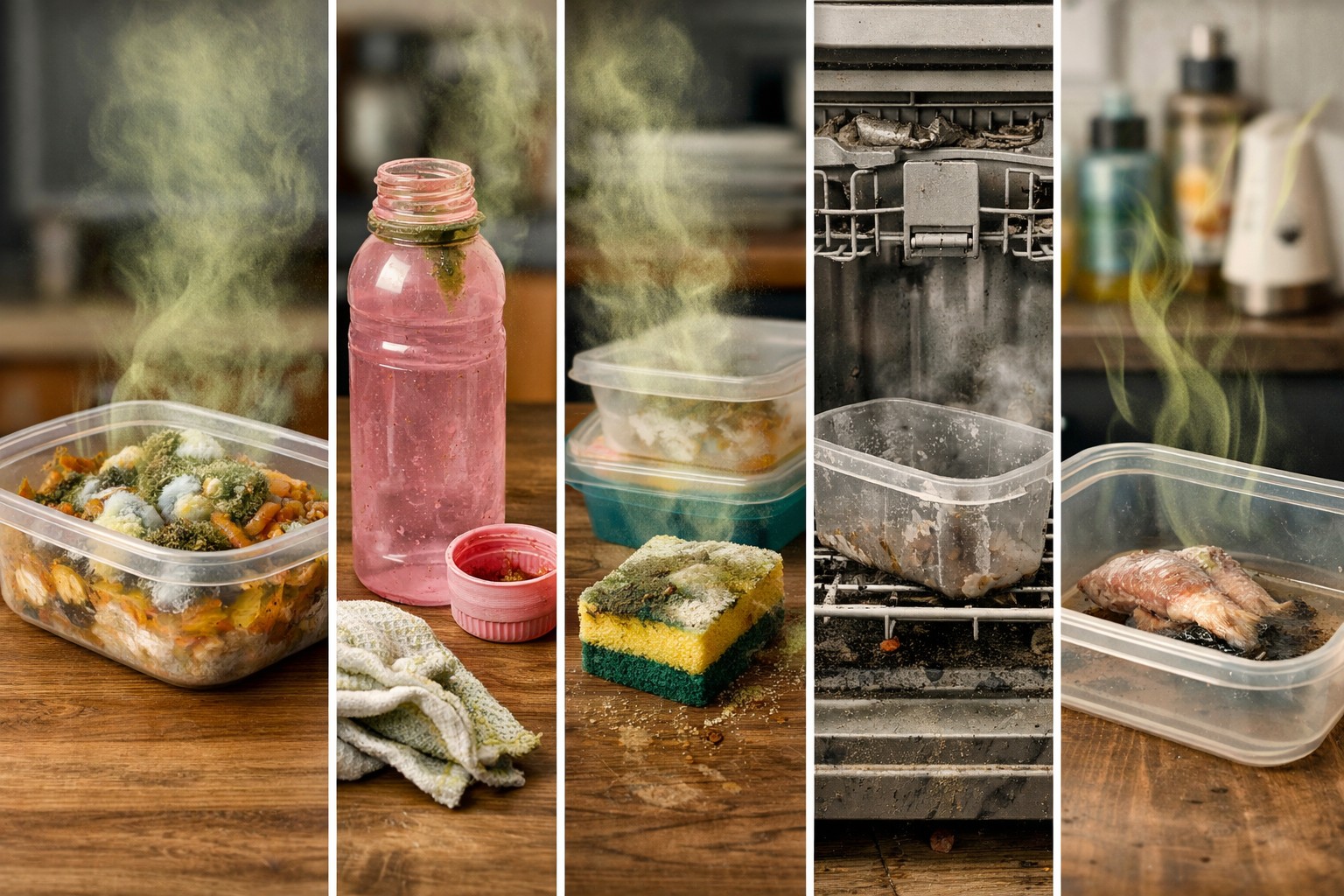
Often new or even familiar household utensils begin to exude a specific “aroma” that spoils the appetite and causes health anxiety. The problem can hide both in the composition of the material itself and in the peculiarities of use, which lead to chemical reactions on the surface of the containers.
Production peculiarities and residual monomers
Sometimes a sharp “chemical” odor from a newly purchased product indicates a violation of production technology. In the process of creating plastic, various polymerswhich, under ideal conditions, should be fully stabilized. If the process cycle has been interrupted, the material still contains volatile organic compounds and free monomerswhich gradually evaporate, creating that unpleasant background.
Porous structure and odor absorption
Contrary to popular belief, the surface of plastic is not completely smooth. With repeated use, it develops micro-cracks and scratches from cutlery. Grease particles and organic food residues penetrate these pores. Over time. lipid oxidationand the plastic starts to smell like stale food, even if it looks visually perfectly clean.
Temperature degradation of the material
Plastic tableware is extremely sensitive to temperature fluctuations. Regular heating in a microwave oven or washing in a dishwasher under aggressive conditions provokes thermal degradation. This process breaks down long chains of polymers, releasing degradation products. The use of containers not designed for hot food is particularly dangerous, as heating releases plasticizerswhich not only smell, but can also get into food.
Improper storage and microflora development
If a container that is even slightly damp is closed with a tight lid, it creates an ideal environment for bacterial growth. Microscopic fungus and mold can develop in gaskets and microcracks. This results in a persistent musty odor that is difficult to remove with conventional cleaning agents.
To minimize the risk of extraneous odors, it is worth following simple rules:
-
Always check markings on the bottom of the product (e.g. glass and fork symbol or numbers in a triangle).
-
Avoid storing intensely flavored foods such as onions, garlic or spices in plastic.
-
Use soft sponges for washing so that you do not create any surface marks. microdamage.
-
Replace dishes in a timely manner if they become cloudy or discolored.
Quality food-grade plastic should remain neutral and safe for daily use if properly maintained.
About the Author