
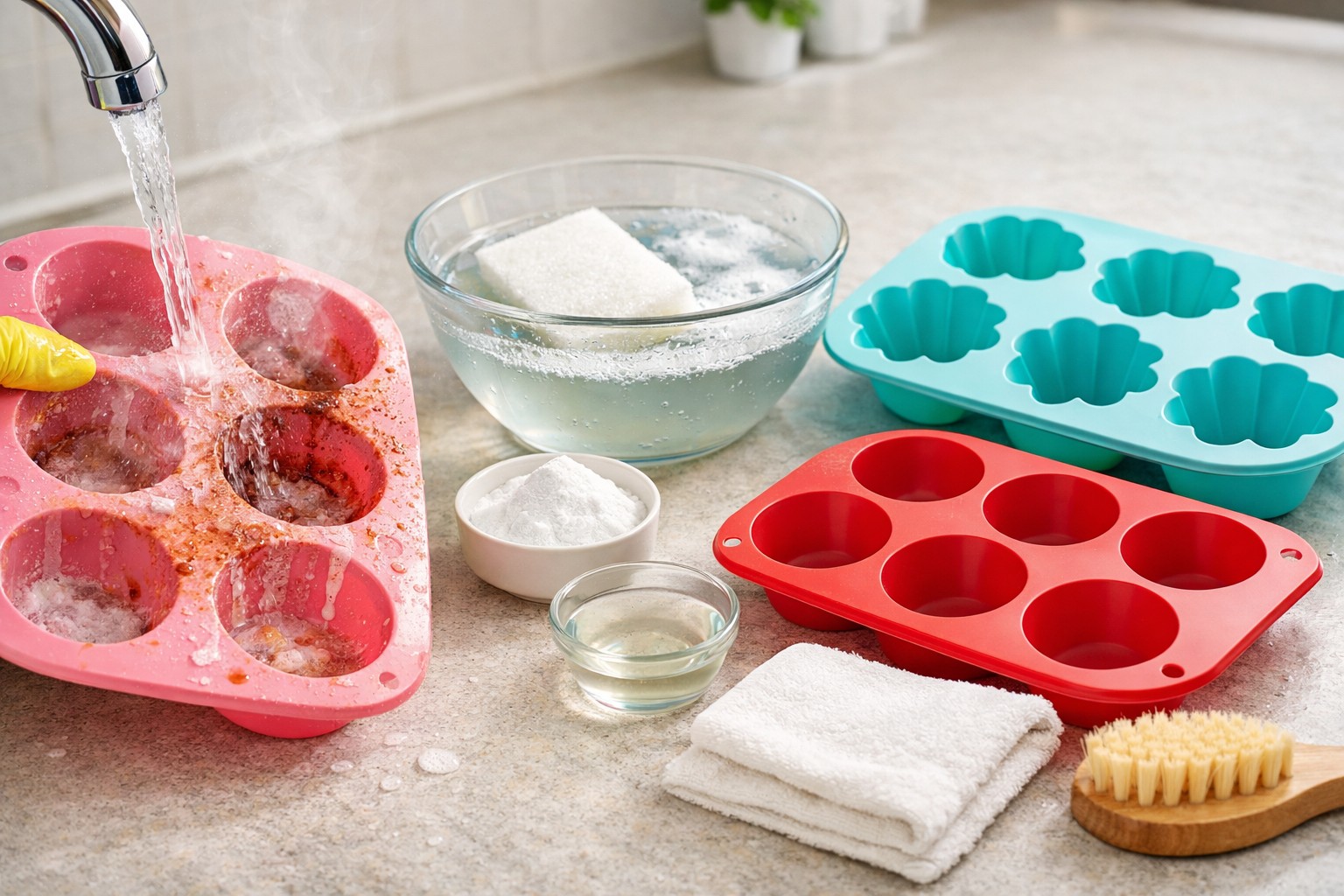
Silicone molds have become indispensable helpers in the kitchen due to their flexibility and non-stick properties. However, over time, they develop sticky residue, whitish patina from hard water or stubborn greasewhich cannot be washed off with normal dishwashing detergent. Proper care will prolong the life of the accessories and keep them safe for your health.
Affordable ways to clean grease and grime
It is not necessary to use aggressive chemistry to remove difficult dirt. Most problems can be solved with products that are in every cupboard.
-
Baking soda and lemon juice. This is one of the most effective combinations. It is necessary to mix baking soda with a small amount of water to the state of porridge, apply it to the problem areas and add a drop of lemon juice. The resulting chemical reaction will gently break down the problem areas stubborn fatwithout damaging the silicone structure.
-
Boiling in soda solution. If the mold has become sticky entirely, it can be boiled in a pot of water to which two tablespoons of baking soda and a little detergent have been added. Ten to fifteen minutes is enough for the dirt to come off on its own.
-
Vinegar solution. To remove lime scaleA soak in a weak solution of table vinegar is ideal, as it is often left behind after washing in the dishwasher or using hard water.
Features of working with silicone
It is important to remember that silicone has a porous structure. When heated, the pores expand, absorbing oil particles, and when cooled – shrink, “locking” dirt inside. This is why molds often appear clean immediately after washing, but become sticky after a couple of days of storage.
-
Usage abrasive sponges or metal brushes are strictly forbidden. Micro-scratches on the surface will cause baked goods to stick and dirt will accumulate even faster.
-
Laundry soap is a great way to deal with organic residues if you grate it and dissolve it in hot water.
-
It is better to dry the molds naturally or blot them with a paper towel to avoid the appearance of lint from the cloth on the surface.
Regular preventive maintenance and avoiding the use of aggressive cleaning powders will ensure that the elasticity and aesthetic appearance of kitchen utensils will be preserved for many years to come. High-quality food-grade silicone can withstand hundreds of heating cycles if its surface remains smooth and undamaged. Correct temperature regime and timely removal of oil residues prevent polymerization of fat on the vessel walls.
About the Author