
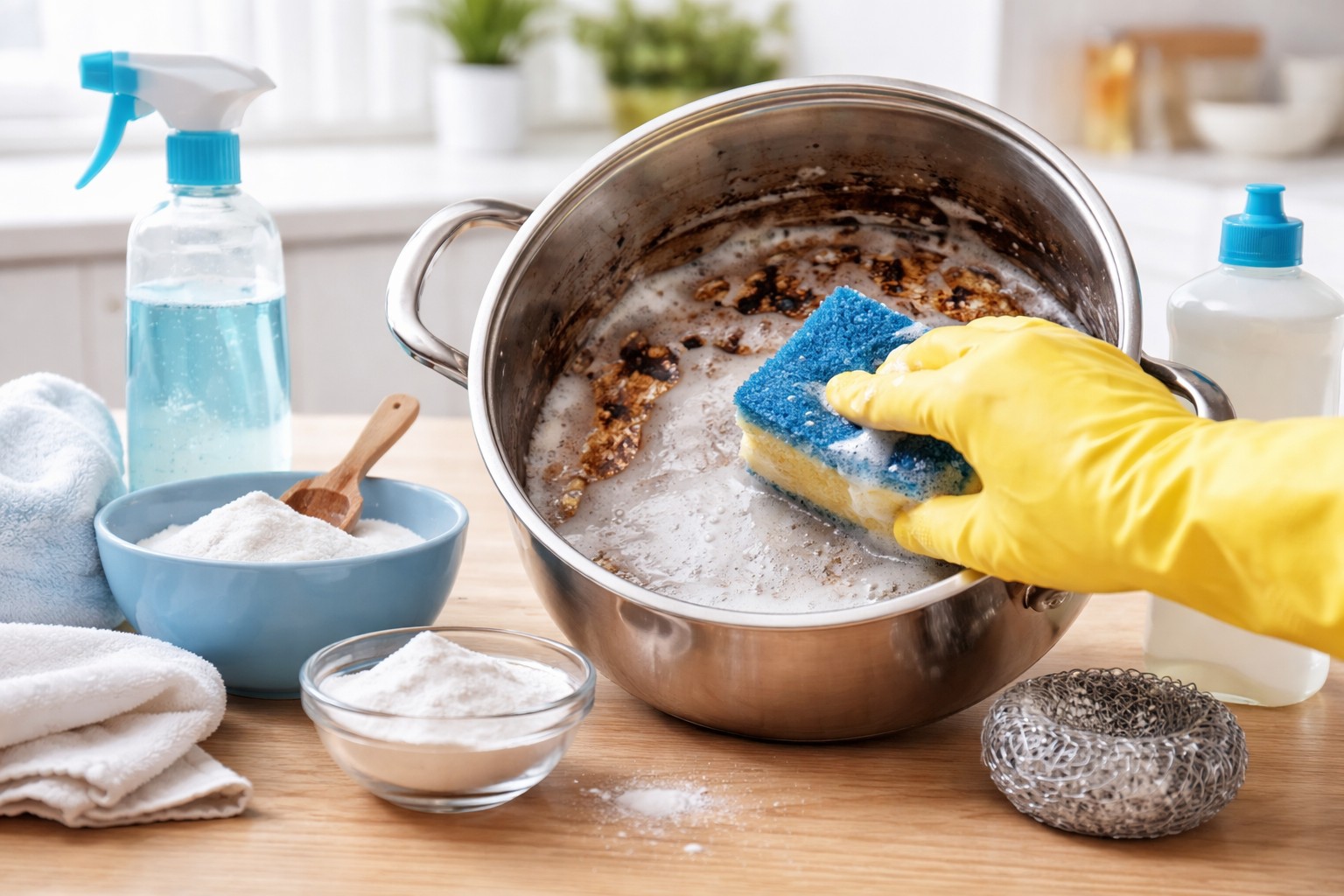
Burnt milk leaves on the bottom of the pot a thick brown deposit and acrid odor, which seems impossible to get out. However, don’t be in a hurry to throw out your cookware or rub it with an iron brush, damaging the surface. There are proven methods that will help dissolve fouling with the help of improvised means, preserving the shine of the metal or the integrity of the enamel.
Effective home cleaning methods
In order to cope with the problem quickly, it is important to take into account the material from which the dishes are made. Aggressive acids are not suitable for all coatings, so it is better to choose gentle but effective components.
-
Baking soda. A universal remedy for removing organic contaminants. It is enough to pour a layer of soda on the bottom, add a little water to the state of mush and leave it for an hour. For stale soot, you can boil the soda solution for ten minutes.
-
Activated carbon. This method is ideal for enameled pots. It is necessary to crush a few tablets into powder, pour the burnt place and leave it for fifteen minutes. After that, cold water is added to the container, and after half an hour, the soot easily comes off with the help of an ordinary sponge.
-
Citric acid or vinegar. An acidic environment is excellent at breaking down protein compounds. If you pour vinegar or citric acid over the stain and pour water over it, the reaction will begin instantly. This method is especially effective for stainless steel cookware.
-
Laundry soap. If the milk burned not strongly, a concentrated soap solution will help. Grated soap is mixed with water and boiled in a saucepan for about twenty minutes, which allows you to soften even a thick crust.
-
Salt. Coarse table salt is good at drawing out residual carbon monoxide. However, it is not recommended to use it for stainless steel when cold, as it can cause dark stains on the metal.
Rules of care for dishes after cleaning
After getting rid of black deposits, it is important to remove them completely burning smell. You can wipe the pot with coffee grounds or leave a cut onion inside for a while. To prevent future sticking, experienced cooks recommend rinsing the pan with ice water before pouring milk into it.
Taking care of the non-stick layer and timely use of mild solvents can extend the life of cookware for years to come. Clean cookware is a guarantee that freshly cooked food will be free of foreign flavors.
About the Author