
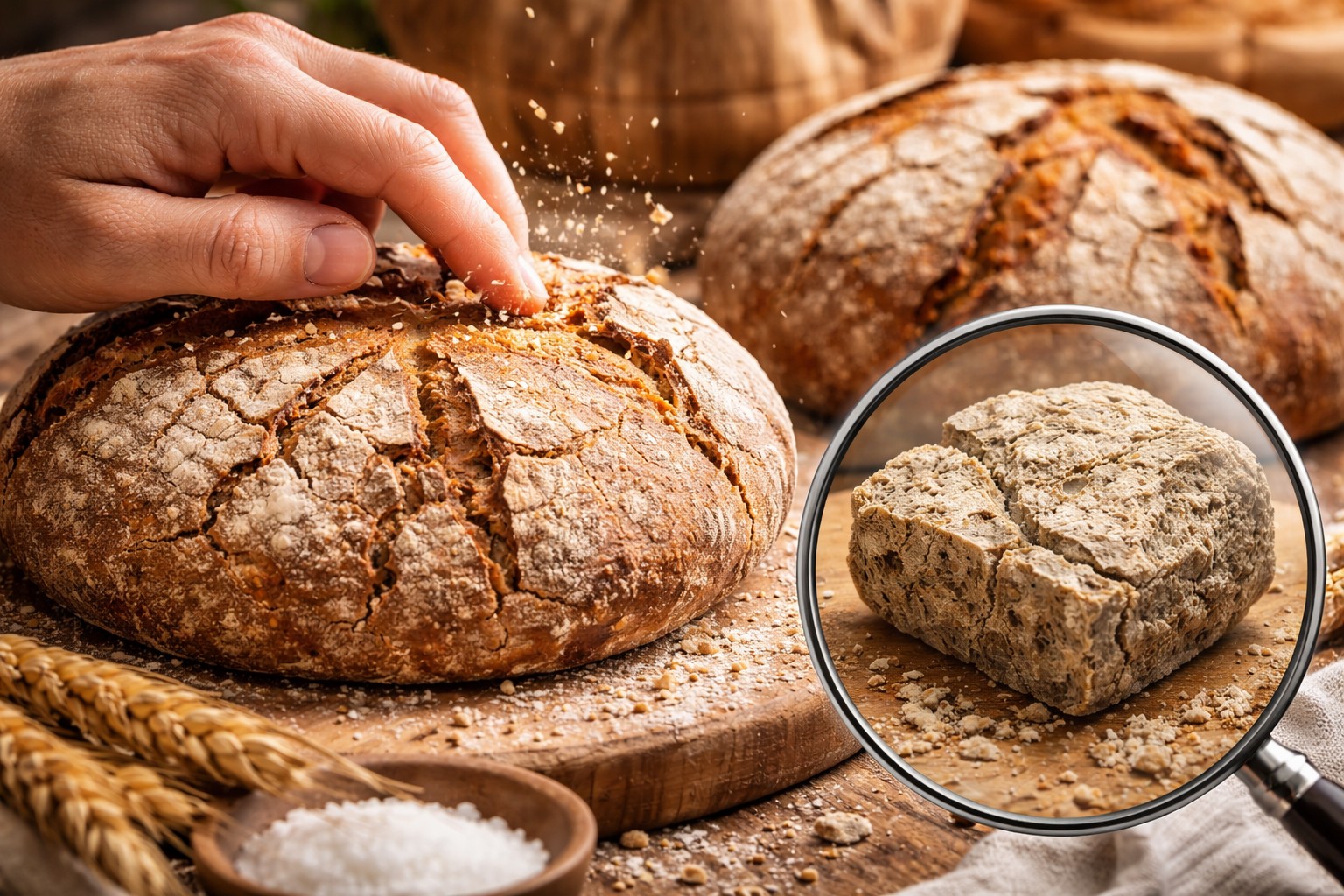
Problem stale bread is familiar to everyone: yesterday’s flavorful loaf now resembles a brick. Many people mistakenly believe that it’s all about moisture evaporation, but the process is much more complex and interesting from the point of view of chemistry.
The science of starch retrogradation
The main reason that baked goods lose their softness is due to starch retrogradation. During the baking process, the starch molecules in the flour absorb water and swell, creating that delicate and porous crumb structure.
As soon as the loaf leaves the oven, the reverse process begins. The starch molecules begin to slowly regain their crystalline structure, pushing water out of the crumb cells into the space between them and into the crust. As a result bread structure becomes stiff and brittle even if the total moisture content of the product has changed only slightly.
The main enemies of freshness
There are several factors that accelerate the aging process of baked goods:
-
Low temperatures. The biggest mistake is to store bread in the refrigerator. Studies show that at temperatures around +4°C the process of starch crystallization is several times faster than at room temperature.
-
Air access. Direct contact with oxygen promotes the evaporation of residual moisture, which makes the crust dry and the crumb crumbly.
-
Product composition. Bread from rye flour or with the addition of fats (butter, milk) remains soft longer, because these components slow down changes in the structure of carbohydrates.
-
Humidity of the medium. Too dry indoor air draws moisture out of the product, turning it into a dry product.
How to extend the life of a loaf
To slow down callousnessIt is worth following simple storage rules. It is best to use paper bags or linen sacks, which allow the bread to breathe but protect it from drying out too much. If you have bought too much bread, the best solution is to store it in a paper bag or linen bag. freezing: at subzero temperatures the retrogradation process is practically stopped.
The softness of already dried bread can be restored by heating it briefly in the oven or microwave. The high temperature causes the starch crystals to break down again, temporarily returning the crumb to its former elasticity.
Proper storage conditions can preserve the taste and texture of your favorite baked goods for several days.
About the Author