
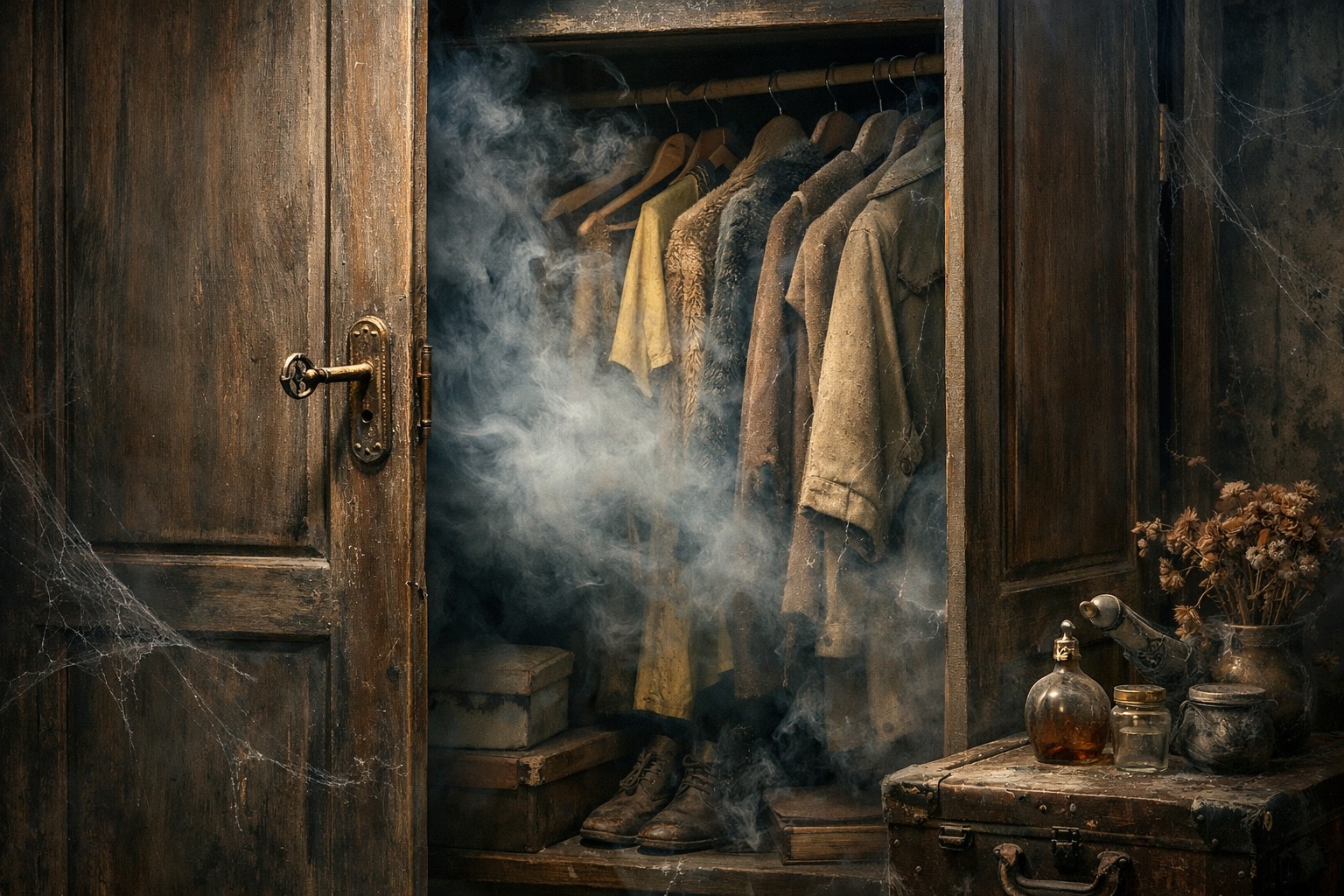
The stale odor that greets you when you open your closet is not just an annoying nuisance, but a signal that the microclimate in your home has been disturbed. This problem is familiar to many, but few people know that its root often lies in unobvious household habits. To keep things fresh, it’s important to understand the biological and physical processes that take place behind closed doors.
The main causes of unpleasant ambergris
The main culprit of the specific odor is poor ventilation. In a confined space, air stagnates, creating ideal conditions for microorganisms. However, there are other factors as well:
-
Increased humidity. Even if the room is dry, condensation can form inside a cabinet against a cold wall.
-
Storing stale items. Clothing that has been worn at least once carries particles of skin, sweat and sebum. In an enclosed space, these organic residues begin to oxidize.
-
Undried laundry. Stacking items that have retained even a minimal percentage of moisture after washing is guaranteed to result in a damp odor.
-
Dust mites and fungus. Mold colonies can develop in old furniture or in the pile of woolen items, which release characteristic volatile compounds.
-
Mixing flavors. The layering of perfume, deodorant, and food odors brought in from the street on top of your outerwear eventually transforms into a heavy “granny” spirit.
How to prevent musty odors
To keep your closet in perfect condition, basic storage hygiene is essential. Regular airing – is the easiest and most effective way to combat stagnant air. It is recommended to leave the cupboard doors open for a few hours at least once a week.
It is equally important to keep an eye on spacing. Too tight a hanging prevents the natural circulation of oxygen. The use of natural odor absorbers such as activated charcoal, baking soda or lavender sachets helps to maintain a neutral background, but does not solve the problem if there is already an odor inside. mold.
When changing the closet seasonally, it is worth conducting a complete audit: remove all the contents, wipe the shelves with a weak solution of vinegar and thoroughly dry each section. Particular attention should be paid to the condition of the back wall of the furniture, as it is there that fungus most often grows unnoticed due to the lack of a gap between the closet and the wall.
Cleanliness in the closet directly depends on discipline in sorting things and controlling the humidity level in the living space.
About the Author