
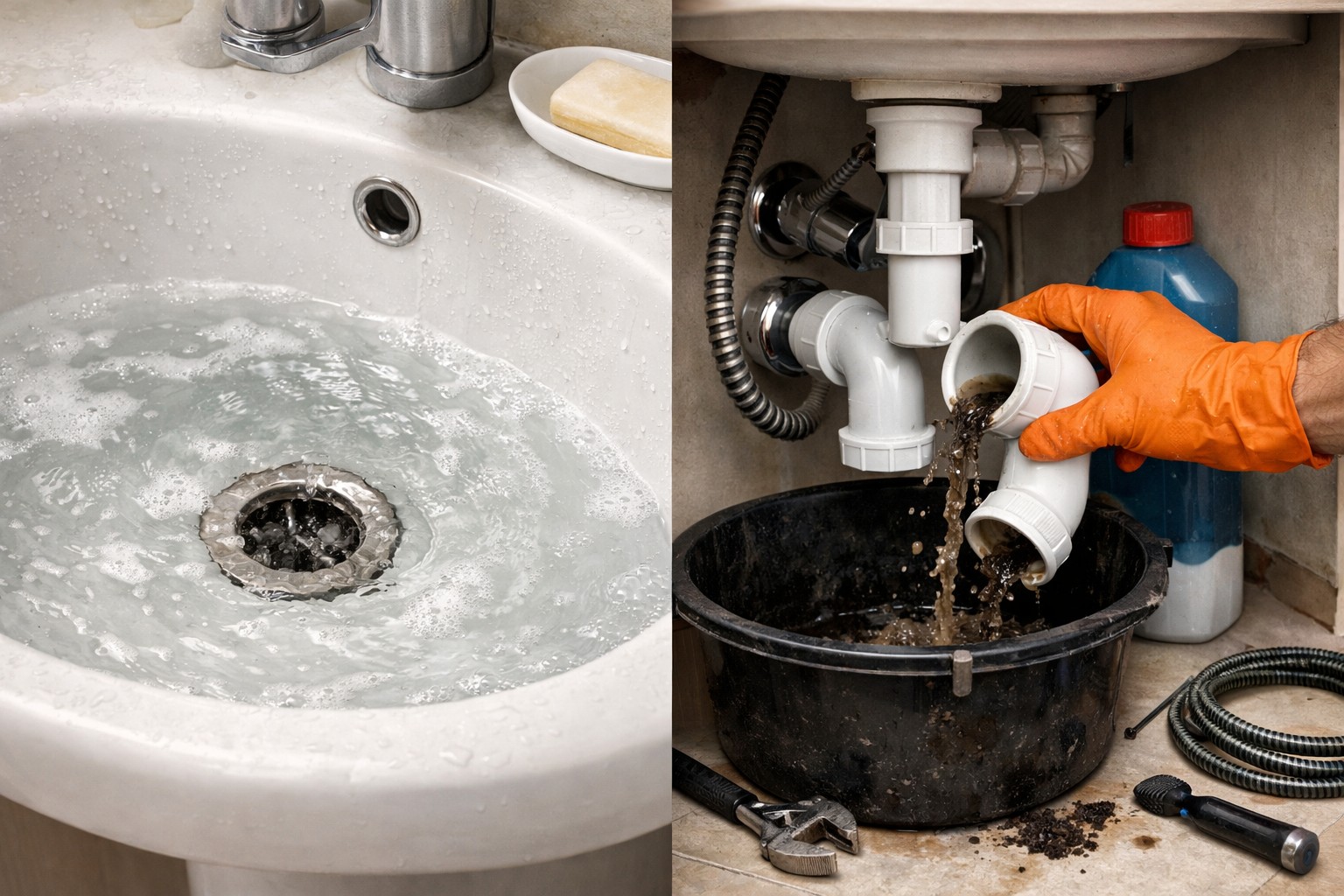
Stagnant water in the sink – one of the most common household problems, which always occurs at the most inopportune moment. When the usual drain turns into a standing swamp, it not only interferes with hygiene, but also becomes a source of unpleasant odor throughout the kitchen or bathroom. The causes of such a malfunction are rarely accidental and are usually related to the gradual accumulation of deposits inside the pipes.
Main causes of poor water drainage
Most often, the work of the plumbing is disturbed due to neglect of simple rules of operation. Depending on the type of room, the factors of clogging can vary significantly:
-
Grease buildup. In the kitchen sink, this is the main enemy. Oil and animal fat residue settles on the walls of the pipes, turning into a sticky mass that narrows the internal diameter of the drain.
-
Hair plugs. In the bathroom, the main cause is hair and pet hair that clings to the irregularities of the trap and creates a dense “filter” that traps water.
-
Food residue and small debris. Food particles, tea brew or vegetable peelings gradually accumulate in the siphon elbow.
-
Soapstone. A mixture of soap components and hard water minerals forms a hard plaque that is difficult to remove by normal rinsing.
-
Installation errors. If sewer slope was calculated incorrectly during installation, the water will escape too slowly physically, regardless of the cleanliness of the system.
Effective methods of clog control
Before calling a plumber, you can try to restore the patency of the system yourself, using proven methods:
-
Hot water flushing. To remove a fresh layer of grease, it is sufficient to run a strong pressure of hot water for a few minutes.
-
Mechanical cleaning with a plunger. An old and reliable method of creating hydraulic shockwhich helps to push the plug further down the pipe or destroy its structure.
-
Disassembling a siphon. The most effective method for deep cleaning. By removing the lower part of the trap, you can manually remove accumulated debris and wash the parts with detergent.
-
Use of household chemicals. Special alkaline or acidic gels dissolve organic compounds, hair and grease without damaging modern plastic pipes.
-
Using a plumber’s cable. This tool is necessary if the clog is deep in the riser pipe where chemicals cannot penetrate.
To prevent similar situations in the future, it is recommended to install a drain plug on the drain outlet safety netwhich will trap the main debris. Regular preventive maintenance and not draining grease down the sink will keep the system in working order for years to come.
Proper plumbing care eliminates the risk of home emergencies.
About the Author