
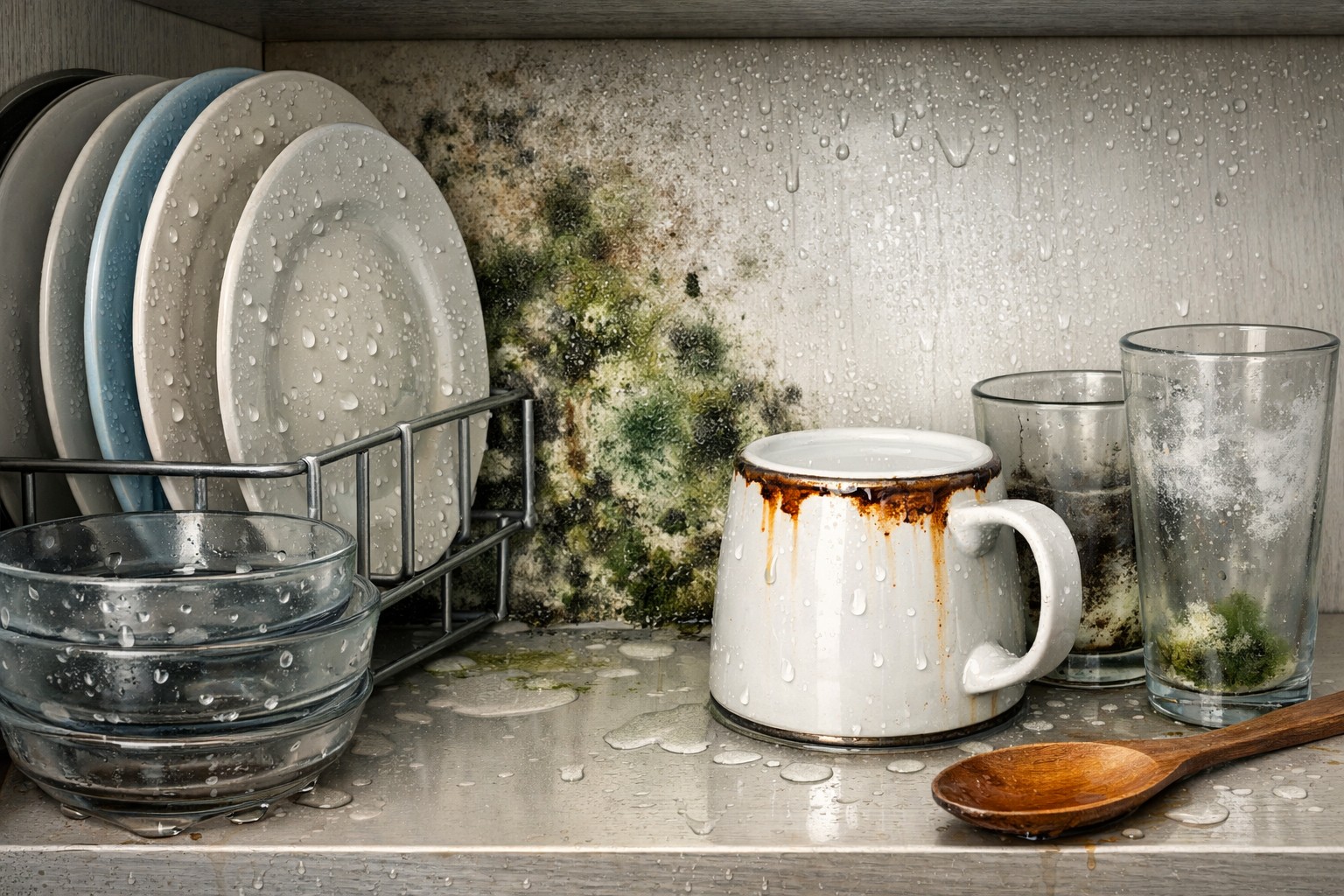
Every time after washing plates and pans, it’s tempting to just stack them up and put them away on the shelf. It seems like the extra moisture will evaporate on its own, but in reality, the habit of ignoring the dish drying can lead to unpleasant consequences for the health and condition of the kitchen furniture.
Hygiene and bacterial control
The main reason to thoroughly remove moisture is to prevent reproduction pathogens. Water left in the closed space of a cabinet or between tightly stacked plates creates an ideal environment for bacterial life.
-
Mold and fungus are active in humid environments.
-
Surfaces that remain wet for more than two hours become a breeding ground for E. coli.
-
The damp environment promotes an unpleasant “musty” odor that is absorbed by clean utensils.
Preservation of the kitchen set
Regular exposure to water droplets on the shelves and walls of cabinets gradually destroys the materials. Even high-quality laminated particleboard or wood can become damp. warp and swell.
-
Furniture edges are peeling off from constant contact with condensation.
-
In places where moisture accumulates, a persistent deposit can appear, which is difficult to remove without damaging the surface.
-
The metal parts of fittings and dryers become coated over time corrosion.
Aesthetics and usability
If water droplets are left to dry naturally, they often remain on the surface lime stains and stains. This is especially noticeable on clear glass, glasses and stainless steel cutlery. Careful wiping or using the right drying rack can keep your dishes shiny without the need for additional polishing before guests arrive.
Drying dishes is not just the final touch in cleaning, but an important step in ensuring the safety and longevity of all kitchen utensils. Understanding these simple processes helps you maintain perfect order and look after your family’s well-being.
About the Author