
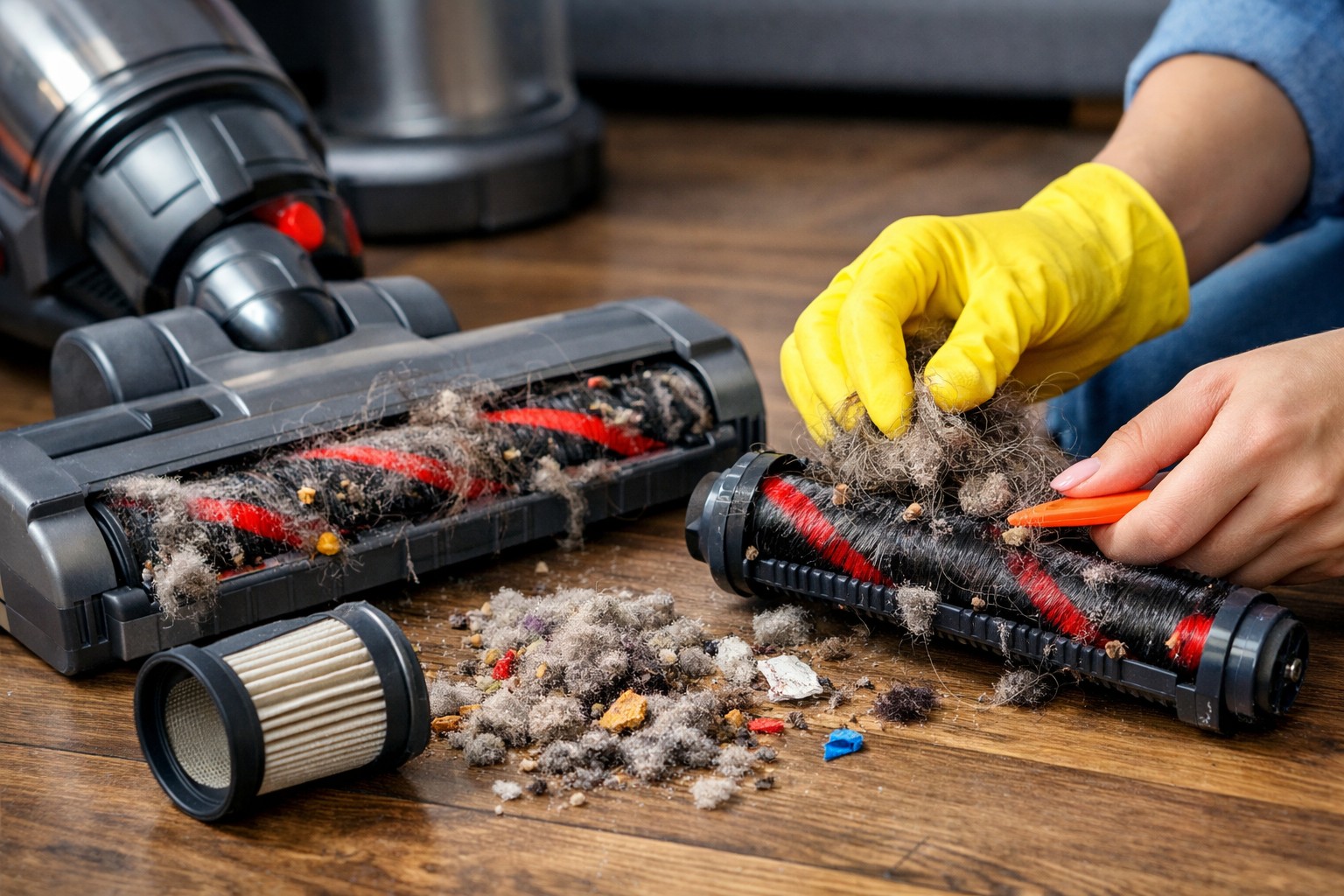
Cleanliness in the house directly depends on the condition of the appliances we use. Often owners of modern devices forget that vacuum cleaner maintenance – is more than just emptying the container when it’s full. Regular maintenance of the device’s internal components is critical to its longevity and the hygiene of your home.
Suction power and motor overheating
When filters and hoses become clogged with fine dust, the airflow within the system is disrupted. This forces the motor to work hard to create the necessary vacuum.
-
Reduced cleaning efficiency means you have to brush the same area several times.
-
Motor overheating due to inadequate cooling by the air flow will shorten the life of the vacuum cleaner several times over.
-
Regular cleaning allows the machine to operate normally without putting unnecessary strain on the electronics.
Air quality and allergens
A vacuum cleaner is designed to pick up dirt, but if not properly maintained, it can become a source of pollution. Fine dust particles passing through clogged filters are thrown back into the room.
-
HEPA filters trap the smallest allergens and pollen, but only as long as their pores are free.
-
Damp dust accumulated inside becomes an ideal breeding ground for bacteria and mold.
-
Characteristic unpleasant odor when the appliance is switched on, signals that organic debris decomposition processes have started inside the system.
Economy and durability
Taking care of your home appliances can help you avoid costly repairs. A vacuum cleaner clogged with debris consumes more electricity trying to compensate for the loss of power. Timely removal of hair and threads from turbo brush prevents the bearings and drive belts from failing.
A clean vacuum cleaner is quieter, uses fewer resources and ensures that the dust collected actually stays inside the unit and not on the furniture. Proper care of key components turns routine cleaning into a quick and efficient process.
About the Author