
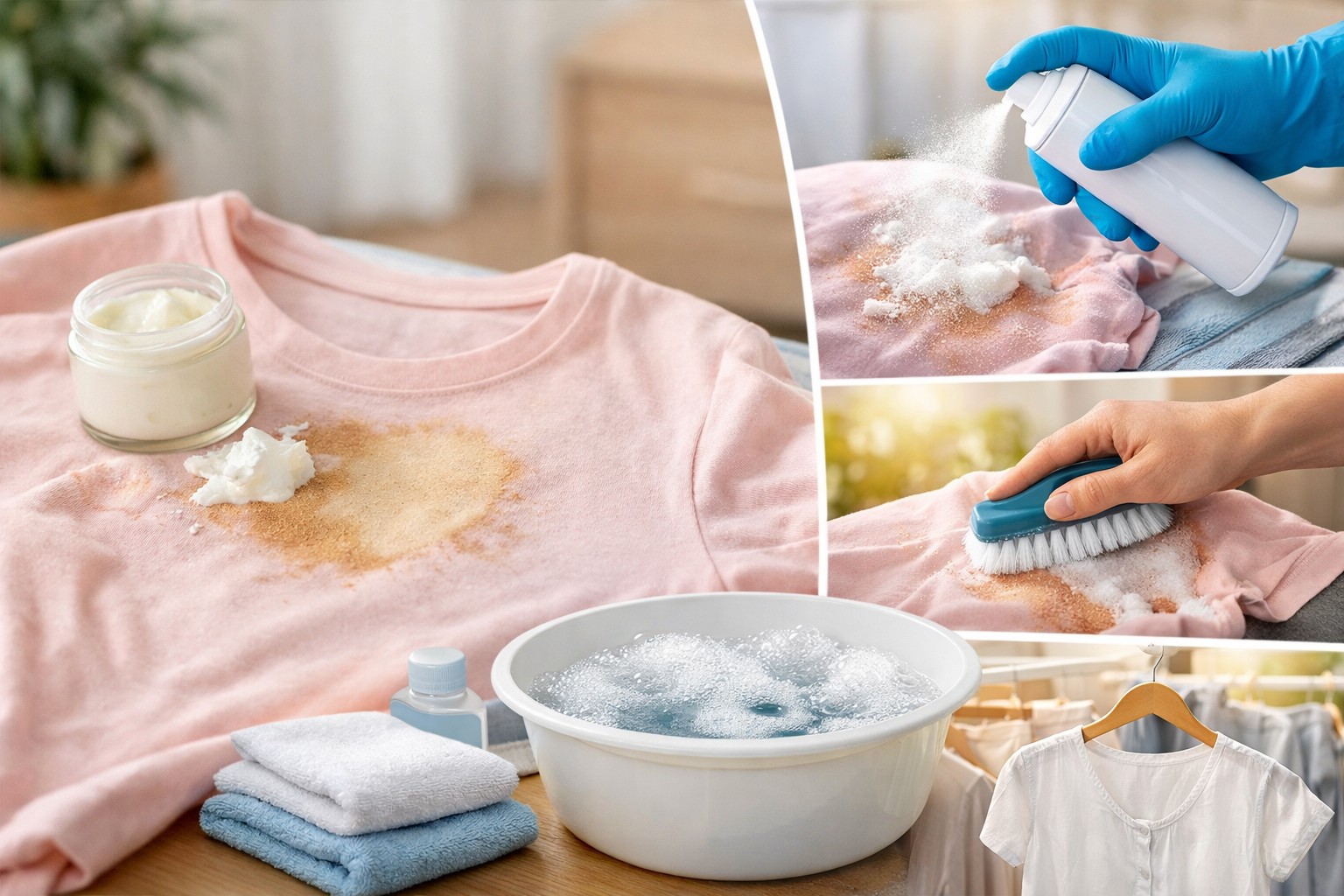
Greasy marks from cosmetics are one of the most insidious problems in closet care. Face cream, hand cream, or sunscreen lotion leave behind visible stainswhich penetrate deeply into the fabric fibers due to the oil and glycerin content. If not addressed immediately, the grease oxidizes, attracts dust and becomes a dark stain that is difficult to remove with normal washing.
First aid in case of a stain
The main rule in the fight against cosmetic stains is to act promptly. As soon as the cream has got on the fabric, it is important not to let it be absorbed.
-
Gently remove the cream residue with a dry cloth or spoon, taking care not to smear it on the surface.
-
Never rub the stain with a damp cloth, as this will only drive the stain deeper. lipids into the structure of the filaments.
-
Sprinkle an absorbent over the fresh trace: an excellent choice is cornstarch, talcum powder or baking soda. Leave the powder on for 15 minutes to draw out excess fat.
Effective removal methods for different fabrics
The choice of method depends on the type of material and the composition of the cream itself. Most modern products contain SPF filtersSPF filters[SPF filters]can cause yellowing when exposed to hard water, so the approach must be delicate.
-
Dishwashing detergent. This is the easiest and most effective method for cotton and synthetics. A quality gel breaks down the fatty base of the cream. Apply a drop to the stain, gently rub in and leave for 10 minutes before washing.
-
Laundry soap. A proven method for light-colored things. You need to wash the area in cool water, creating a thick foam.
-
Micellar water. Ideal for removing stains from jacket collars or delicate fabrics if the cream was foundation or contained pigments. Simply wipe the residue with a cotton pad soaked in the product.
-
Alcohol solution. Will help with heavy nourishing creams on dense fabrics such as denim.
Special features of working with stale marks
If the stain was not noticed immediately, ordinary cleaners may not cope. In this case, specialized stain removers with enzymes that effectively break down organic compounds. Before using any aggressive formulation, be sure to test the reaction of the dye on an inconspicuous area of the seam.
After local treatment, the whole thing should be washed. The optimal temperature setting is 40 degreesIf the water is too hot, it may “boil” the protein components of the cream, and cold water will not dissolve the remaining oils.
The right choice of cleaning agent and timely treatment can fully restore the appearance of the product without damaging the structure of the material.
About the Author