
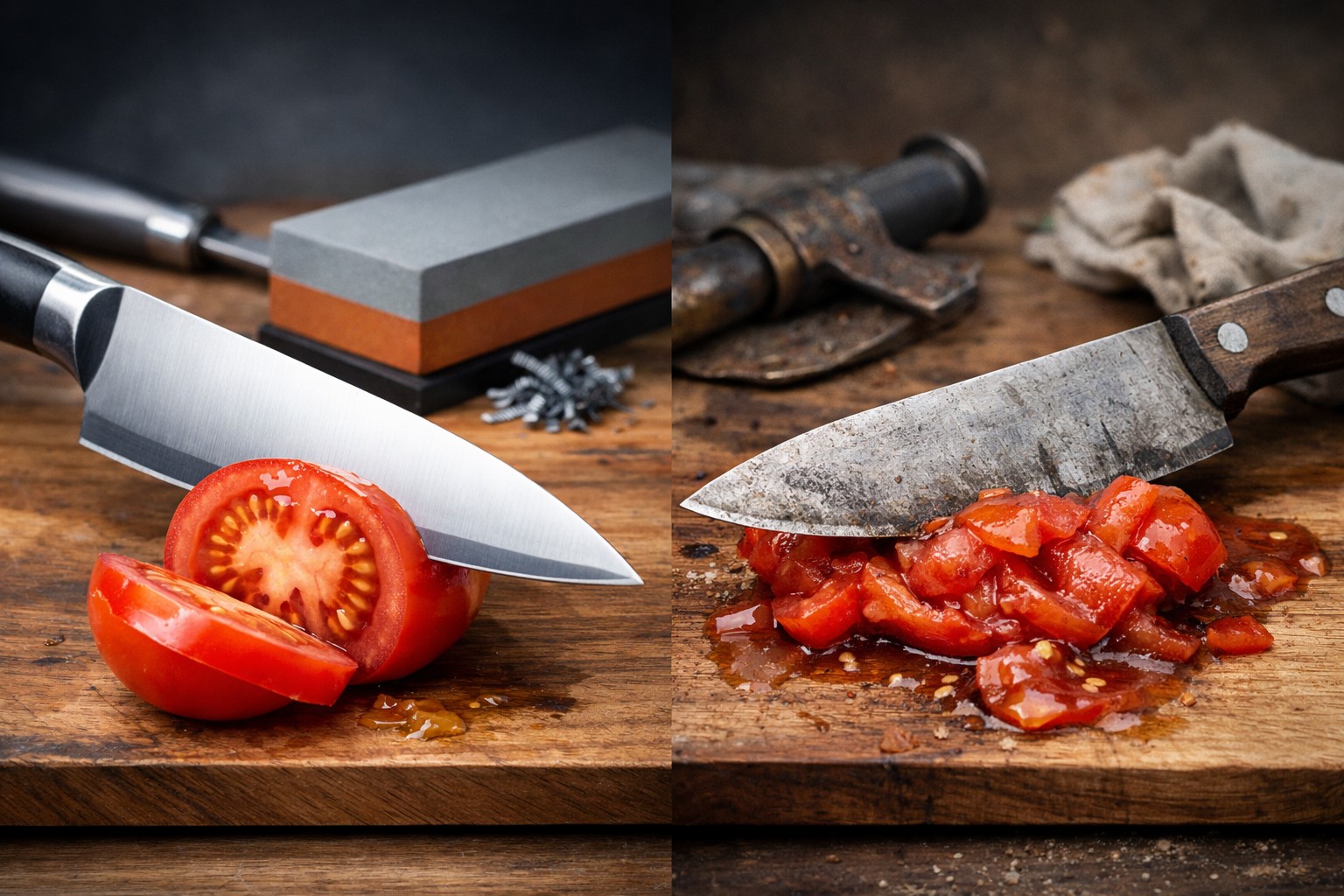
Many people believe that buying an expensive high-carbon steel tool will solve the problem forever blade sharpness. However, the reality is that even a professional chef’s knife becomes a useless piece of metal if basic physical processes and daily habits are not taken into account. The main reason for the loss of cutting properties is not the quality of the alloy, but the improper operation and storage.
The main enemies of perfect sharpening
Most users make critical mistakes at the product preparation stage. Understanding how external factors affect the microstructure of the metal will help to preserve cutting edge in working order for much longer.
-
Glass and stone boards. Using glass, marble or ceramic surfaces is the fastest way to kill a sharpener. These materials are harder than steel, so with each blow, the blade does not cut through the surface, but is literally crumpled and gouged out.
-
Washing in the dishwasher. It is a combination of harsh chemicals, high temperatures and vibration. Powerful alkaline agents cause corrosionand the water currents cause the knives to hit other utensils, destroying the thin edge.
-
Storage in a common drawer. When knives are mixed with forks and spoons, there is constant metal-to-metal contact. Each time the drawer is opened, micro-impacts occur, causing the blade to become jagged.
-
Slicing frozen food. Steel becomes brittle at low temperatures, and trying to cut through a block of ice creates lateral pressure that a regular kitchen knife is not designed to withstand.
-
Food residue and moisture. Acids found in lemons, tomatoes or onions provoke a oxidation. If you leave a dirty knife on the table, chemical processes will begin to break down the metal at the molecular level.
How to extend the life of a shiv
To keep your knife sharp, a culture of care is important. Switching to wooden or soft plastic boards significantly reduces the stress on the blade. Proper storage on magnetic tape or in a special wooden block prevents accidental damage.
It is also worth distinguishing between dressing and sharpening. The use of a mousse helps to smooth a bent edge without removing excess metal, allowing you to postpone major sharpening for several months. Regular cleaning by hand immediately after use and thoroughly wiping dry will ensure rust-free operation and maintain the integrity of the alloy.
Quality tool care turns routine cooking into an easy and safe process.
About the Author