
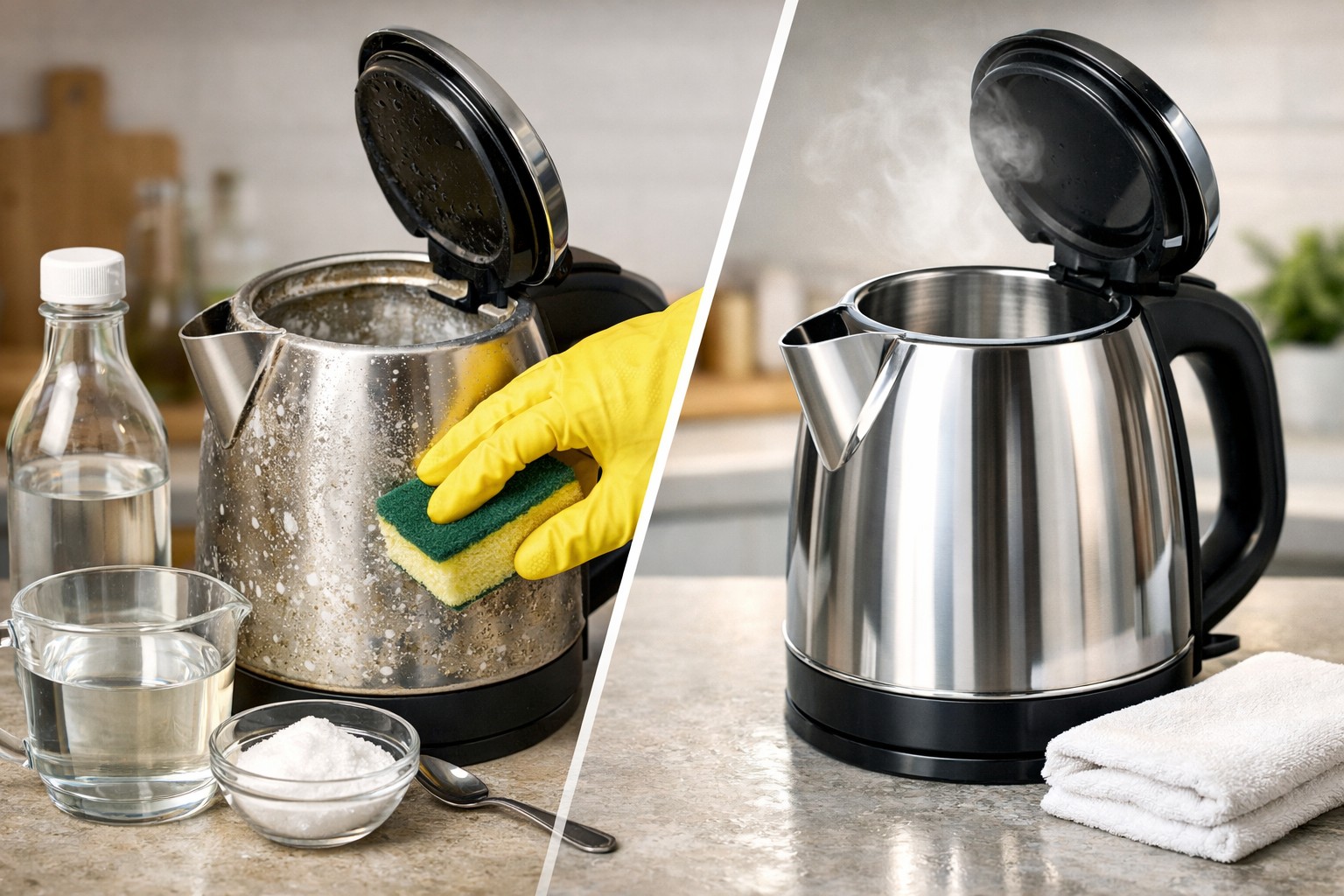
White scale on the walls and bottom of the kettle – it is not just an aesthetic problem, and salt depositswhich increase energy consumption and can spoil the taste of your favorite beverage. Using ordinary table vinegar is one of the most effective and affordable ways to restore the original appearance of your appliances without the use of harsh chemicals.
This method is ideal for glass, plastic and metal models, helping to dissolve quickly calcium deposits и magnesium salts.
Step-by-step cleaning algorithm
To perform the procedure you will need a standard 9% table vinegar. The cleaning process is as follows:
-
Fill the kettle about two-thirds full with water so that the liquid completely covers the scale layer.
-
Add vinegar to the water at the rate of 100 ml for each liter of water.
-
Turn on the appliance and bring the solution to a boil.
-
Leave the kettle with the hot solution on 30-60 minutesto allow the acetic acid to react with the solid deposits.
-
Drain the liquid and rinse the interior thoroughly with running water.
-
Fill with clean water, boil it and drain it again to completely eliminate it characteristic odor.
Precautions and tips
Working with acetic acid requires following certain rules for safety and to preserve the longevity of the technique:
-
During boiling, it is advisable to open a window or turn on a hood, as the vapors have a pungent aroma.
-
If the scale layer is too thick, the procedure can be repeated by increasing the concentration of vinegar or the exposure time.
-
It is not recommended to use vinegar essence in its pure form, as it may damage the rubber seals or the temperature sensors.
-
Regular preventive maintenance once a month will prevent the formation of a thick layer of stone and prolong the life of the heating element.
A clean kettle is much quieter and heats water much faster due to the absence of a thermally insulating layer of lime.
Regular descaling helps to preserve the natural flavor of tea and coffee.
About the Author