
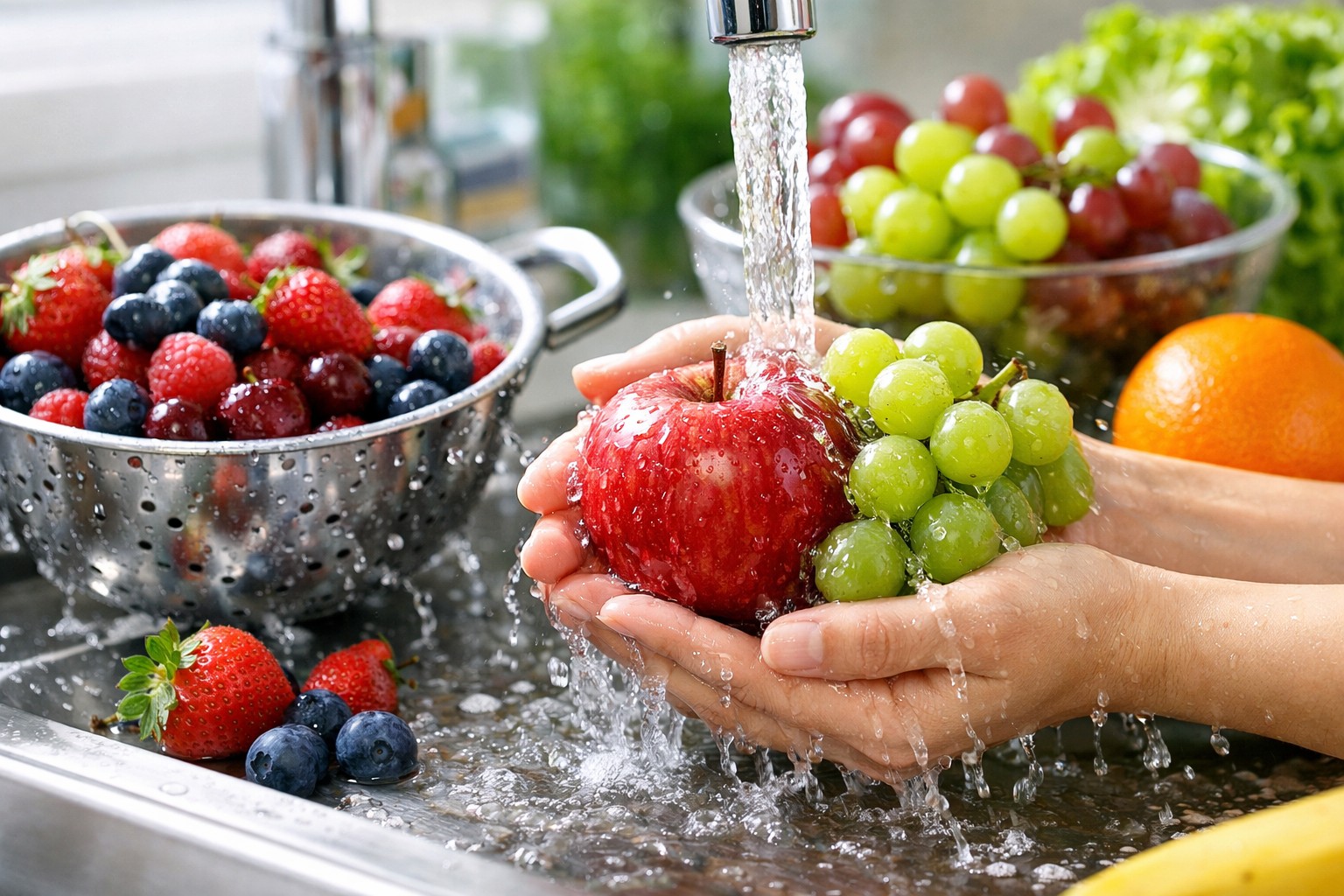
Clean fruit is not only a matter of aesthetics, but also a basic rule of thumb food safety. Each fruit travels a long way from the garden to the counter, coming into contact with soil, shipping containers and the hands of dozens of people. In addition, crop protection often involves pesticides and specialty wax coatingswhich cannot be removed by rinsing.
Why rinsing with water is not enough
Many people are used to washing food “just for the fun of it” by running it under a cold stream for a couple of seconds. However, the rinds may still have bacteria (such as salmonella or E. coli), fertilizer residues and sticky preservative. For cleaning to be effective, it is important to consider the structure of each individual fruit.
General preparation rules
Before processing the fruit, you should wash your own hands thoroughly with soap and water. This will prevent the transfer of germs from the skin to the clean surface of the produce.
-
Use only running drinking water.
-
Do not use regular laundry soap or dishwashing detergent, as their ingredients may be absorbed through the porous peel.
-
If the fruit has a hard surface, use a special soft scouring pad vegetable brush.
-
Be sure to wash even those fruits whose peels are not eaten (bananas, oranges, tangerines, melons), because when cut with a knife, dirt gets inside the pulp.
Peculiarities of processing different types of fruits
Each category of fruit requires a different approach to achieve maximum purity.
-
Apples and pears. Apples and pears have thick skins that often accumulate waxy deposits. They are best washed in warm water, gently scrubbing the surface with a brush or dense cloth.
-
Grapes and berries. These products are very delicate and spoil quickly from excess moisture. It is recommended to wash them immediately before use. It is better to put the fruit in a colander and hold it under a shower, stirring gently, and then dry it on a paper towel.
-
Citrus fruits. The rinds of lemons and oranges are often treated with paraffin. To dissolve it, you can run hot water over the fruit and then rinse thoroughly with cold water.
-
Peaches and apricots. They retain more dust because of their hairy surface. They should be washed under moderate water pressure, paying attention to the stalk area.
Using natural solutions
If you want to be sure that there are no chemicals on the surface, you can use simple home remedies. Solution baking soda (one teaspoon per liter of water) effectively helps to break down the residues of some pesticides. It is enough to soak the fruit in such a container for 10-15 minutes, and then rinse them thoroughly under the tap. Another option is a weak solution of vinegarwhich does an excellent job of killing bacteria on the smooth skin.
Careful food hygiene is the easiest and most affordable way to prevent infections and preserve the health benefits of fresh crops.
About the Author