
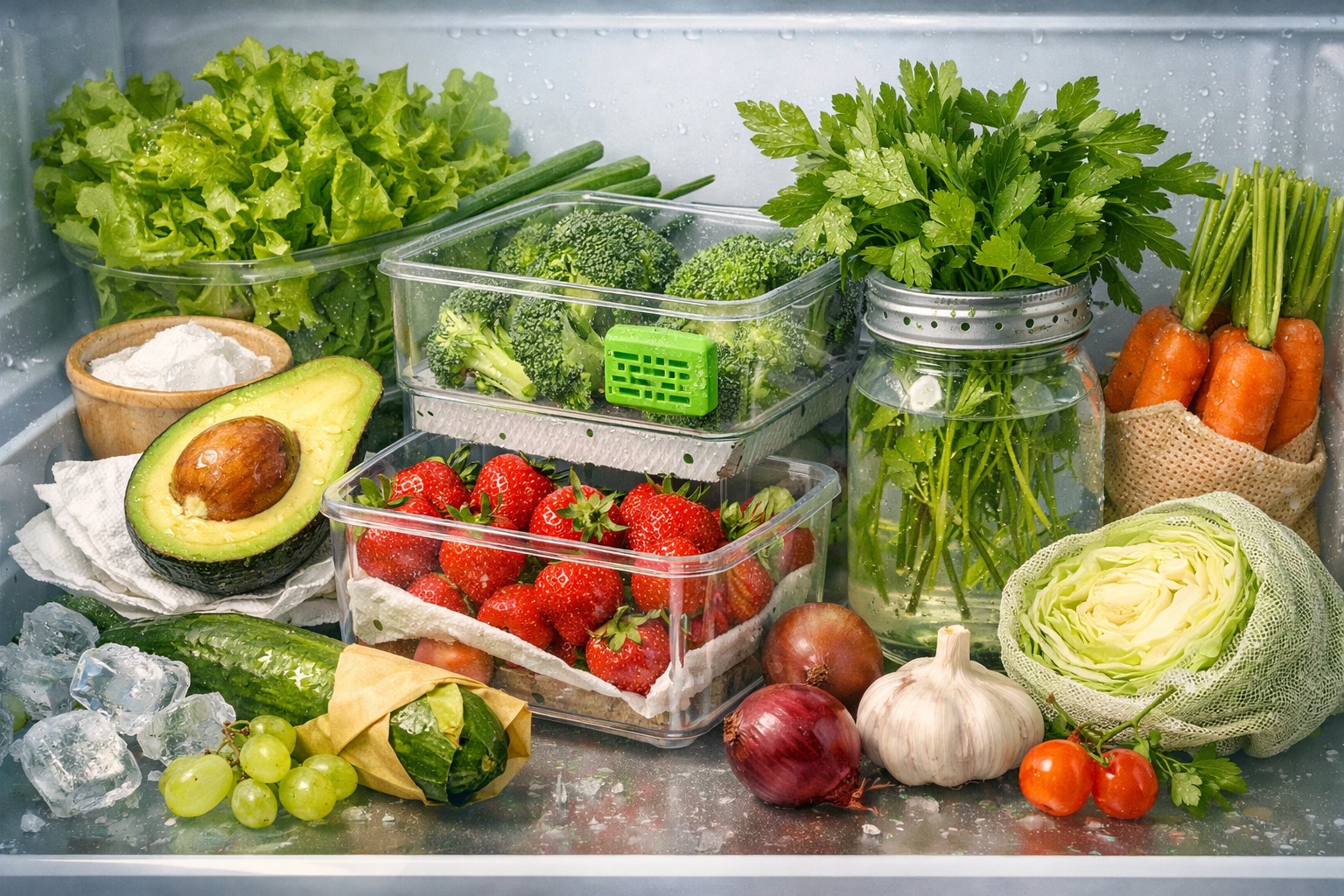
Correct vegetable storage in the refrigerator is not just an order on the shelves, but a way to preserve vitamins and save your budget. Many people make the mistake of putting all their purchases in one compartment, which leads to rapid spoilage and loss of flavor. The basic principle of success is control humidity and separation of crops that are not “friendly” with each other.
The intricacies of commodity neighborhoods
Some fruits exude ethylene – gas, which accelerates the ripening and subsequent rotting of your shelf neighbors. To keep food crisp for longer, you should follow some simple rules:
-
Apples and tomatoes apples and tomatoes are best kept separate from salad greens and cucumbers, as they actively produce gas.
-
Greens keeps fresh longer if placed in a glass of water or wrapped in a damp paper towel.
-
Root vegetablesRoot crops such as carrots and beets prefer high humidity and are therefore best stored in perforated bags.
-
Cucumbers and zucchini are extremely sensitive to low temperatures and should be placed in the warmest area of the refrigerator, away from the back wall.
Temperature conditions and packaging
Each shelf in a refrigerator has its own micro-environment. The bottom drawers are usually designed to maintain an optimal level of condensate. If vegetables are stored in polyethylene without access to air, they begin to “suffocate”, which provokes the growth of mold.
-
Use reusable nets or paper bags for air circulation.
-
Do not wash food before storing it, as excess moisture on the surface is the main enemy of longevity.
-
Periodically go through the contents of drawers so that one spoiled fruit does not contaminate the rest.
Optimizing space and following simple temperature guidelines can significantly reduce food waste. Careful attention to the microclimate inside the refrigerator ensures the availability of healthy and quality ingredients for your meals at all times. A competent approach to the organization of storage turns an ordinary household process into an effective system for preserving the nutritional properties of food.
About the Author