
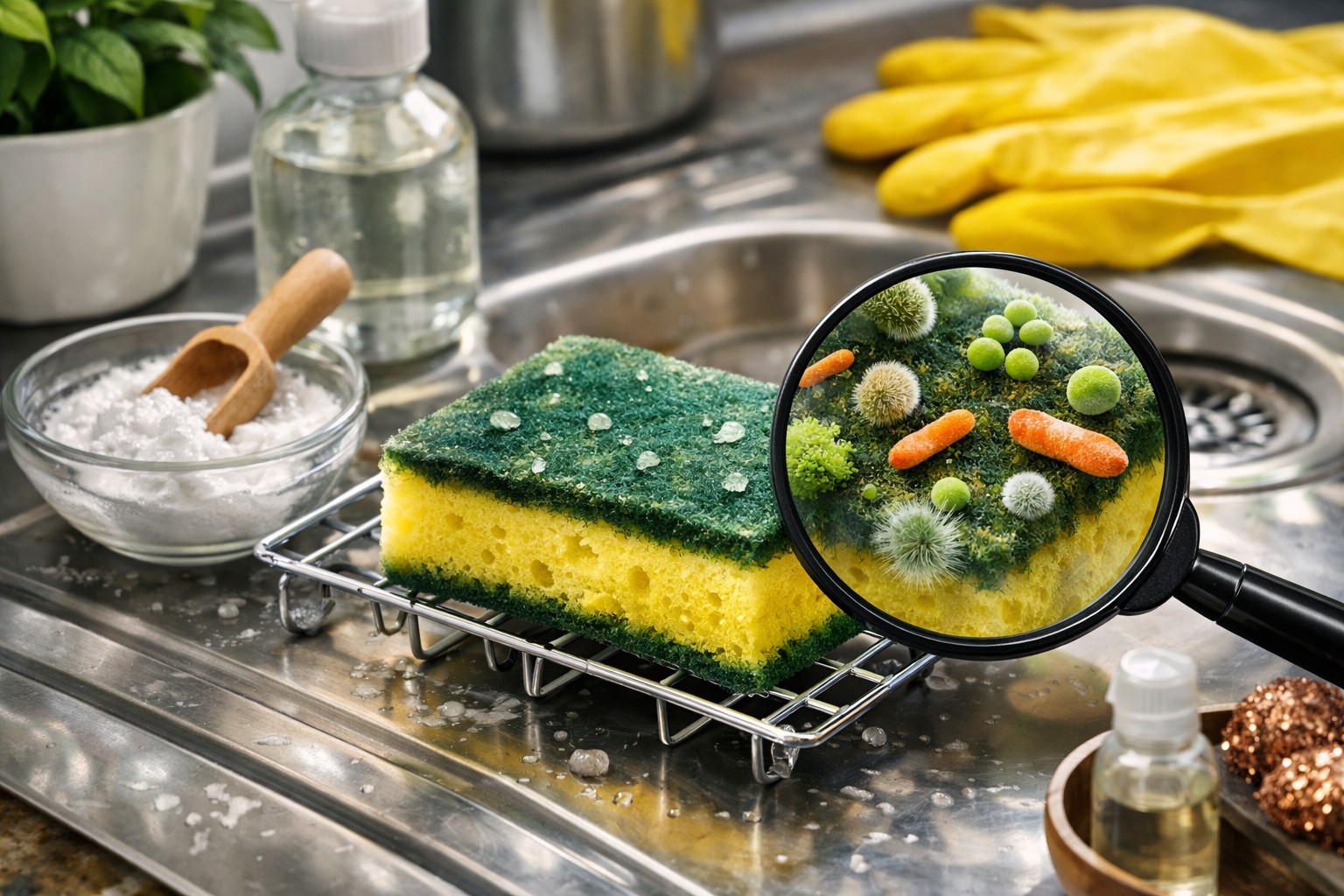
Ordinary dish sponge – is the most popular, but also the most unhygienic tool in the kitchen. Due to constant contact with water and food residues, it quickly becomes a breeding ground for bacteria and loses its structure. However, with proper care, it can be significantly prolonged service lifewhile maintaining cleanliness and health safety.
Proper cleaning and disinfection
To kitchen utensils It is important not just to rinse it with water, but to deep clean it regularly. The porous structure of the material retains grease particles that cause unpleasant odors.
-
After each use, rinse the sponge thoroughly with an antibacterial agent.
-
Soak it in a solution every few days vinegar or a mild salt solution for 10-15 minutes. This helps to neutralize germs and remove stubborn plaque.
-
Usage microwave oven for sterilization is an effective method, but only for completely wet items without metal threads. One minute on high power is sufficient.
Quality drying as a guarantee of durability
The main enemy of any porous material is constant humidity. This is what destroys the fibers and promotes the growth of mold.
-
Never leave a sponge at the bottom of the sink or in a soapy puddle.
-
Use special mesh standswhich allow air to flow in from all sides.
-
Thoroughly wring the product after use, but do so carefully so as not to deform the structure of the foam.
Division of responsibility
The service life is directly related to the intensity of the workload. It is optimal to use different tools for different tasks.
-
Allocate a separate sponge for washing fruits and vegetables, as it will come into less contact with grease.
-
For heavily soiled pans and baking trays use metal scrapers or brushes to avoid damaging the soft surface of the base sponge.
-
The alternation of the two sponges allows one of them to dry completely, which significantly slows down the wear of the material.
Timely care and hygiene allow you to use the product to its maximum potential without harming the comfort of your home.
About the Author