
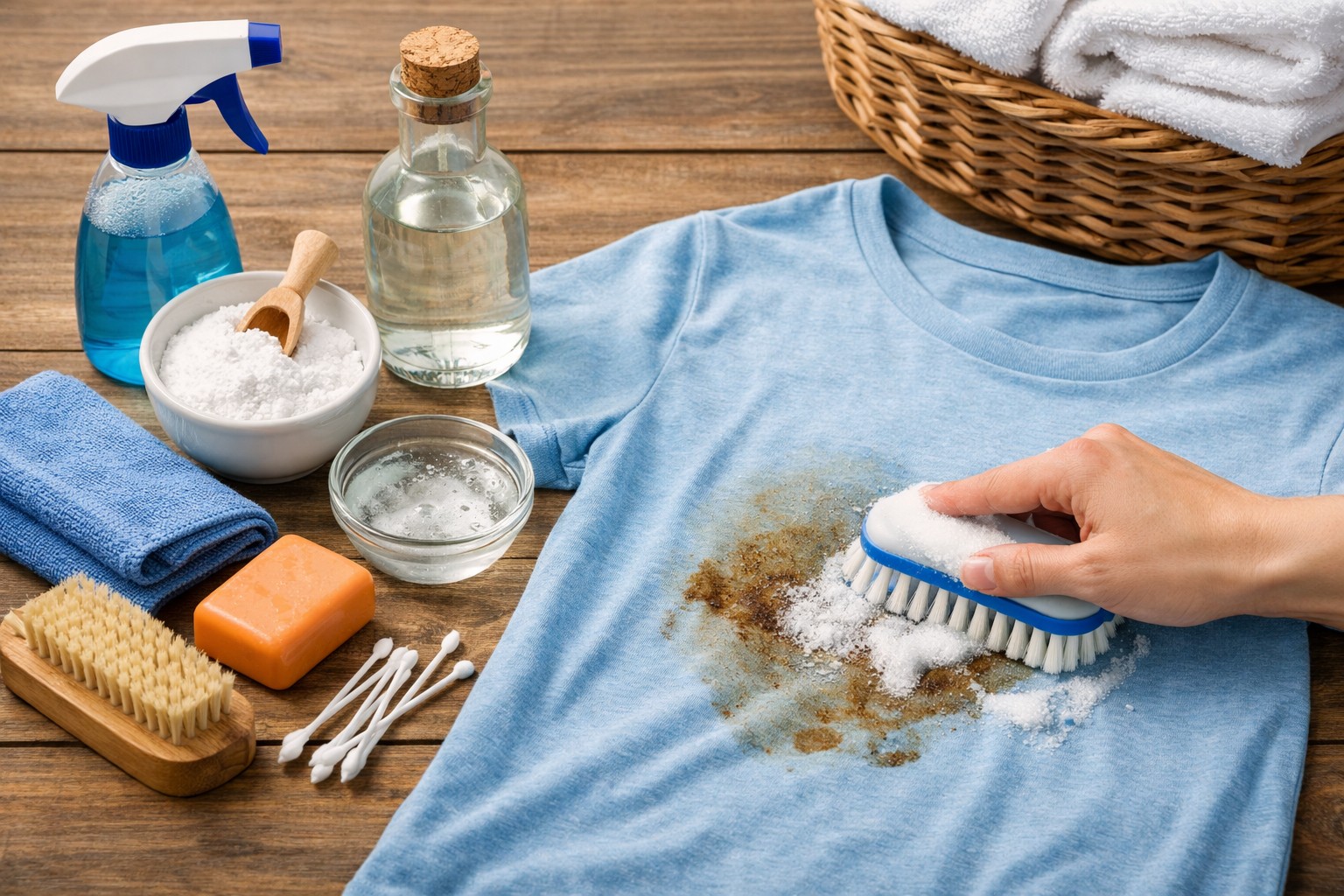
The appearance of an oily trace on your favorite thing often seems like a disaster, but most of these contaminants can be removed without a trace at home. The main rule is to act as quickly as possible, while grease has not had time to penetrate deeply into the structure of tissue fibers and polymerize.
First steps when a stain is detected
As soon as a greasy substance has got on the fabric, it is necessary to immediately blot it with a dry cloth. It is important not to rub the contamination, so as not to increase the area affected. After that, you can proceed to use absorbentsthat will absorb excess oil:
-
Baking soda or fine salt are excellent for fresh marks.
-
Talcum powder or baby powder is suitable for delicate materials like silk or wool.
-
Starch (potato or corn starch) gently extracts grease without damaging the structure of the threads.
Sprinkle a thick layer of powder over the soiled area, leave it for 15-20 minutes and then gently brush it off.
Effective home remedies
If dry cleaning did not help completely, compositions capable of breaking down lipids come to the rescue. The choice of method depends on the type of fabric and the age of the stain.
-
Dishwashing gel. This is the most popular and affordable product. It contains powerful surfactantsspecially formulated to fight grease. Apply a drop of gel to the stain, gently rub in and leave for half an hour before washing.
-
Laundry soap. The classic method, proven over time. The alkalis contained in it effectively dissolve oil stains. For better results, the stain is soaped and leave the thing in a bag for several hours to prevent drying.
-
Naphtha. In combination with water, it helps to remove stains from synthetic fabrics. The solution is prepared in a ratio of one to two and applied with a cotton pad from the edges to the center.
Working with stubborn stains
Older stains require more intensive treatment as the grease oxidizes over time. In such cases, heat treatment is often used. A sheet of white paper or a thin cotton cloth is placed on the stain and then the spot is ironed with a warm iron. The grease melts and transfers to the substrate.
For light-colored things made of dense cotton, you can use a mixture of baking soda and hydrogen peroxide. This mixture not only removes grease, but also has a slight bleaching effect, returning the fabric to its original appearance. When working with colored or thin fabrics, it is worth pre-testing the effect of any product on an inconspicuous area of the seam.
The right choice of cleaning composition and timely treatment can keep clothes in perfect condition even after serious incidents in the kitchen or during dinner. The use of simple household products saves the need to go to an expensive dry cleaner.
Many modern fabrics require delicate handling, so maintaining temperature control when washing is a key success factor.
About the Author