
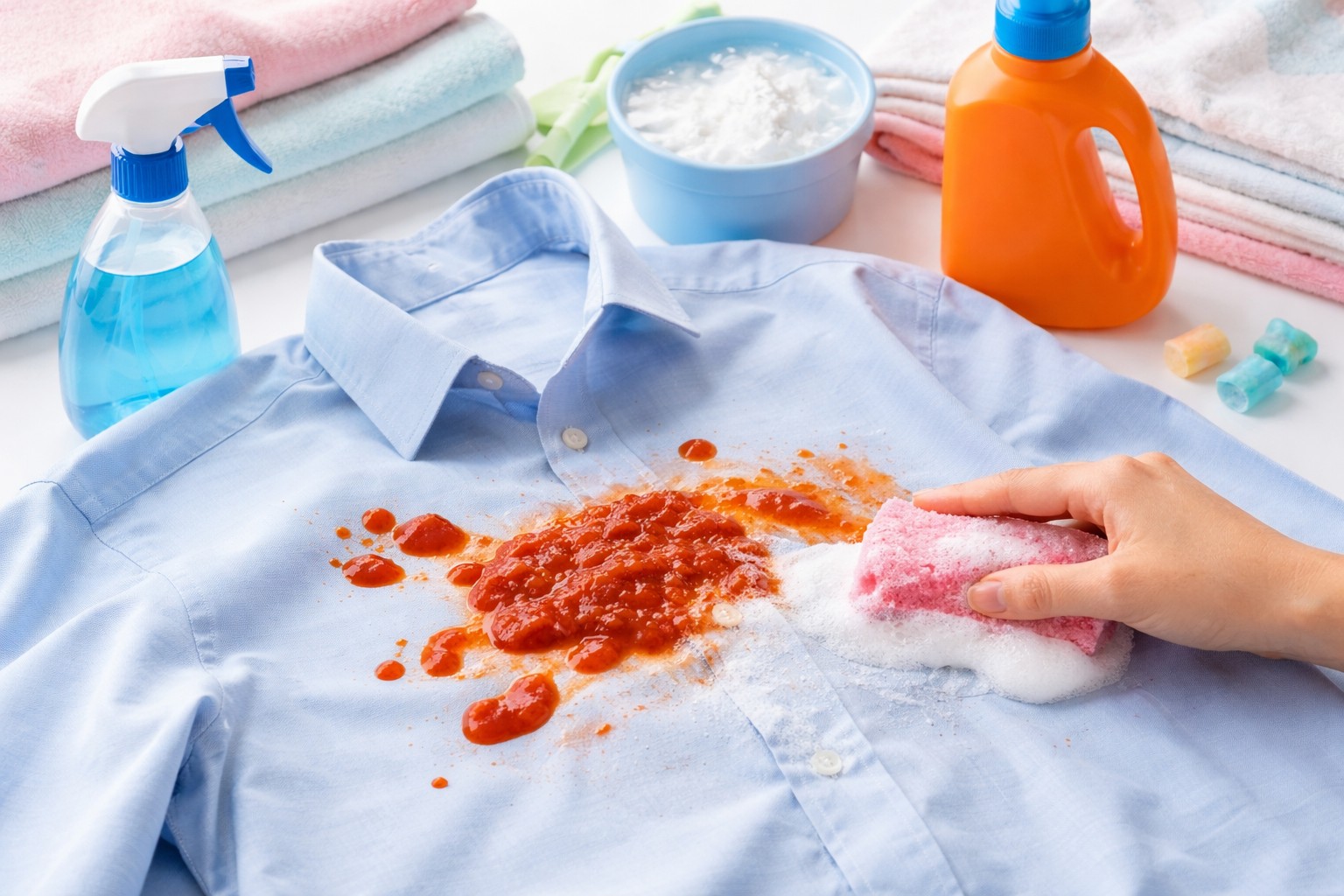
Spilled sauce is not a death sentence for your favorite item if you act quickly and use the right techniques. The main secret of success is to prevent the pigment from penetrating deep into the fibers of the fabric. The fresher pollutionthe higher the chances of returning your clothes to their original appearance without going to the dry cleaner.
First steps when a stain appears
Before starting a full wash, it is necessary to carry out pre-treatment. Mistakes at this stage can cause the stain to set permanently.
-
Carefully remove any remaining thick sauce with a napkin or the blunt side of a knife, moving from the edges to the center.
-
Never rub the stain, otherwise you will rub the grease and dyes even deeper.
-
Wash the trail cold water from the wrong side – this will wash some of the particles outward, and not into the material.
-
Blot the area with a paper towel to remove excess moisture.
Effective products for different types of sauces
Different seasonings require an individual approach due to their chemical composition. Acid, grease and natural dyes react differently to cleaners.
-
Fatty sauces (mayonnaise, pesto, creamy dips) respond best to regular dish soap. It effectively breaks down fats at the molecular level.
-
Tomato sauces (ketchup, adjika) contain lycopene, which is afraid of sunlight and hydrogen peroxide. After rinsing with cold water, apply a paste of baking soda and water to the stain.
-
Soy sauce It is easily removed with ammonia or long-term soaking in warm milk.
-
Mustard and turmeric are considered the most persistent. Treatment with wine vinegar or lemon juice before the main wash will help here.
Safe Cleaning Rules
In order not to spoil the structure of the fabric, always consider the type of material. Delicate items require care, while cotton can withstand more abuse.
-
Always check your selection stain remover on an inconspicuous area of the seam.
-
Avoid using hot water on protein and starch stains as they will “cook” and remain permanently on the fabric.
-
For white items, it is acceptable to use oxygen bleaches, but for colored items it is better to choose products marked Color.
-
When working with silk or wool, use only specialized gels and avoid strong mechanical friction.
The correct choice of temperature conditions and timely processing allow you to completely restore the appearance of the product even after contact with the most resistant dyes. A competent approach to caring for your wardrobe at home saves time and eliminates unnecessary expenses on buying new things. A properly selected product will solve the problem in a few minutes.
About the Author