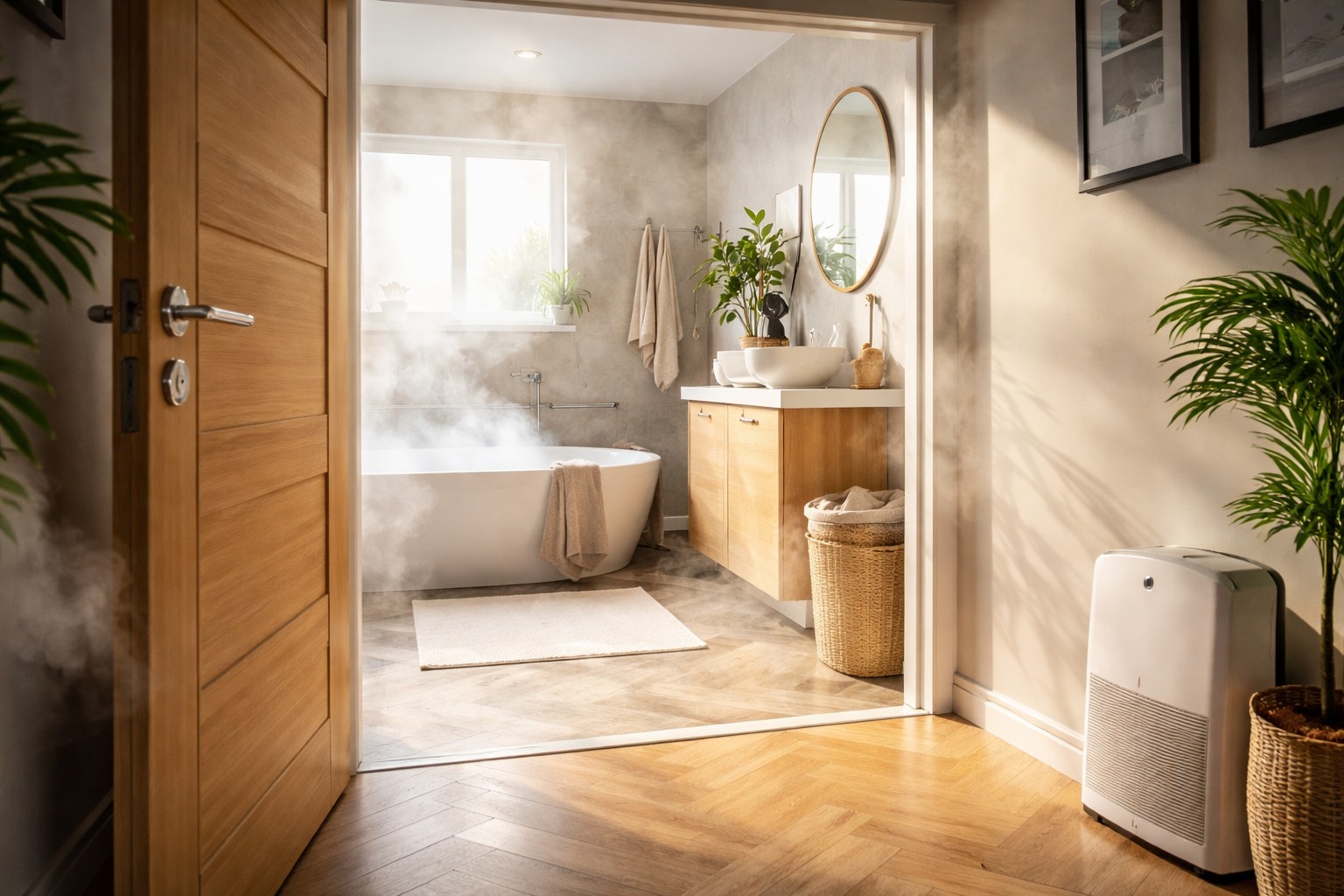
The bathroom is the wettest place in the house, where the humidity level after taking a hot shower can reach critical levels. Ignoring a simple rule ventilation leads to a chain of negative consequences that affect both the condition of the premises and the well-being of the residents.
The main reasons to improve air circulation
The main problem is condensatewhich settles on all surfaces: mirrors, tiles, ceilings and inside furniture. If moisture does not evaporate in time, it penetrates into microcracks in the grout and under the finishing materials.
-
Prevention of fungus and mold. A dark, damp environment is an ideal incubator for black mold spores. It not only spoils the appearance of the seams, but also releases toxic substances into the air.
-
Preservation of finishing. Constant dampness causes wood to swell, paint to peel, and metal elements to become corroded.
-
Fighting unpleasant odors. Stagnant, humid air quickly acquires a characteristic smell of dampness, which can spread throughout the apartment.
-
Household health. Inhaling air with a high concentration of fungal spores provokes allergic reactions, coughing and more serious respiratory tract diseases.
How to properly remove excess moisture
Simply opening the door a crack is often not enough, especially if the apartment is in poor condition. natural ventilation. To effectively dehumidify a space, there are a few simple habits to follow.
-
Leave the door fully open for at least 15 to 20 minutes after each use of water.
-
Check cleanliness regularly ventilation grillesince dust blocks the air flow.
-
Use a power exhaust (electric fan) if equipped, and do not turn it off immediately after getting out of the shower.
-
Wipe wet surfaces and sides of the bathtub dry to reduce the area of evaporation.
High-quality air exchange in the bathroom is a prerequisite for maintaining hygiene and durability of the interior. Regular ventilation helps to avoid expensive repairs and visits to the doctor.
The correct microclimate in the bathroom directly affects the overall ecology of a modern home.
About the Author