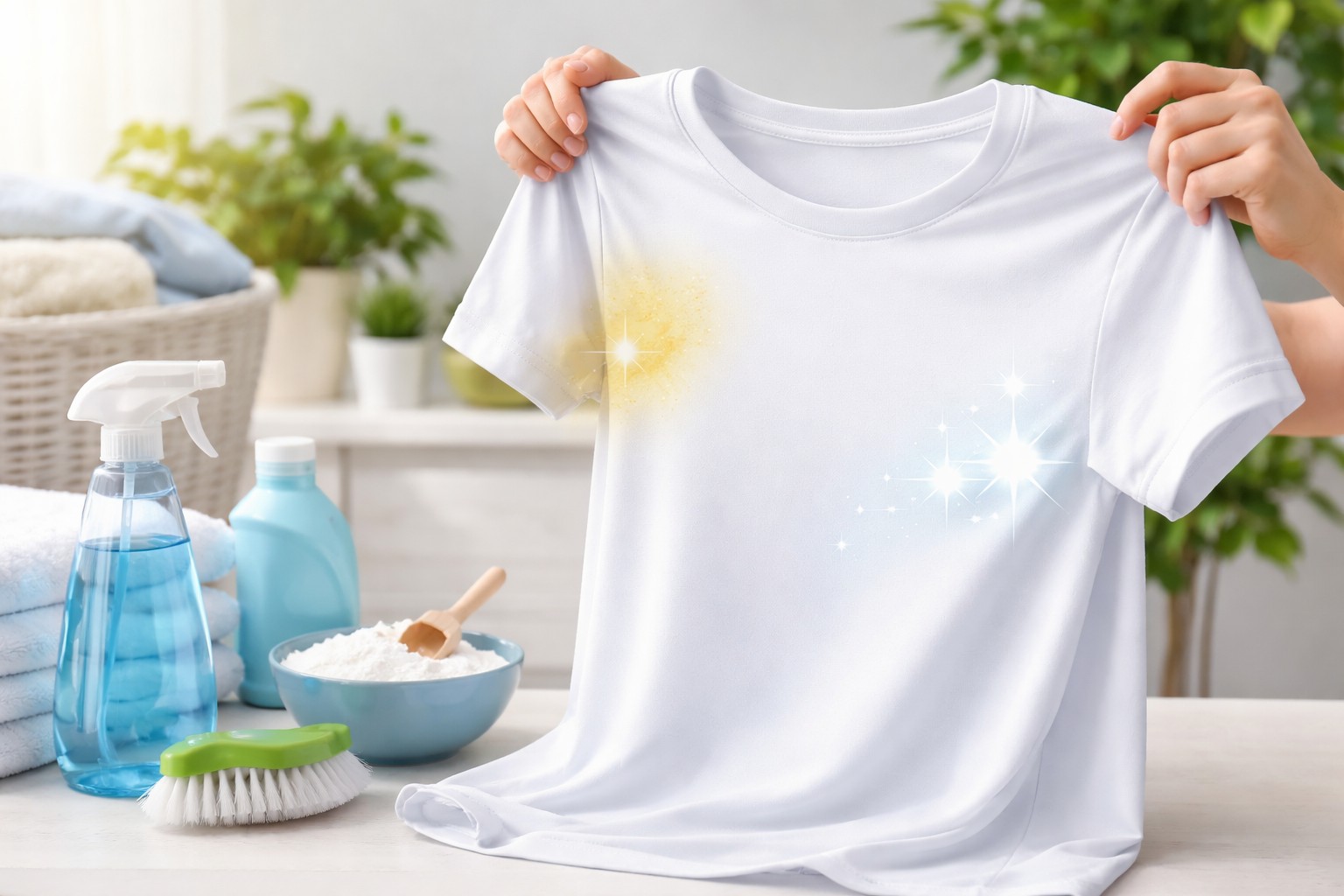
Yellow marks on white shirts and an unpleasant residue on dark clothes are a problem that everyone faces. The combination of skin secretions and antiperspirant components creates persistent stains that do not respond to regular washing. To save your favorite clothes, it is important to treat the structure of the stain with the right components, taking into account the type of fabric.
Proven Home Remedies
Available compounds that work no worse than professional chemicals are suitable for removing fresh and old marks. The main task is to destroy the protein bond between tissue fibers and organic residues.
-
Baking soda effectively copes with odor and slight yellowness. It is enough to mix it with a small amount of water to form a paste, apply it to the contaminated area and leave for an hour.
-
Hydrogen peroxide Ideal for white cotton items. It gently bleaches the fibers, returning them to their original brightness.
-
Laundry soap with a high content of fatty acids remains a classic in the fight against organic pollution. It is most effective when pre-soaked in warm water.
-
Citric acid or natural lemon juice help dissolve salt deposits that make the tissue stiff in the armpits.
-
Aspirincrushed and dissolved in water, contains salicylic acid, which penetrates deeply into the structure of the material and removes even stubborn stains.
Features of working with different fabrics
The choice of product directly depends on what the item is made of. Delicate materials require a careful approach, as aggressive compounds can damage the structure of the threads or change color.
For silk and wool It is strictly not recommended to use alkaline solutions or boiling. Here it is better to give preference to a weak solution of vinegar or specialized gels. Synthetics does not tolerate high temperatures and exposure to pure alcohol, so stains on it should be treated with mild detergents immediately after they appear.
Natural cotton and linen are considered the most stable. They can be treated with a mixture of soda and salt, and in some cases the use of oxygen-containing bleaches is acceptable.
Rules for effective cleaning
In order not to completely ruin the item, you need to follow a few simple rules. Never use hot water to soak items with sweat stains, as the high temperature “cooks” the protein, making the stain virtually impossible to remove. The optimal temperature is 30–40 degrees.
Before applying any compound to the front side, be sure to test it on an inconspicuous area or inside seam. This will help ensure that the dye is stable and the fabric does not deform under the influence of active substances.
Proper care and timely processing can significantly extend the life of your wardrobe. Properly selected components carefully clean the fibers and return the clothes to a neat appearance.
About the Author