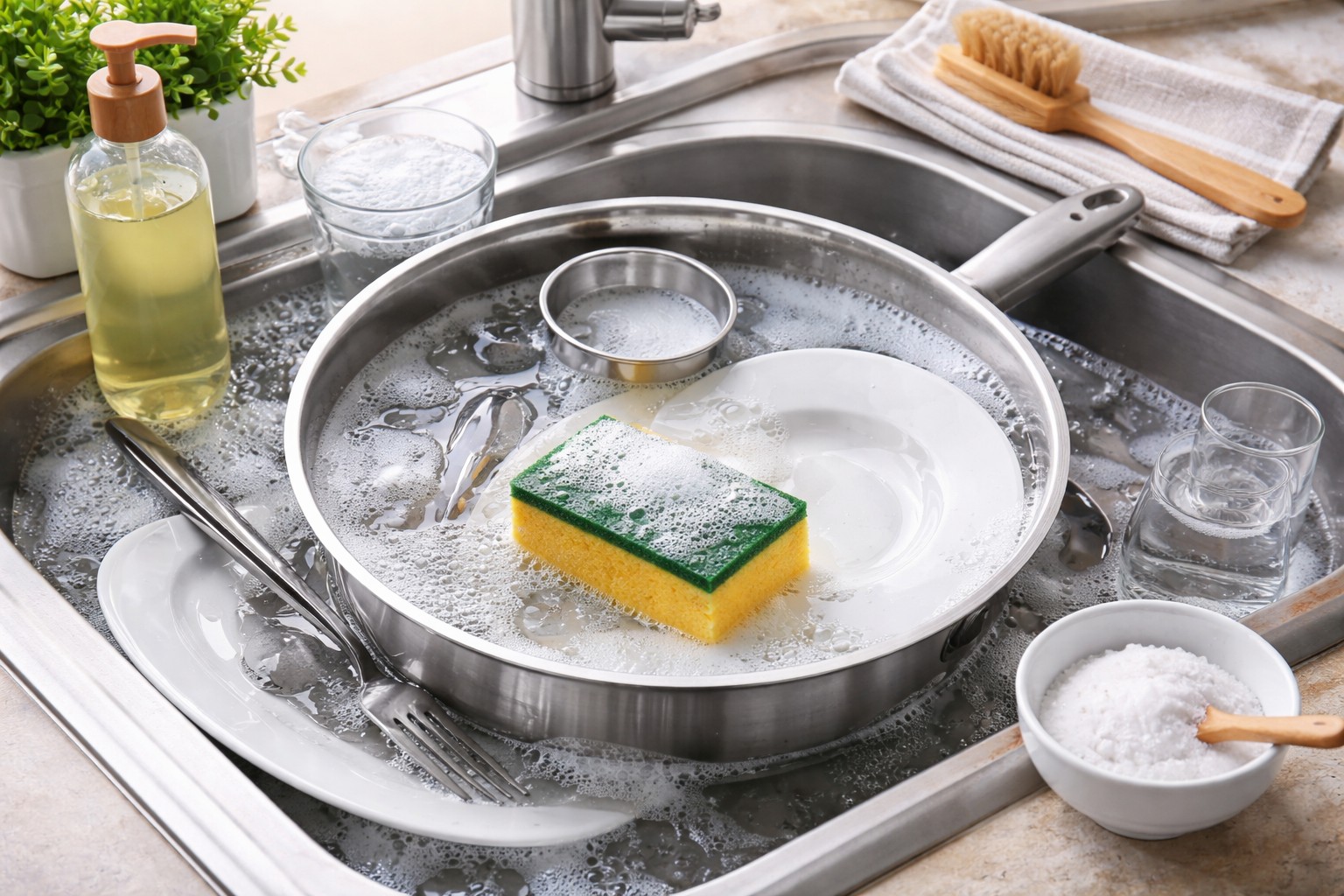
Many housewives are accustomed to starting aggressive cleaning of dishes immediately after dinner, using hard brushes and abrasives. However, experienced cooks know what is right soaking the pan can not only make life easier, but also significantly extend the life of kitchen utensils. This simple process helps you tackle the toughest stains without any extra effort.
Gentle removal of burnt food
The main reason to leave a pan in water is to soften it. burnt fat and leftover food. When water penetrates the structure of the contamination, the connection between the deposit and the surface weakens. This allows you to clean the bottom with a soft sponge without scratching protective layer metal
Preservation of non-stick properties
Modern frying pans often have teflon or ceramic coating, which is extremely sensitive to mechanical stress. Using metal scrapers causes microcracks to appear, causing food to stick even more. Preliminary exposure to moisture avoids friction, maintaining the smoothness and integrity of the non-stick layer for many years.
Saving time and chemicals
Soaking works effectively against old carbon deposits even without the use of harsh chemicals. Hot water combined with a drop of regular detergent or baking soda will dissolve most stains within a few hours. .
-
Warm water is more effective than cold water lipid deposits.
-
Adding a small amount of salt helps to quickly break down the structure of the burnt protein.
-
For cast iron products, the contact time with water should be minimal so as not to provoke the appearance of corrosion.
This approach to caring for kitchen equipment turns tedious work into a quick and easy process. A clean surface without damage guarantees high-quality cooking and the absence of foreign odors. Proper care of things always begins with an understanding of simple physical processes.
About the Author