The main mistake that almost everyone makes when they see a fresh stain on their trousers or jacket is to try wipe immediately contamination with a damp cloth or water. This action only drives soil particles deeper into the fabric fibers and increases the affected area. The secret to successfully combating street dirt lies in patience and the correct sequence of actions that will preserve the structure of the material.
Why you shouldn’t touch wet dirt
Street dirt is a complex mixture of earth, clay, oils and reagents. As long as the stain is wet, it acts as a dye. If you start rubbing it, you actually “etch” the pigment into the clothing.
-
Give it dirt dry completely. This is the golden rule that will save your item.
-
Do not use hot water in the first stage, as high temperatures can fix the protein components of the soil.
-
Avoid aggressive rubbing to avoid damaging the pile or membrane when it comes to outerwear.
Mechanical cleaning
Once the dirt has turned into a dry crust, you can begin the first stage of cleaning. Your task is to remove as much soil as possible without getting the fabric wet.
-
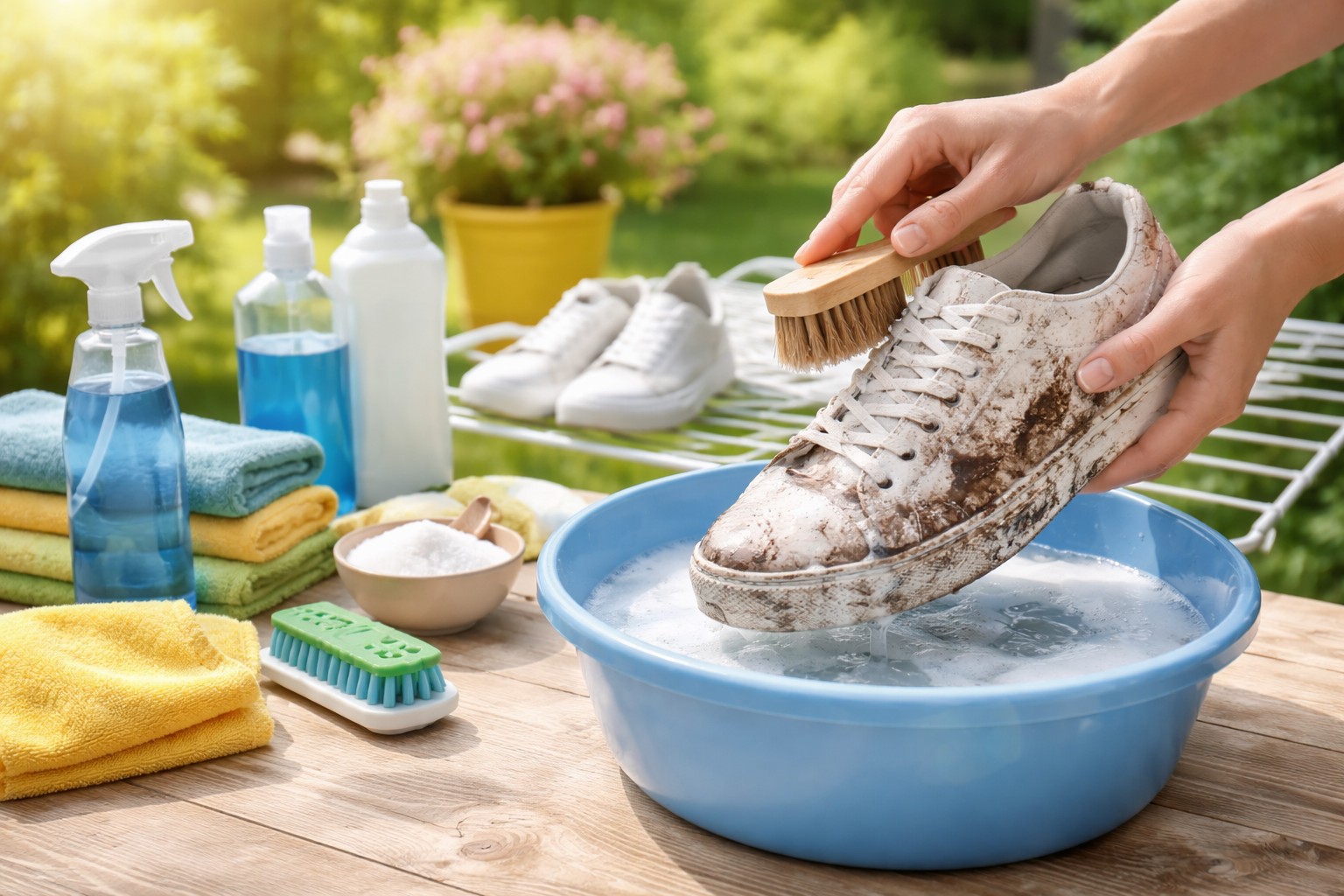
Take the brush from hard bristles or the back of a dish sponge.
-
Use gentle movements to remove any dried dirt. Often at this stage up to 80% of the contamination is removed.
-
If the fabric is delicate, use a soft toothbrush to avoid leaving any snags.
Soaking and home remedies
The remaining trace requires chemical action. You don’t have to immediately run for expensive stain removers; simple ingredients often help.
-
Laundry soap. Wet the area with warm water and lather it generously. Leave the item for 15–20 minutes. An alkaline environment is excellent at breaking down organic matter.
-
Vinegar solution. Mix table vinegar with water in a 1:2 ratio. This product works especially well on denim and helps preserve the color.
-
Baking soda and hydrogen peroxide. For light-colored items, you can make a paste, apply it to the stain and wait 10 minutes, but be sure to test the durability of the fabric on an inconspicuous area.
Final wash
After pre-treatment, the item must be washed in a machine or by hand. Use the appropriate setting for the fabric type. For better results, you can add a wash enhancer or oxygen bleach to the powder. It is important not to dry clothes on a radiator or in direct sunlight if the stain is not completely removed, as heat can reveal the remaining pigment permanently.
Proper care and lack of haste allow you to remove even the most complex stains from black soil or clay. Maintaining temperature conditions and avoiding mechanical friction on a wet spot ensures that your clothes will last a long time and maintain a neat appearance.
About the Author