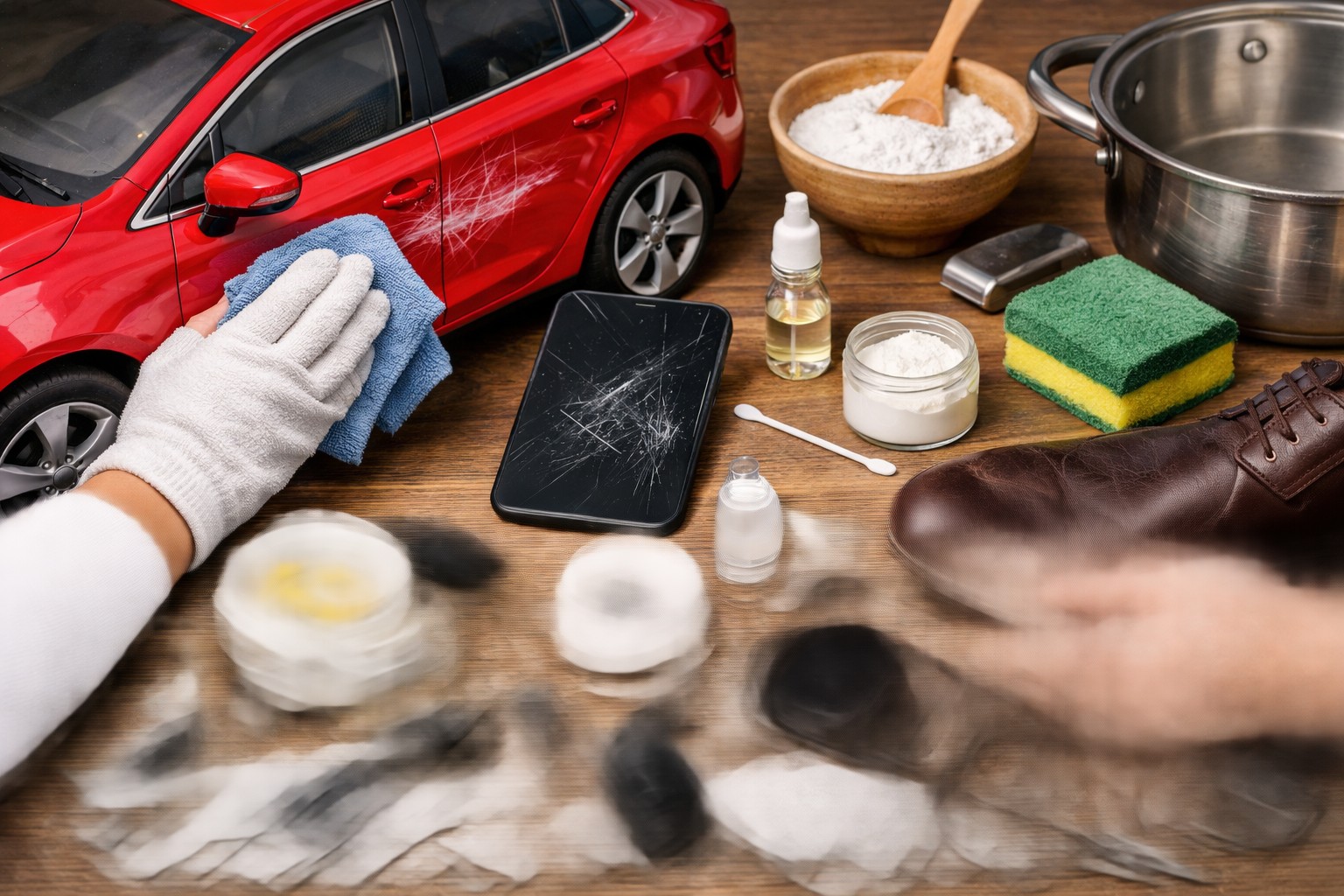
The appearance of small defects on a car body, phone screen or wooden table is often annoying, but does not always require expensive repairs from professionals. Many damages affect only top coat of varnish or coating, which allows you to eliminate them yourself using improvised means or specialized auto chemicals. The main rule is to correctly determine the material and depth of damage, so as not to aggravate the situation with aggressive influence.
Car paint restoration
Small scratches on the body, which are visible only on a dry car and disappear when wet, only affect the varnish layer. Ideal for eliminating them fine abrasive polishes. The product is applied to a soft cloth or a special circle, after which the damaged area is polished in a circular motion.
If the scratch is deeper (felt with a fingernail), but has not reached the metal, the following methods will help:
-
Wax pencils. They fill the groove with color and even out the surface, although the effect lasts until the first serious wash.
-
Repair kits. Kits that include paint and varnish allow you to spot-paint a defect, creating a long-lasting protective layer.
-
Toothpaste. For cloudy plastic headlights, this is an old but working method: the paste acts as a mild abrasive, restoring transparency.
Saving smartphone screens and glass
Glass is a hard but brittle material, so polishing requires care. Deep cracks cannot be removed, but micro scratches from keys or sand they can be camouflaged.
-
Baking soda. Mix baking soda and water in a 2:1 ratio until it becomes a thick paste. Apply to a cotton pad and gently rub into the scratch in a circular motion, then remove any excess with a damp cloth.
-
Baby powder. It works on the principle of soda, but is a more gentle abrasive, suitable for finishing.
-
GOI paste. A specialized glass and metal polish that gives best results when used with felt cloth.
Restoration of wooden furniture and laminate
Wood is a fertile material for restoration, as its structure is capable of absorbing pigments and oils.
-
Walnut. The most famous life hack for wood. It is enough to rub a scratch with a walnut kernel: natural oils will darken in air and fill the cavity, making the defect invisible.
-
Iodine. For furniture made of dark wood (oak, walnut, mahogany), an iodine solution helps to tint the scratch. It must be applied with a cotton swab strictly inside the damage.
-
Mayonnaise. Suitable for removing small cracks on lacquered furniture. Fats cause the wood to swell slightly, closing the edges of the crack. The product is applied for several days and then polished.
Working with plastic and household appliances
Plastic parts in a car interior or on a laptop case often lose their appearance due to abrasions. Here it is important to take into account the texture of the material: glossy plastic is polished, while matte plastic is better heated.
-
Construction hair dryer. A stream of hot air directed at a scratch on matte plastic slightly melts the edges of the damage, tightening it. It is important not to overheat the part so that it does not become deformed.
-
Melamine sponge. Works like very fine sandpaper. It perfectly removes black streaks and surface abrasions, but with strong pressure it can make the glossy surface matte.
When choosing a method, you should always start with the least aggressive means, testing them on an inconspicuous area of the object.
About the Author