High-quality cutlery can last for decades, passed on from generation to generation, but only if handled properly. Even the most expensive stainless steel or nickel silver fade over time, becoming covered with iridescent spots or a fine web of scratches. To keep your forks and spoons looking like they just came out of a gift box, it’s important to follow a few basic cleaning and storage principles.
Features of washing in a dishwasher
Many people believe that an automatic car wash is suitable for everything, but there are pitfalls. The main enemy of metal in a car is contact corrosion. It occurs when utensils made of different metals (such as silver and stainless steel) come into contact during the wash cycle. This leads to the appearance of hard-to-remove dark spots.
-
Always place cutlery in the basket with the handles facing down for better rinsing.
-
It is better to place knives with the blades down or in a special horizontal tray so as not to damage the machine mechanism and keep it sharp.
-
Remove appliances immediately after completing the cycle to prevent condensation from causing rust stains, even on stainless steel.
Manual cleaning and plaque control
If you wash dishes by hand, avoid using abrasive sponges and powders containing chlorine. They leave micro-scratches, which cause the surface to lose its glossy appearance. Home remedies are great for removing old grease or dark plaque. Ordinary table vinegar or a solution of citric acid will help get rid of lime deposits and restore the shine of the metal.
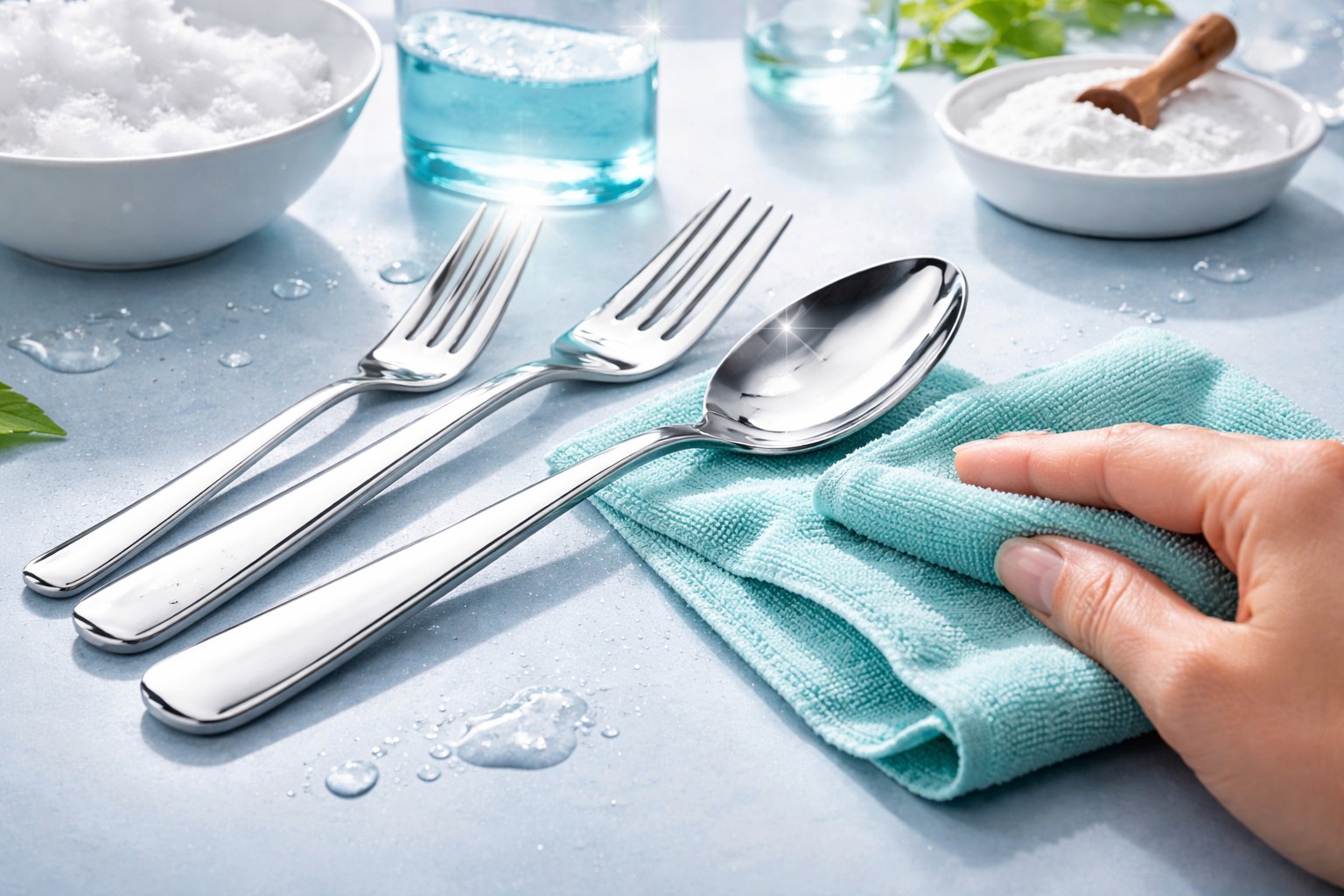
For items made of cupronickel or silver, it is best to use the “lazy” cleaning method. The bottom of the container is covered with foil, poured baking soda and salt, place the utensils and pour boiling water over them. A chemical reaction removes blackness in minutes without mechanical friction, maintaining the integrity of the coating.
Rules for drying and polishing
The most important step that is often ignored is drying. Water that dries naturally on metal leaves whitish marks due to the calcium salts it contains. To achieve mirror shineyou must wipe each item dry with a soft towel immediately after washing.
Microfiber or flannel are ideal for this purpose. Cotton fabric quickly absorbs moisture and polishes the surface without leaving lint. This simple ritual takes only a couple of minutes, but dramatically changes the appearance of the table setting.
Storage organization
Chaotic dumping of equipment into one drawer is a sure way to scratches. Metal rubs against metal, and the glossy polish quickly becomes dull. Use special organizers with dividers, where each type of device has its own section. For particularly valuable sets made of silver or gold-plated, it is recommended to use velvet covers or other soft fabric that prevents oxidation in air.
Regular care does not require expensive products, but only attention to detail and compliance with temperature conditions. Clean, dry and properly laid appliances not only look aesthetically pleasing, but also retain their hygienic properties much longer. The correct habit of caring for kitchen equipment extends its service life several times.
About the Author