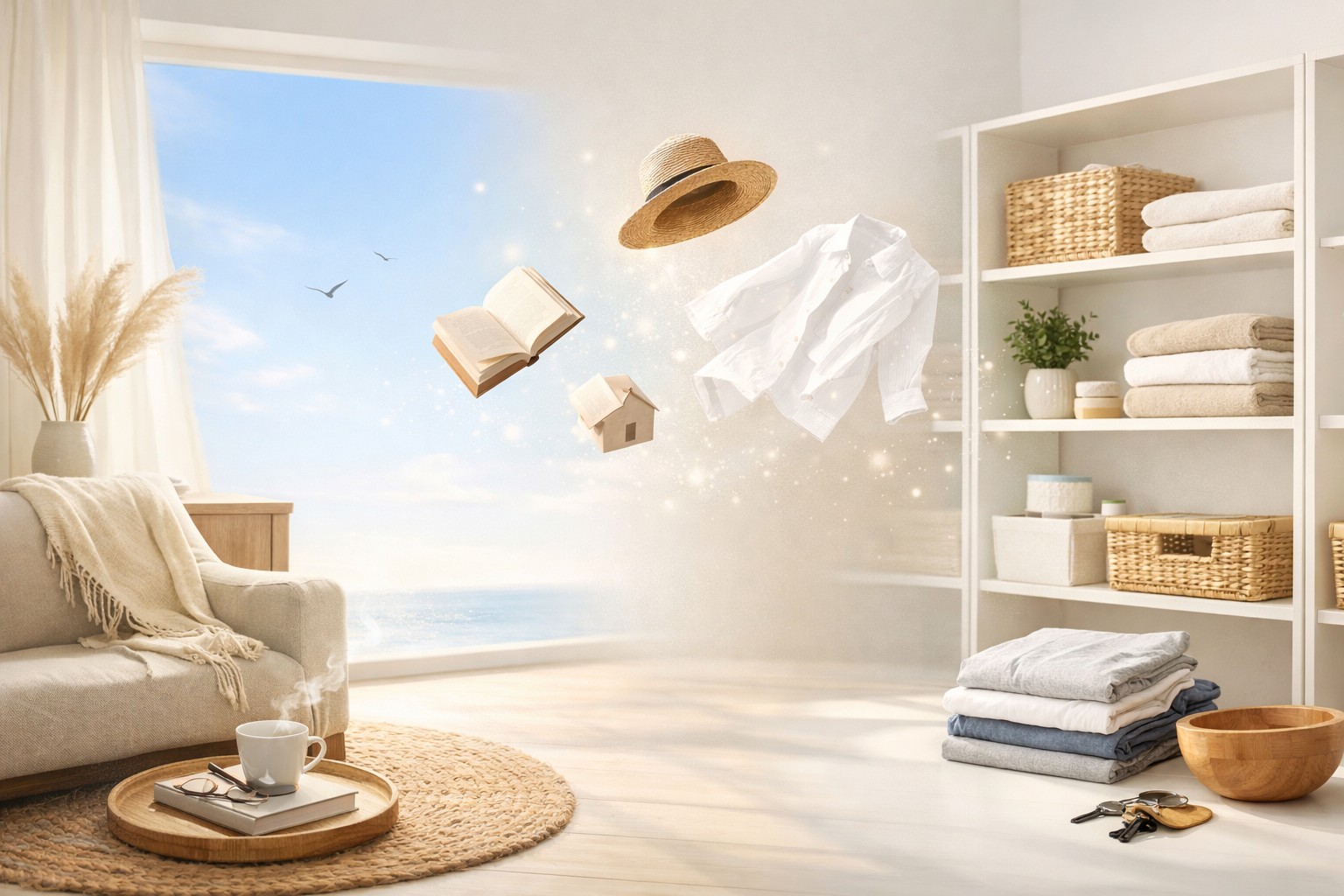
Minimalism has ceased to be just an aesthetic trend from social networks and has turned into an effective tool for survival in the world of information noise. When we get rid of unnecessary things, we free up not only the shelves in the closet, but also the cognitive resource of our brain. Every thing in the house is an invisible thread that consumes our attention, time for cleaning, maintenance and decision-making.
Psychology of free space
Research shows a direct connection between cortisol levels and the amount of visual noise in a living space. Extra things act as constant irritants, reminding us of unfinished tasks or wasted money. When the space becomes clean, the level of anxiety decreases and the ability to concentrate increases.
Saving the main resource
The main value of having few things is freeing up time. Life becomes easier for several practical reasons:
-
The decision-making process is simplified (what to wear, what to cook, what to do).
-
The time for household routine and maintaining order is reduced several times.
-
Mobility and readiness for change or travel appears.
-
The focus shifts from having to experiencing experiences and emotions.
Ecology of consumption and awareness
By choosing quality over quantity, we invest in durable materials and support the principles of sustainable development. Avoiding spontaneous purchases allows you to save money for truly important goals, be it self-education or health. Ease of life is directly related to the ability to separate your true needs from imposed marketing images.
Liberation from material ballast creates the foundation for inner harmony and clarity of thinking. A person who owns little gains much more control over his own reality and directs his energy to creation, rather than to maintaining the accumulated property. The ability to make do with a minimum of things becomes a sign of a high quality of life and intellectual freedom.
About the Author