Dust is not just an aesthetic problem, but a complex “cocktail” of organic and household microparticles. Even with closed windows and regular cleaning, it can cover surfaces in a matter of hours. Understanding where these particles come from can help significantly reduce their concentration in the air.
Main sources of pollution in the home
Most household waste is anthropogenic origin. We ourselves and our pets are the main “suppliers” of dust.
-
Dead skin cells. Every day a person loses millions of microparticles of the epidermis, which become the basis for house dust.
-
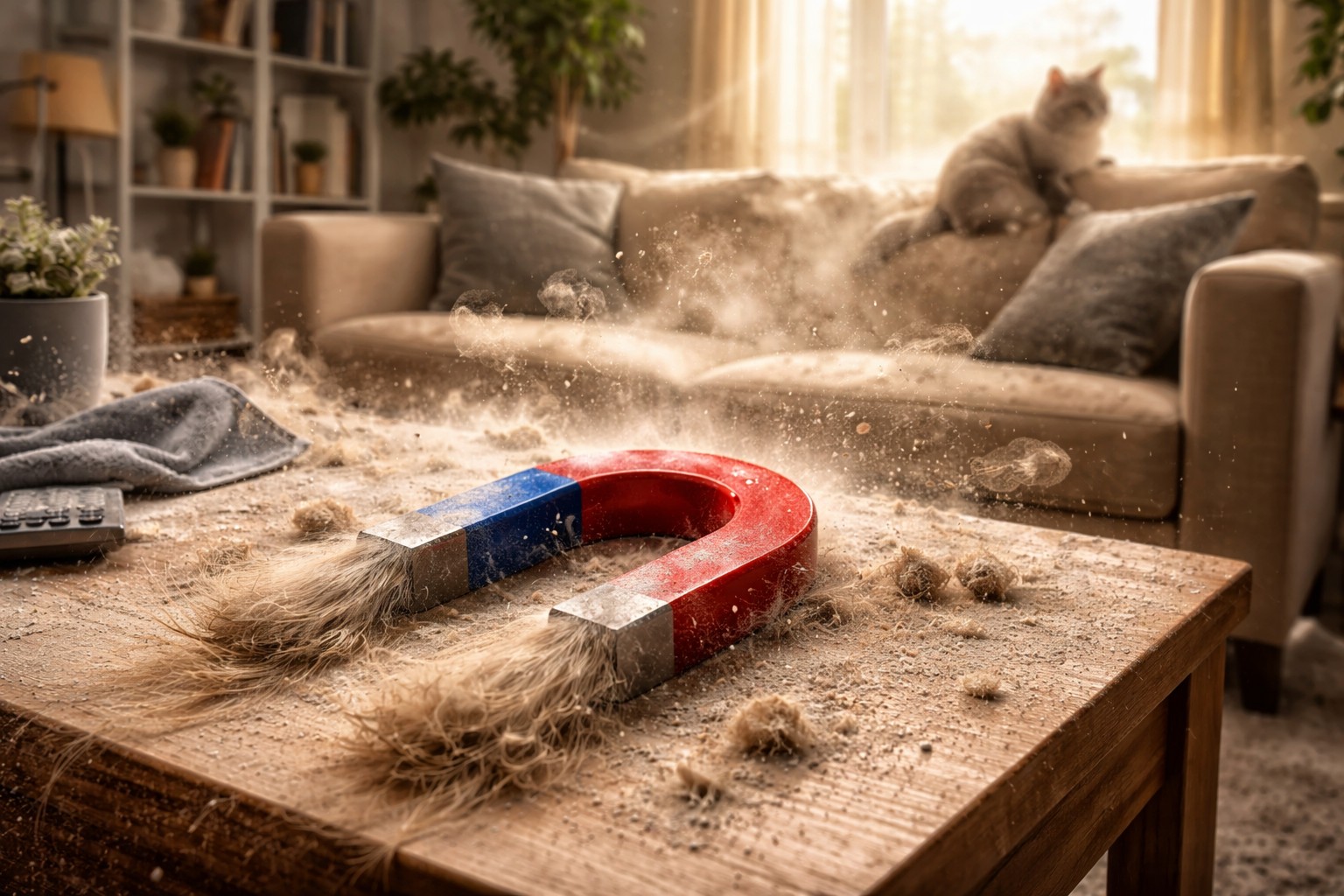
Animal hair and dander. Even if your pet is not actively shedding, its presence increases the amount of organic matter in the air.
-
Textile fibers. Bed linen, towels, curtains and carpets are constantly destroyed by friction, throwing lint into space.
The role of humidity and static electricity
The physical conditions in a room directly affect how quickly small particles settle on furniture.
-
Dry air. During the heating season, humidity drops, causing particles to become lighter and float in the air longer, moving between rooms.
-
Statics. Household appliances, TV screens and synthetic fabrics accumulate electrostatic chargewhich literally attracts dust.
Invisible ways of entry from outside
Even the most sealed apartment is not protected from external factors that imperceptibly change the composition of the home environment.
-
Street dust. Plant pollen, soil particles and combustion products of automobile fuel penetrate through open windows and ventilation systems.
-
Shoes and outerwear. We carry a huge amount of fine debris, which is then spread throughout the house.
Dust mites and microbiological factor
Microscopic organisms such as saprophyteslive in mattresses and upholstered furniture. They feed on organic matter and produce waste, which accounts for a significant portion of the weight of dust in older homes. Without high-quality filtration and the use of modern air purifiers, these particles constantly circulate in closed spaces.
Regular use of humidifiers and replacing textiles with tightly woven materials help minimize the rate at which dirt accumulates. Proper air circulation and maintaining an optimal microclimate make the cleaning process much more efficient and durable.
About the Author