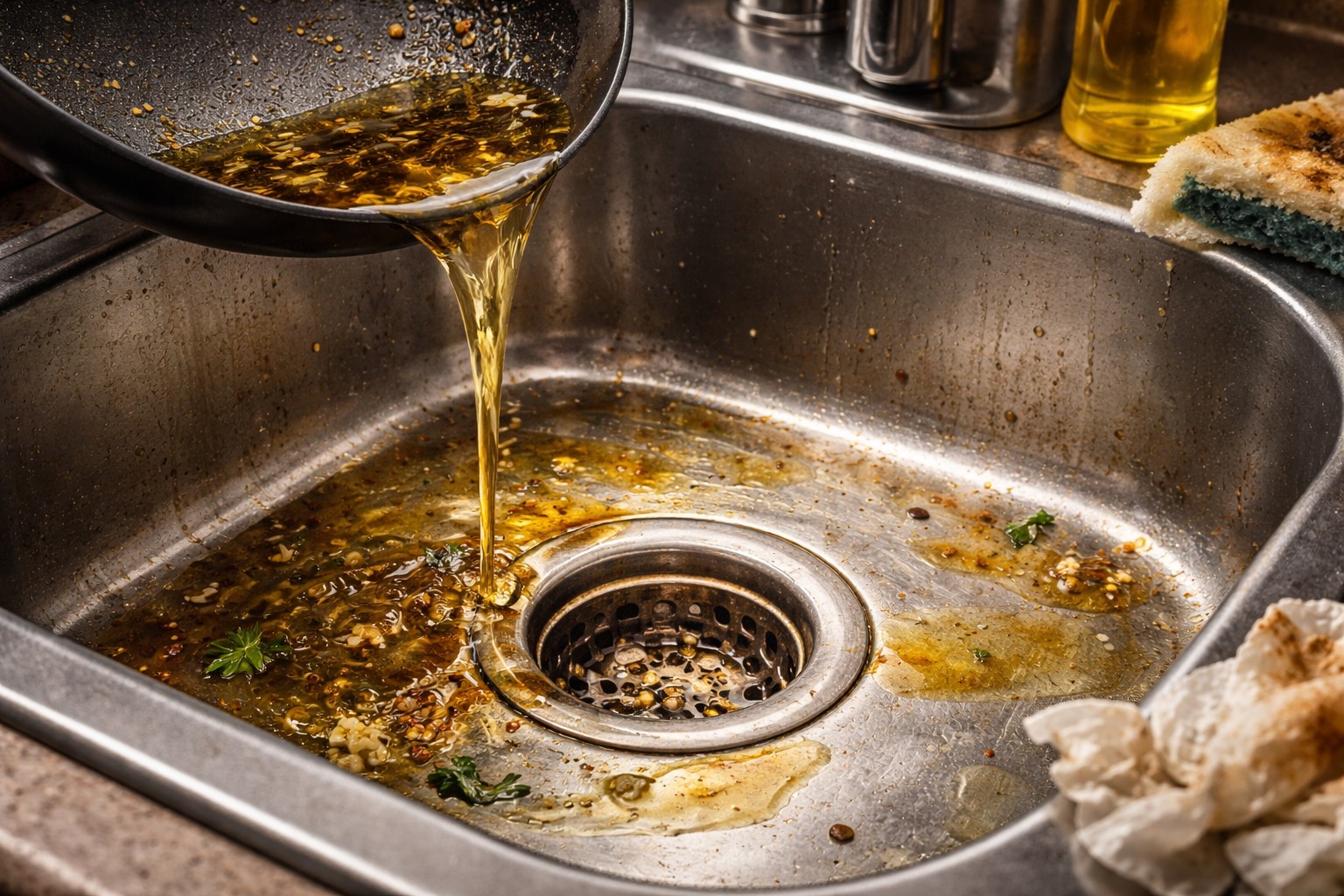
It seems that draining the remaining oil from the frying pan into the sink is the most logical and quickest action after cooking. The liquid quickly goes down the drain, and the problem seems solved. However, plumbers say that edible fat – This is one of the most dangerous enemies for the sewer system. Even if you regularly use hot water and household chemicals, the consequences of this habit can lead to serious accidents and expensive repairs.
How fat turns to stone
The main problem lies in the physical properties of fats. When hot, the oil is liquid and flowing, but as soon as it enters the pipes, its temperature drops sharply. As the substance cools down, it undergoes a process crystallization and hardens.
Fat does not just settle at the bottom, it envelops the walls of the pipes with a sticky layer. Over time, this layer acts like glue, trapping other waste:
As a result, the lumen of the pipe narrows, creating a dense plug that is almost impossible to break through with a regular plunger.
The myth about hot water and detergents
Many are sure that if you shed fat in large quantities boiling water or add dishwashing detergent, a clog will not form. This is a dangerous misconception. Hot water and surfactants actually break down the fat and allow it to pass a little further – from the siphon into the main pipe.
There, deep in the system, the water cools and the emulsion of fat and soap thickens again. This only pushes the problem deeper into communications, where removing the blockage will be much more difficult and expensive. Often such plugs form at pipe joints or bends where standard cables cannot reach for cleaning.
Global fatberg problem
If the fat does leave your apartment, it ends up in the city sewer system. There it combines with calcium and non-woven materials (such as wet wipes), forming fatbergs – giant fat icebergs.
These monolithic blocks can weigh several tons. They block city sewers, causing sewer breaks and wastewater to spill onto the streets. Your personal contribution in the form of one frying pan of oil seems insignificant, but it is from such portions that large-scale communal disasters are formed.
Safe disposal
To avoid blockages and preserve the environment, it is enough to change your approach to disposal. Grease should never enter the water system. The easiest way to get rid of it is to let the oil cool and thicken.
After this, you can collect it with a paper towel and throw it in the trash. If there is a lot of fat, it should be poured into an unnecessary container with a lid (for example, a glass jar or plastic bottle) and disposed of along with solid household waste. This simple step will ensure that your pipes stay clean for years to come.
About the Author