Many people perceive tidying up as a grueling marathon that takes up the entire weekend. However, the feeling of fatigue often arises not from the amount of work, but from improper planning and chaotic actions. If you change the approach and implement system of small stepsthe process will cease to be a source of stress and will turn into a simple background activity.
The fifteen minute principle
One of the main mistakes is trying to clean the entire apartment at once. This leads to physical and emotional burnout. It is much more efficient to use timer method: Set aside exactly 15 minutes a day for cleaning. During this time, you can have time to wipe the dust in one room or dismantle the debris on the desktop. It is psychologically easier to start a task knowing that it will take very little time, and regularity allows you to maintain cleanliness constantly.
Rule of movement from top to bottom
To avoid doing double work, it is important to respect the laws of gravity. Dust and debris always settle down, so you should start with chandeliers, top shelves of cabinets and curtain rods. If you first vacuum the floor and then start dusting the furniture, crumbs and microparticles will end up back at the bottom. Correct sequence action saves energy and eliminates the need to wash the floors twice.
Inventory optimization
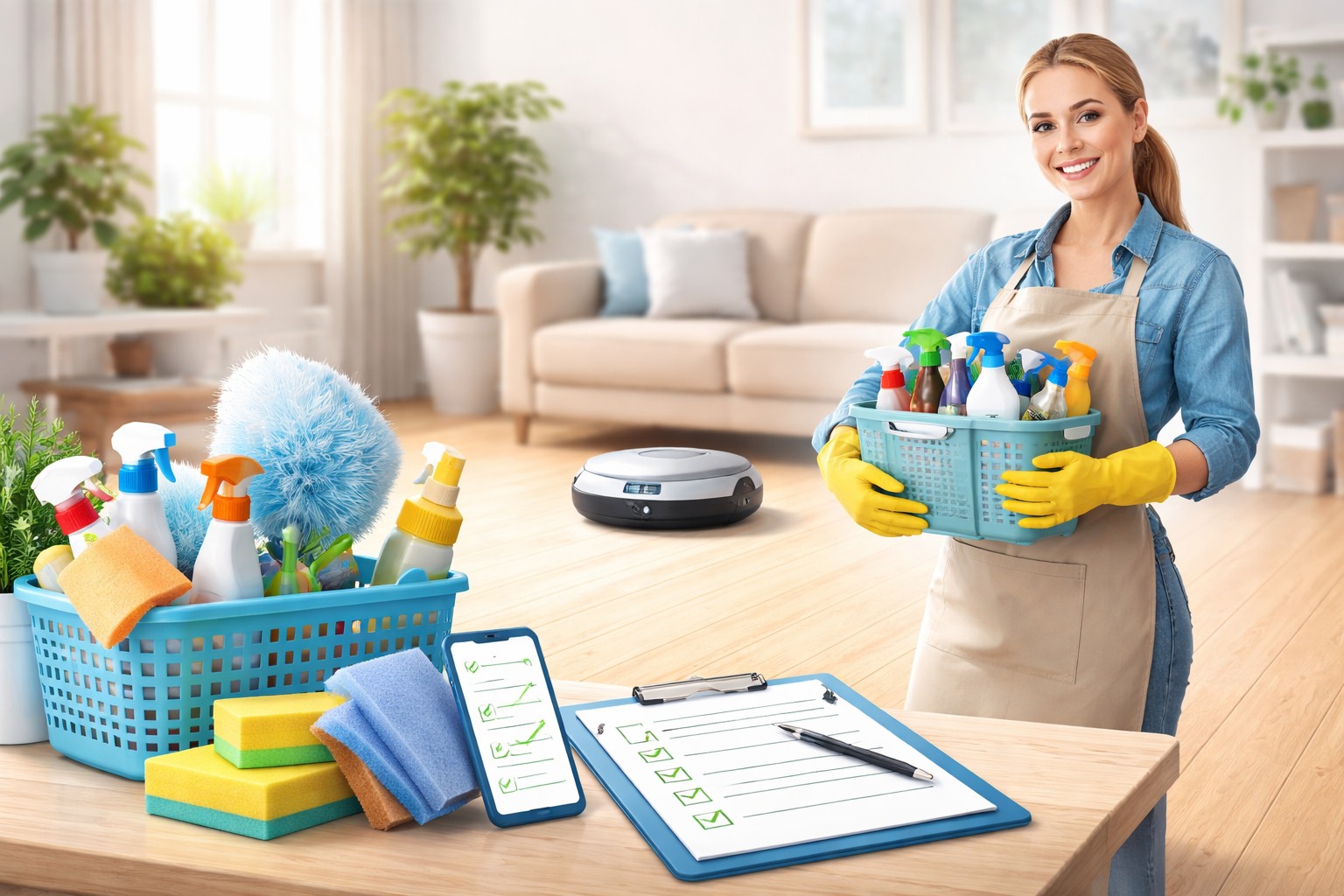
Using outdated tools makes the task much more difficult. A heavy vacuum cleaner with a cord or an uncomfortable mop will cause you to waste more calories and time. It is worth paying attention to modern gadgets: robot vacuum cleaner for daily cleanliness or a steam generator that removes dirt without chemicals and unnecessary friction. Quality microfiber cloths also work better than older cloths because they attract dust through static electricity rather than smearing it around.
Eliminating visual noise
Often the feeling of clutter is created not by dirt, but by scattered things. Before you begin wet cleaning, you must decluttering surfaces. Put unnecessary items in closed cabinets or organizers. The fewer items there are on open shelves and countertops, the easier and faster it is to wipe off dust. Minimalism in the interior directly affects the speed of cleaning.
Instead of wasting energy on deep cleaning, it is better to develop the habit of returning things to their place immediately after use. Cleanliness in the house does not depend on how often you wash the floor, but on how conveniently the storage system is organized. A competent approach to everyday life frees up time for relaxation and hobbies.
About the Author