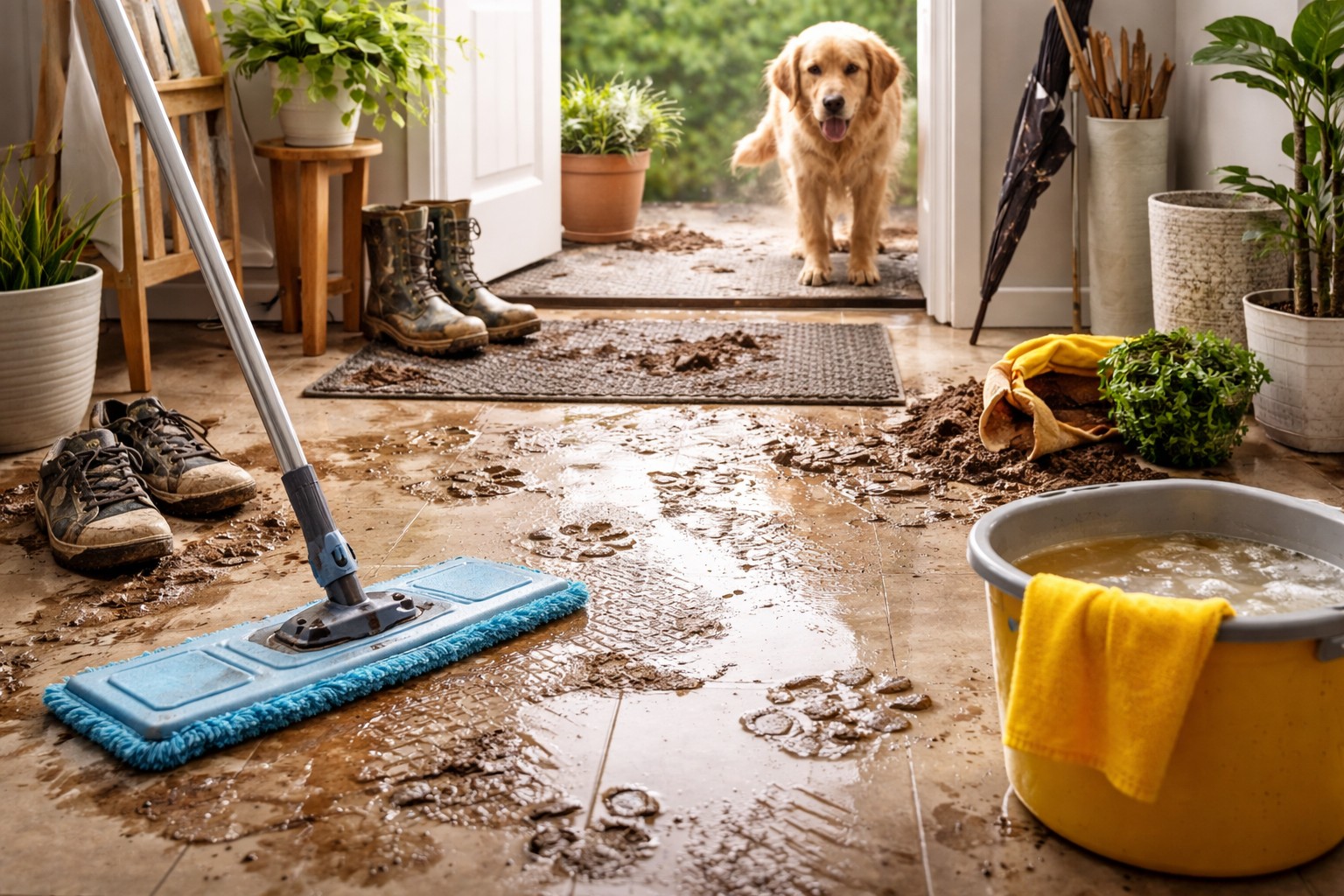
Cleanliness in the entrance area depends not so much on the frequency of cleaning, but on proper planning of the space. Often, even with daily washing of the floors, sand and dust are instantly spread throughout the apartment. The reason lies in technical and design mistakes that act like a magnet for dirt.
Inappropriate size and material of the mat
The most common cause of permanent sand is small rug. If it does not accommodate an entire adult, then when you step from the carpet onto a clean floor, you will inevitably transfer dirt with your soles. An effective surface should be long enough that you can take at least two steps on it before stepping onto the main surface.
Also important pile texture. Smooth or too hard models do not retain small particles, and they remain on the surface, waiting for the slightest draft. Cellular structures or rubberized bases that trap debris inside work best.
Mistakes in choosing flooring
Aesthetics often trump practicality, and this becomes a problem. Too much light or plain dark tiles works as a pollution indicator: every dried drop of water and speck of dust is visible on it.
-
Tiles that are too textured accumulate dirt in the grooves, which is difficult to wash without a brush.
-
Smooth porcelain tiles become slippery from moisture and do not trap dust, allowing it to fly further into the rooms.
-
Light grout for seams in the hallway loses its appearance after just a month of use, creating a feeling of untidiness even on a clean floor.
Lack of clear zoning
The entrance area must be isolated from the routes of movement around the apartment. If the route from the kitchen to the living room or bathroom crosses the “dirty zone” at the door, sand will be carried throughout the house on house slippers. It’s called transit pollution.
It is important to organize the space so that outdoor shoes remain in a localized area where household members do not enter unnecessarily. Visual separation of floor coverings (for example, the junction of tiles and laminate) helps not to subconsciously cross this boundary.
Storing shoes on the open floor
When shoes are simply left on the floor, the dirt from the soles dries and turns into dust, which rises into the air with every movement. In addition, this interferes with high-quality cleaning: the need to lift and rearrange shoes every time reduces the motivation to wash the floor.
Usage pallets with sides or closed shoe racks with ventilation localizes moisture and reagents in one place. Furniture with legs or hanging consoles greatly simplifies the mop’s access to the farthest corners, preventing dust from accumulating along the baseboards.
Proper organization of the entrance area and replacing the door mat with a professional dirt barrier can reduce cleaning time several times.
About the Author