Many people are accustomed to buying expensive household chemicals that promise instant results and “Alpine freshness.” However, a simple remedy that is found in every kitchen often does the job much more effectively and safely. Using regular table vinegar to clean your floors isn’t just an old wives’ method, it’s a scientifically proven way to make your home truly clean.
Perfect cleanliness without streaks
The main problem with most industrial floor cleaning products is foam. Even with thorough rinsing, soap scum often remains on the surface, attracting new dust and creating visible stains, especially on laminate or tile. Vinegar works differently.
Acidic environment instantly dissolves fat and mineral deposits without forming a soap film. Thanks to this, the floor dries faster and the surface acquires a natural shine. This is especially true for glossy tiles and dark laminate, where any stains are immediately noticeable.
Powerful odor neutralizer
Unlike scented gels, which only mask unpleasant odors with strong fragrances, acetic acid eliminates the source of odor at the molecular level.
This property makes vinegar solution an indispensable assistant in apartments where pets live. The solution effectively removes specific odors without harming the sensitive sense of smell of pets after drying. The characteristic smell of vinegar itself, which scares many, completely eroded within 15–20 minutes after cleaning, leaving behind only a feeling of freshness.
Disinfection without chlorine
For families with small children or people with allergies, safety comes first. Aggressive chemicals with chlorine kill germs, but can cause irritation to the respiratory tract and skin.
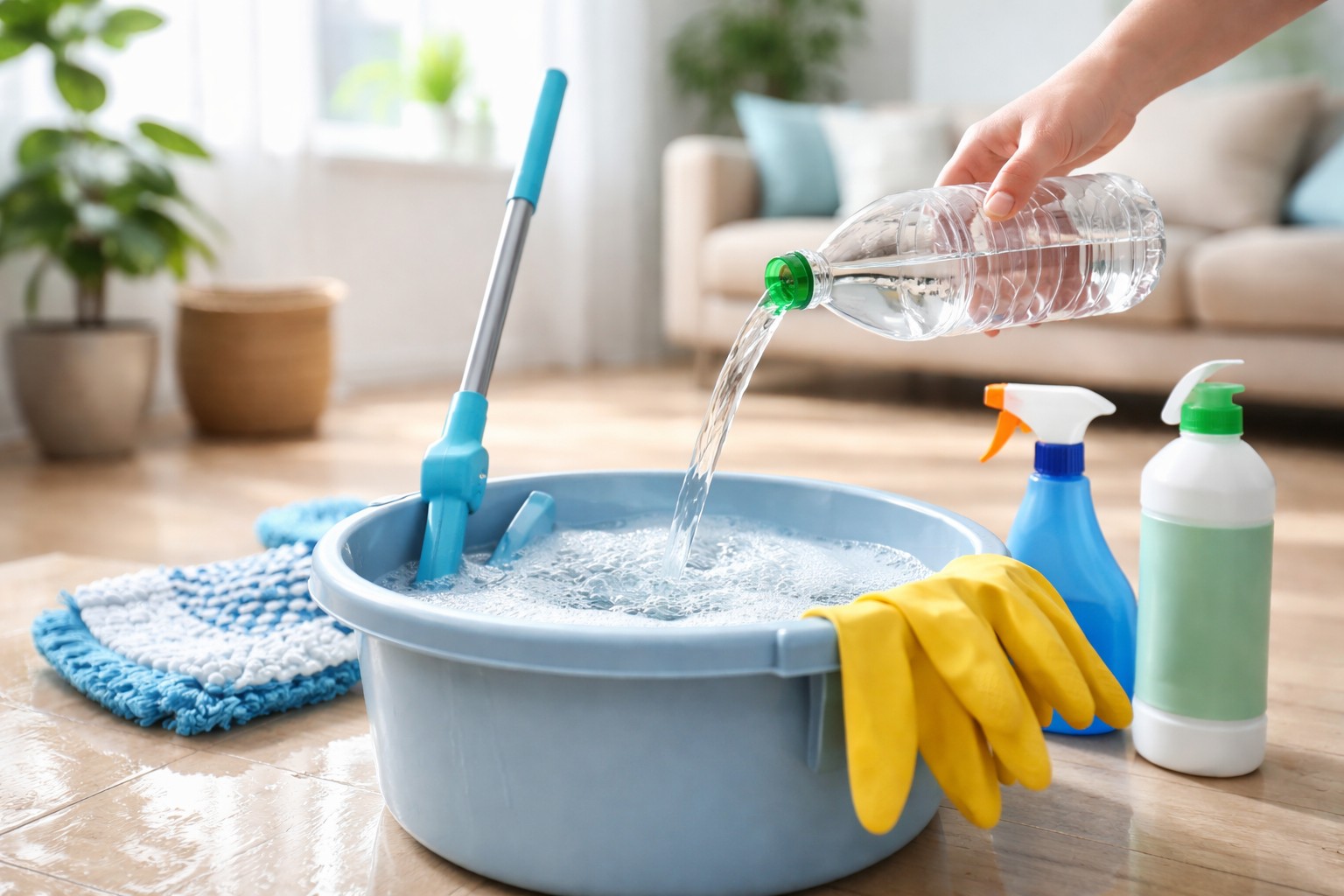
Vinegar is natural antiseptic. It inhibits the growth of many bacteria, mold and fungi. Regular cleaning with the addition of vinegar (half a glass per bucket of water is enough) creates an environment unsuitable for the life of harmful microorganisms, without turning the apartment into a sterile hospital room with a pungent chemical smell.
Savings and protection from insects
In addition to its cleansing properties, the acidic environment serves as an excellent preventative against the appearance of uninvited guests. Ants and other small insects cannot tolerate the smell of acetic acid, which forces them to avoid treated surfaces.
At the same time, the cost of one cleaning tends to zero. Refusal of specialized detergents in favor of vinegar allows you to significantly save the family budget without losing the quality of cleaning.
Important Cautions
Despite its versatility, vinegar is not suitable for all surfaces. Acid can damage the structure of some natural materials.
You should avoid this method if you:
-
Natural stone (granite, marble) – acid can leave dull spots and “burn through” the polish.
-
Wooden parquet with wax impregnation – vinegar can dissolve the protective layer of wax.
-
Untreated wood – Excess moisture and acid can cause warping.
For laminate, linoleum, vinyl and ceramic tiles, this solution is one of the safest and most effective maintenance options.
Proper use of simple components allows you to achieve results that surpass the effect of complex household chemicals.
About the Author