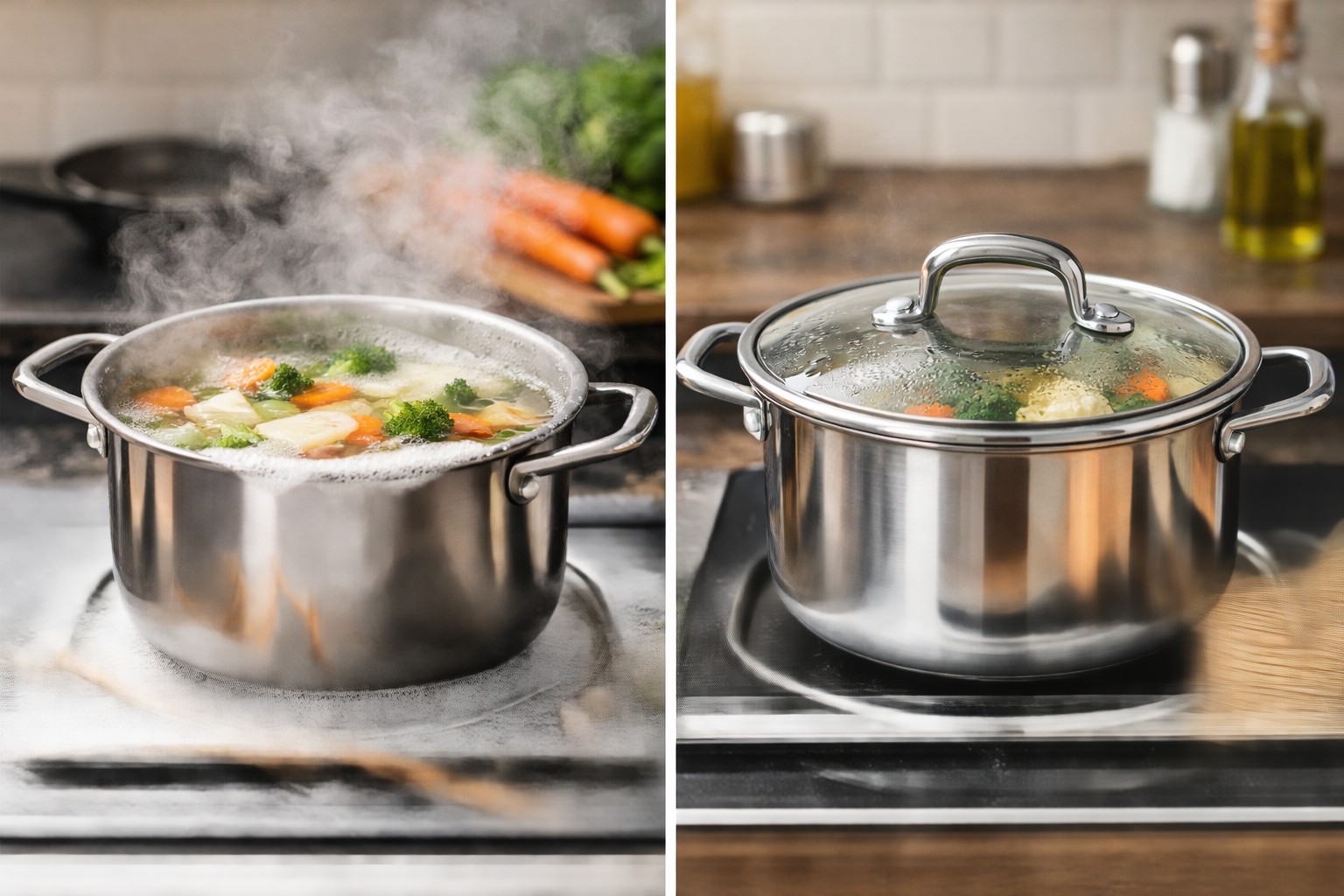
It would seem that such a simple piece of kitchen utensil does not require instructions for use, but many ignore its use, losing money and the taste of the products. Proper handling of the lid is not just a matter of habit, but an important culinary technique that directly affects quality of the dish And energy consumption. The physics of the cooking process changes dramatically as soon as you cut off the access of cold air to the food.
There are several good reasons why professional chefs insist on using a lid in most processes:
-
Acceleration of heating. Covered dishes create an enclosed space where heat circulates rather than escapes into the atmosphere. This allows the water to boil much faster, which is especially important when you’re in a hurry. Saving resources – gas or electricity – in the long term it becomes noticeable for the family budget.
-
Preservation of aroma. The most volatile compounds responsible for the appetizing smell evaporate first. If you cook broth or stew in an open container, most of the flavor will escape into the hood rather than remaining in the bowl. Sealing allows flavor molecules to condense and return back to the sauce or broth, enhancing the flavor. rich and deep.
-
Delicate texture. For tough meats or dense vegetables, a simmering effect is required. Without a lid, the liquid quickly boils away, and the food begins to fry or burn, remaining raw inside. The moist environment under the lid softens the fibers, providing even cooking without overdrying.
-
Cleanliness in the kitchen. This is the most practical aspect. Boiling sauces and fatty dishes tend to splash, contaminating the stove and apron. Using the lid, even slightly open, acts as a protective screen, eliminating the need to spend a long time cleaning surfaces after dinner.
It is important to remember balance. If your goal is to evaporate excess moisture so that the sauce thickens, or to get a crispy crust when frying, the lid should be removed. Moisture that accumulates on the inner surface will drip back, which will turn the frying process into stewing.
Conscious control of temperature and humidity distinguishes the amateur from the professional. The simple skill of closing the pan on time helps preserve the juiciness of foods and preserve their beneficial properties. Understanding these nuances turns routine cooking into the creation of culinary masterpieces.
About the Author