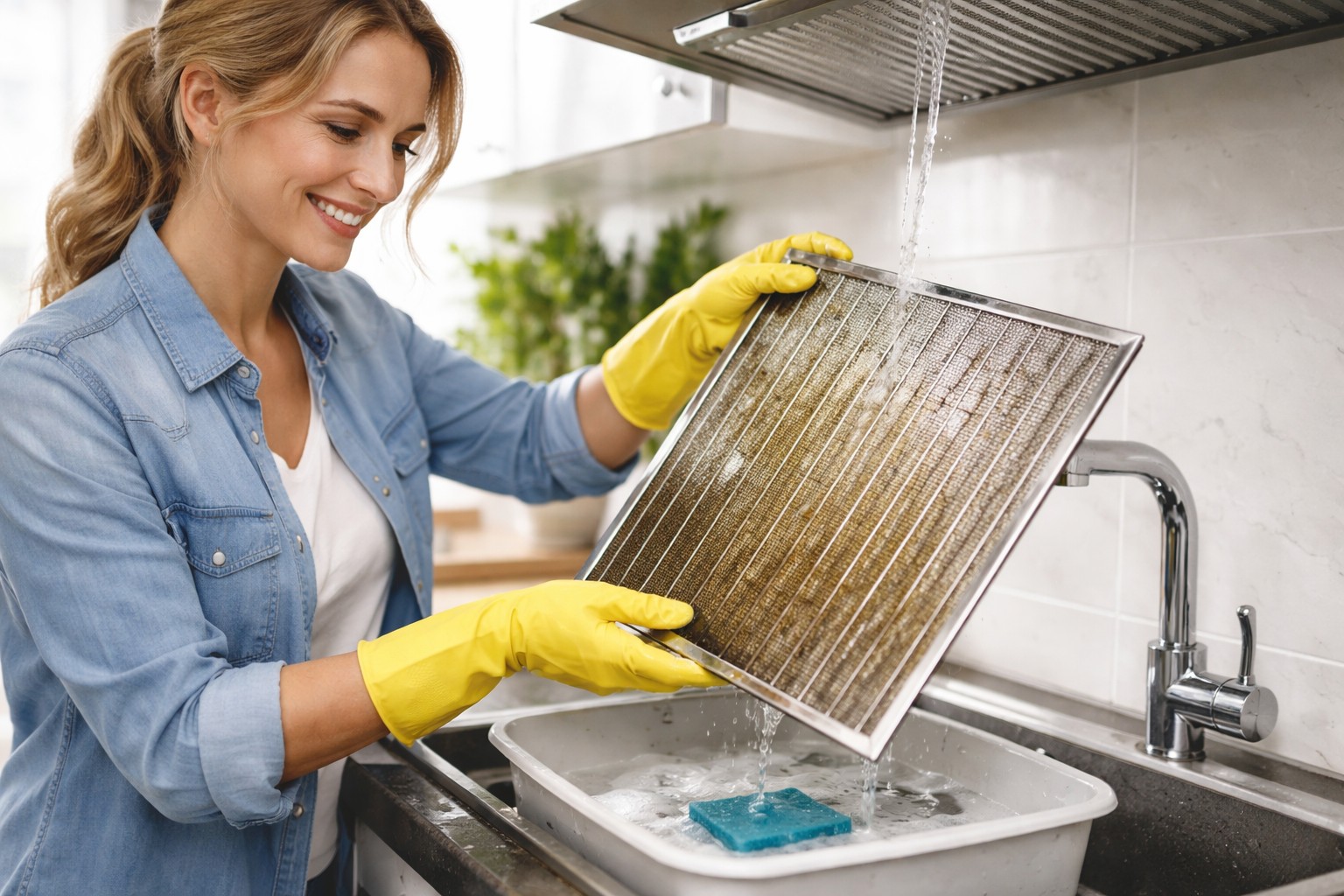
Dirty metal kitchen hood filters are not only an aesthetic problem, but also a fire safety issue. Accumulated sticky coating interferes with air circulation and can cause engine damage. To restore the mesh to its original appearance, you do not have to buy expensive professional products. There are proven methods that dissolve even old fat in a matter of minutes.
For effective cleaning, the following are most often used:
-
Baking soda. The most accessible method. Gradually pour half a cup of soda into a large saucepan of boiling water. The mesh is boiled in this solution for about 10–15 minutes until the contaminants begin to peel off on their own.
-
Laundry soap. The classic 72% bar is grated and dissolved in hot water. The resulting alkaline environment copes well with organic contaminants.
-
Ammonia. A method for the most difficult cases. Warm water is poured into a deep baking tray and 100 ml of ammonia is added. It is important to carry out the procedure with the windows open and wearing a mask, as the vapors have a pungent odor.
-
Citric acid. Helps remove not only fat, but also limescaleif the water in the region is hard. The granules are applied directly to the wet surface of the filter and left for half an hour.
If hand washing seems too labor-intensive, you can use modern technology.
-
Dishwasher. If the filter is made of aluminum, you should be careful with the temperature (not higher than 50 degrees), otherwise the metal may darken. Steel models can withstand any washing cycle.
-
Specialized gels “Anti-fat”. They contain aggressive alkalis that eat away dirt in 5 minutes. Be sure to use rubber gloves when working with them.
Regular maintenance of appliances significantly extends their service life and maintains a healthy atmosphere in the kitchen. Clean filter cells provide maximum draft and prevent unpleasant odors during cooking. A properly selected cleaning method allows you to preserve the structure of the metal and avoid corrosion for many years. Regular prevention once a month eliminates the need to use radical chemical compounds.
About the Author