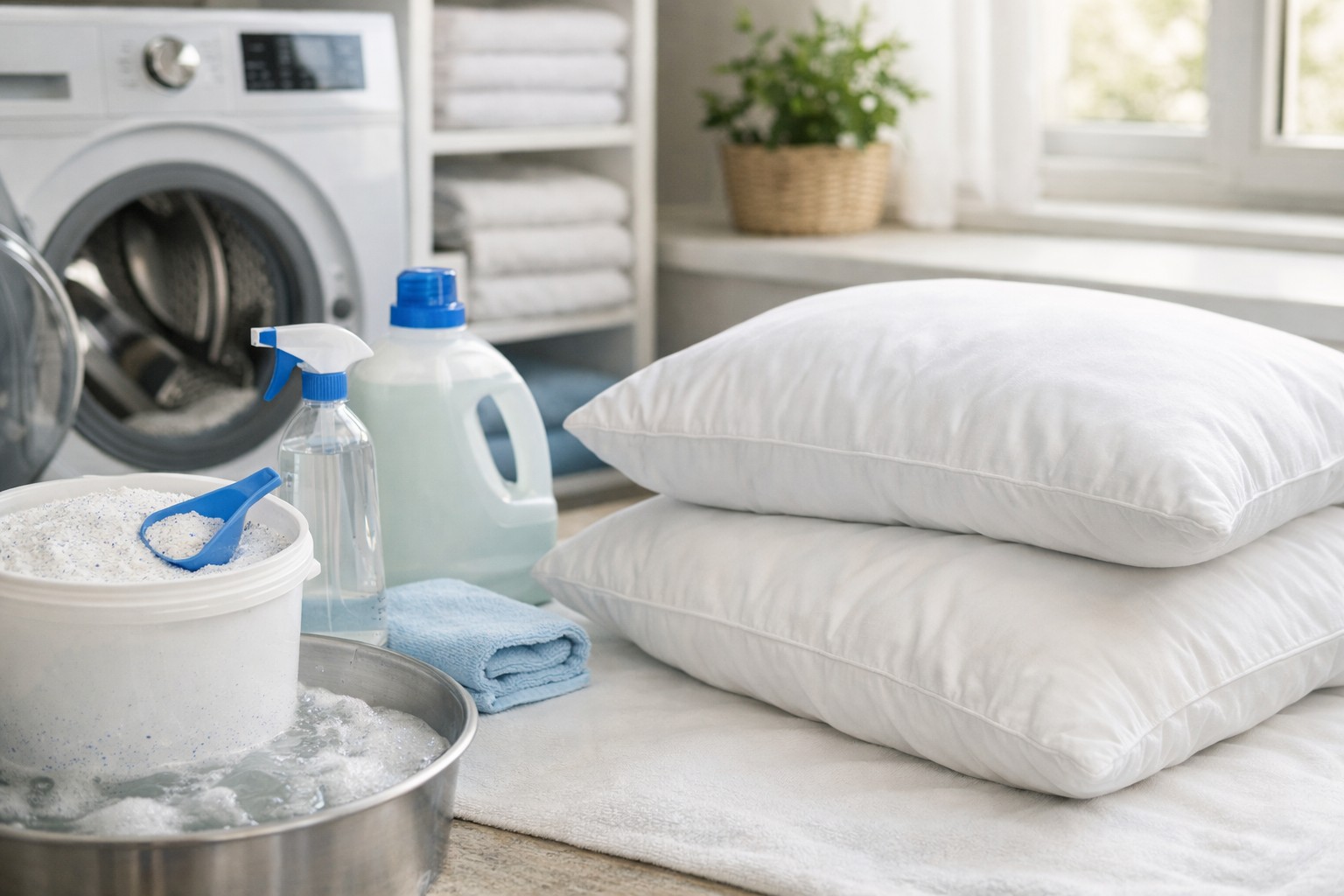
Cleanliness of bedding directly affects the quality of sleep and skin health. Over time, they accumulate inside the filler dust mitesepidermal particles and moisture, which makes the pillow heavy and stale. To extend the life of the product and ensure a safe rest, it is important to choose a cleaning method based on the composition of the filler.
Features of cleaning different fillers
Each material requires an individual approach, since improper washing can irreversibly damage the structure of the product.
-
Down and feather. Natural fillers are best taken to a professional dry cleaningwhere ultraviolet disinfection is carried out. If you wash them at home, use only liquid detergents and special laundry balls to prevent the fluff from clumping together.
-
Sintepon and holofiber. These materials can easily withstand delicate machine wash at temperatures 40 degrees. They dry quickly, but require careful rinsing so that any remaining powder does not cause allergies.
-
Memory Foam. These pillows are strictly prohibited from being machine washed. Water destroys the fragile partitions of the foam. Only dry cleaning or wiping the surface with a damp cloth is allowed.
-
Bamboo fiber. Very unpretentious material that can withstand repeated washing. The main thing is to avoid chlorine bleaches and high spin speeds.
Effective stain removers
To combat yellow stains and unpleasant odors, it is not necessary to use aggressive chemicals.
-
Laundry soap copes well with organic stains on covers.
-
Baking soda helps neutralize odors during dry cleaning: just sprinkle baking soda on the pillow, leave for an hour and vacuum thoroughly.
-
Lemon juice in combination with salt, effectively removes traces of sweat if applied locally before the main wash.
-
Liquid gels for wool and silk, they retain the softness of the fibers and are more easily washed out of the filler structure.
Drying and care rules
Proper drying is no less important than the cleaning itself. Pillows made from natural materials should be dried horizontally in a well-ventilated place, periodically fluffing and turning them over. Sunlight serves as an additional natural antiseptic, but it is better to protect synthetic materials from direct rays to avoid drying out the fibers.
Regular use protective pads with a zipper greatly simplifies care, as they can be washed every week along with bed linen. The optimal frequency of complete cleaning of the pillows themselves is once every six months to maintain the hygiene of the sleeping area.
Proper care of pillows guarantees healthy sleep and preservation of the original shape of the product for many years.
About the Author