The tradition of adding fat when cooking foods is not just a habit, but a technological necessity that directly affects the taste, texture and safety of food. Understanding the physical processes that occur on the surface of the metal helps transform ordinary frying into a culinary art.
Anti-stick protection and process physics
Even the smoothest-looking surface has microscopic pores and irregularities. When heated, the proteins and sugars in foods react chemically with the metal, causing them to burn. Vegetable oil or animal fat create a thin protective barrier that fills these microcracks.
-
Oil acts as coolantensuring uniform distribution of heat over the entire contact area.
-
A hydrophobic layer is created that prevents product juices from penetrating into the structure of the pan.
-
Fat prevents the fibers of meat or fish from breaking when flipped.
Effect on taste and Maillard reaction
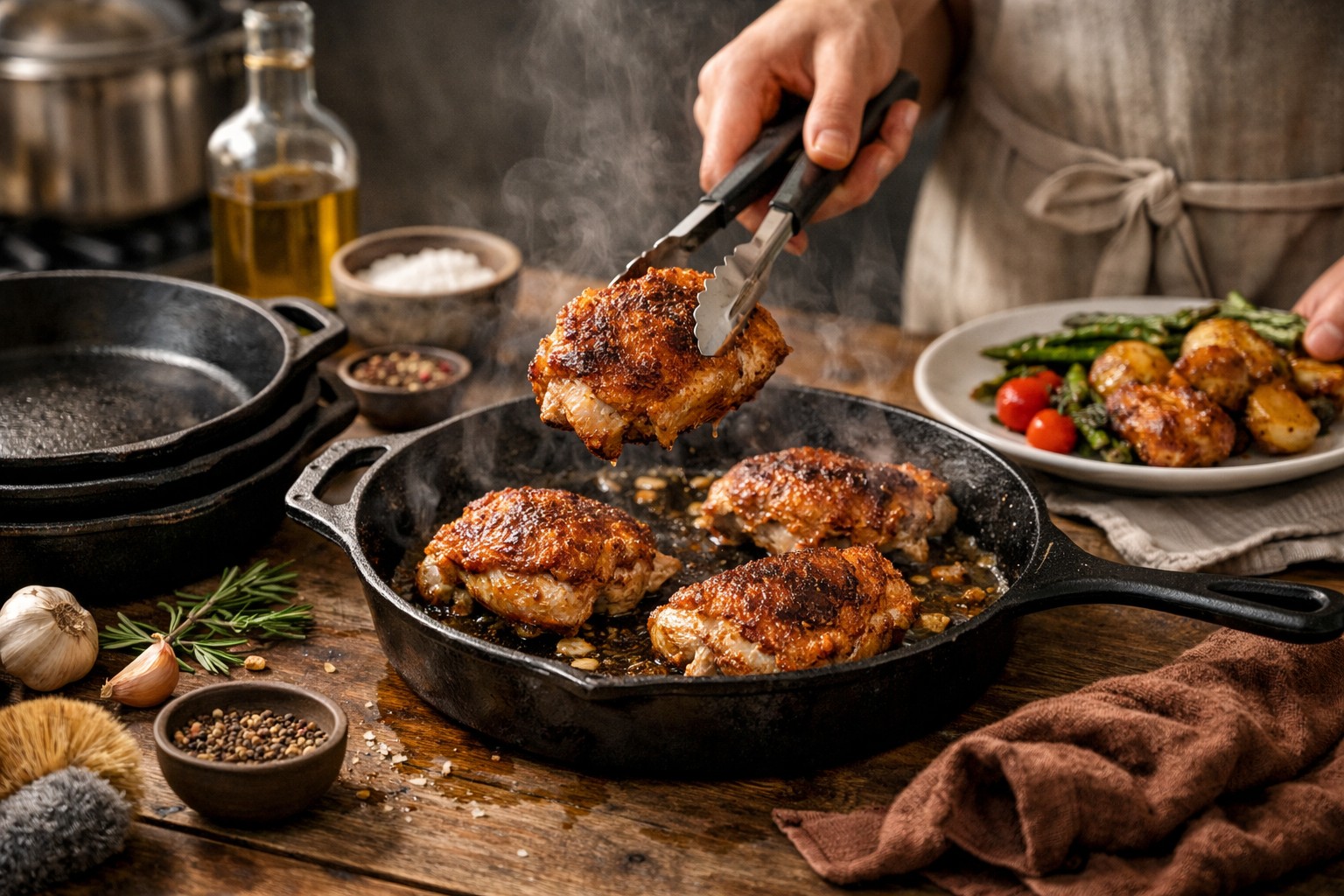
To obtain that same golden crust, a high temperature is required at which the Maillard reaction. Without the use of oil, the transfer of energy from the burner to the product occurs unevenly: in some places the food remains raw, while in others it instantly chars.
-
Saturated fats and oils with a high smoke point help maintain stable frying temperatures.
-
Fat dissolves the aromatic compounds contained in spices, making the taste of the dish deeper and more expressive.
-
Thanks to proper lubrication, vegetables and meat retain their internal juiciness while developing a crispy exterior.
Preservation of non-stick properties
Regular use of a small amount of oil will prolong the life of your kitchen utensils. For cast iron products, this is critically important: fat penetrates the pores of the metal and polymerizes under the influence of temperature, creating a natural protective layer. Modern coatings also last longer if they are not subjected to “dry” overheating, which leads to microcracks and material degradation.
The correct choice of temperature and quality oil guarantees predictable results every time you cook.
The good habit of lubricating the surface before starting work eliminates the need for a long cleaning of dishes after dinner.
About the Author