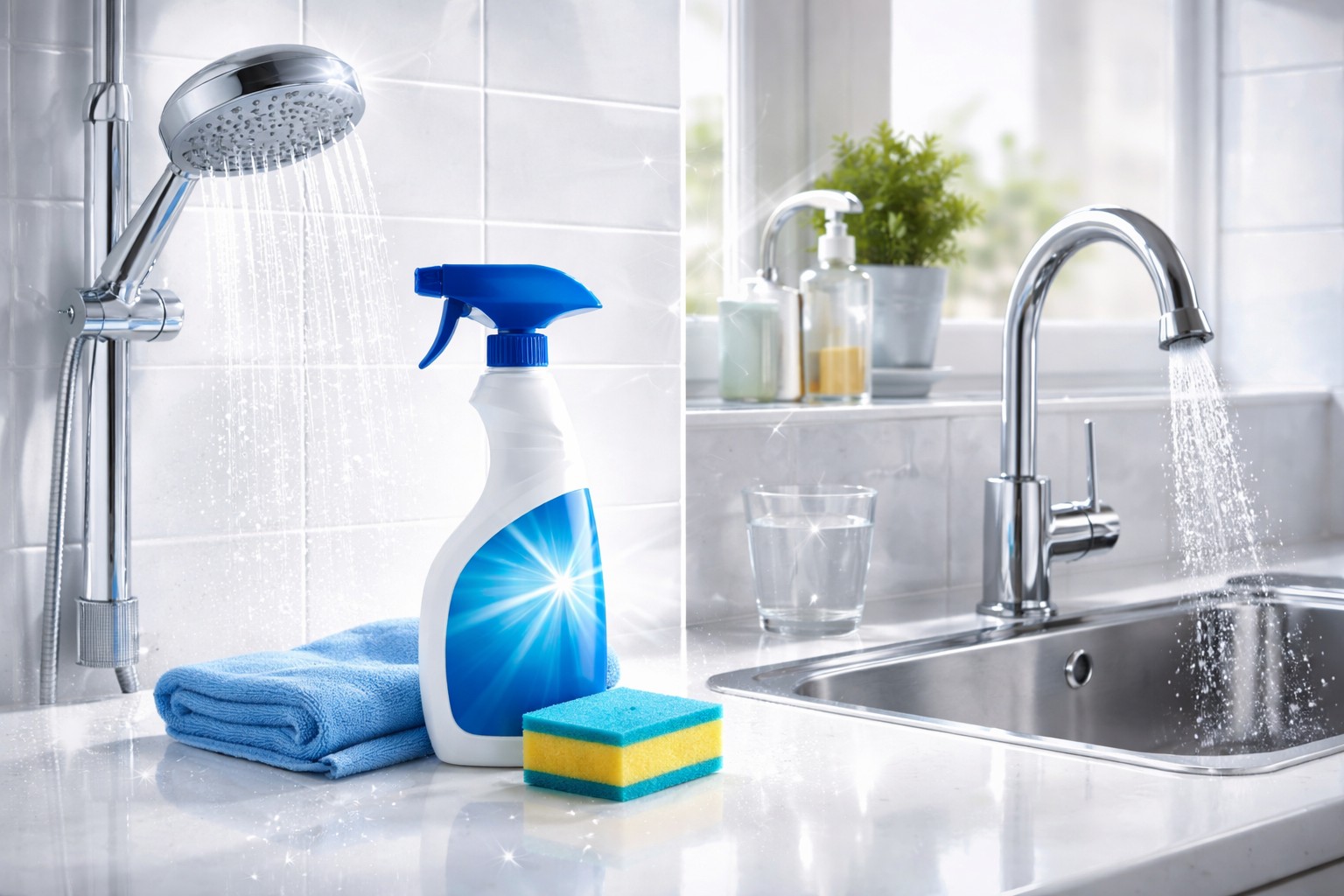
Limescale deposits on plumbing fixtures and tiles can ruin the appearance of even the most expensive bathroom. Hard water leaves white streaks that turn into hard stone over time, and regular detergents often find themselves powerless in the face of this problem. However, you can restore the shine to your taps and showerheads using simple components that are found in almost every home.
Citric acid against stubborn stains
One of the most powerful tools in the fight against mineral deposits is citric acid. It does not have a strong odor and perfectly dissolves calcium formations. This powder is often used to clean a kettle or washing machine, but it is also effective on surfaces.
-
Dissolve the sachet citric acid in a glass of warm water.
-
Soak a sponge or rag in the solution and apply liberally to the contaminated area.
-
Leave the product to act for 15–20 minutes so that the acid softens raid.
-
Rinse thoroughly with water and wipe the surface dry with a soft cloth.
If the contamination is on a horizontal surface, for example, around the base of the faucet, you can moisten a paper napkin with the solution and wrap it around the problem area.
Using table vinegar
Another proven method is to use table vinegar. It is more aggressive than citric acid, so it is better to work with it with gloves and with the door open for ventilation. Vinegar is ideal for cleaning shower heads and glass partitions.
To clean the shower head, pour vinegar into a thick plastic bag and secure it to the watering can with an elastic band so that it is completely immersed in the liquid. After an hour, remove the bag and rinse the plumbing – the water holes will be completely clean.
Prevention of plaque
The main reason for the formation of stone is the drying of hard water droplets. The easiest way to avoid long cleanings in the future is to get into the habit of wiping faucets and dry the tiles after each use. It only takes a few seconds, but allows you to maintain the perfect shine for weeks.
To protect glass and chrome surfaces, you can use special water-repellent compounds or simply rub them with a small amount of wax paper. The thinnest film will not allow water to linger and mineral salts will not settle on the material. Regular care always requires less effort than removing old stone.
About the Author