The appearance of dark plaque in the bathroom is not just an aesthetic problem, but a serious threat to health of the whole family. Fungal spores multiply quickly in a humid environment, penetrating deep into the porous structure of the grout and causing allergic reactions. To restore tiles to their original appearance and safety, it is not necessary to immediately resort to expensive aggressive chemicals. There are proven methods that cope with the task quickly and efficiently.
Why does mold come back again?
The main reason for the survivability of the fungus lies in the bathroom conditions: high humidityheat and lack of quality ventilation. Regular washing off of surface plaque gives only a temporary effect. To completely destroy a colony, it is necessary to influence root of the problem – mycelium, which hides deep in the tile joints.
Impact force of table vinegar
Ordinary table vinegar capable of destroying up to 80% of all types of mold. This is a powerful acidic agent that destroys the structure of the fungus. There is no need to dilute the liquid with water for processing.
-
Pour the vinegar into a spray bottle.
-
Spray the mixture liberally onto the affected areas of the tile.
-
Leave the product to work one hour.
-
Rinse the surface with warm water and wipe dry with a cloth.
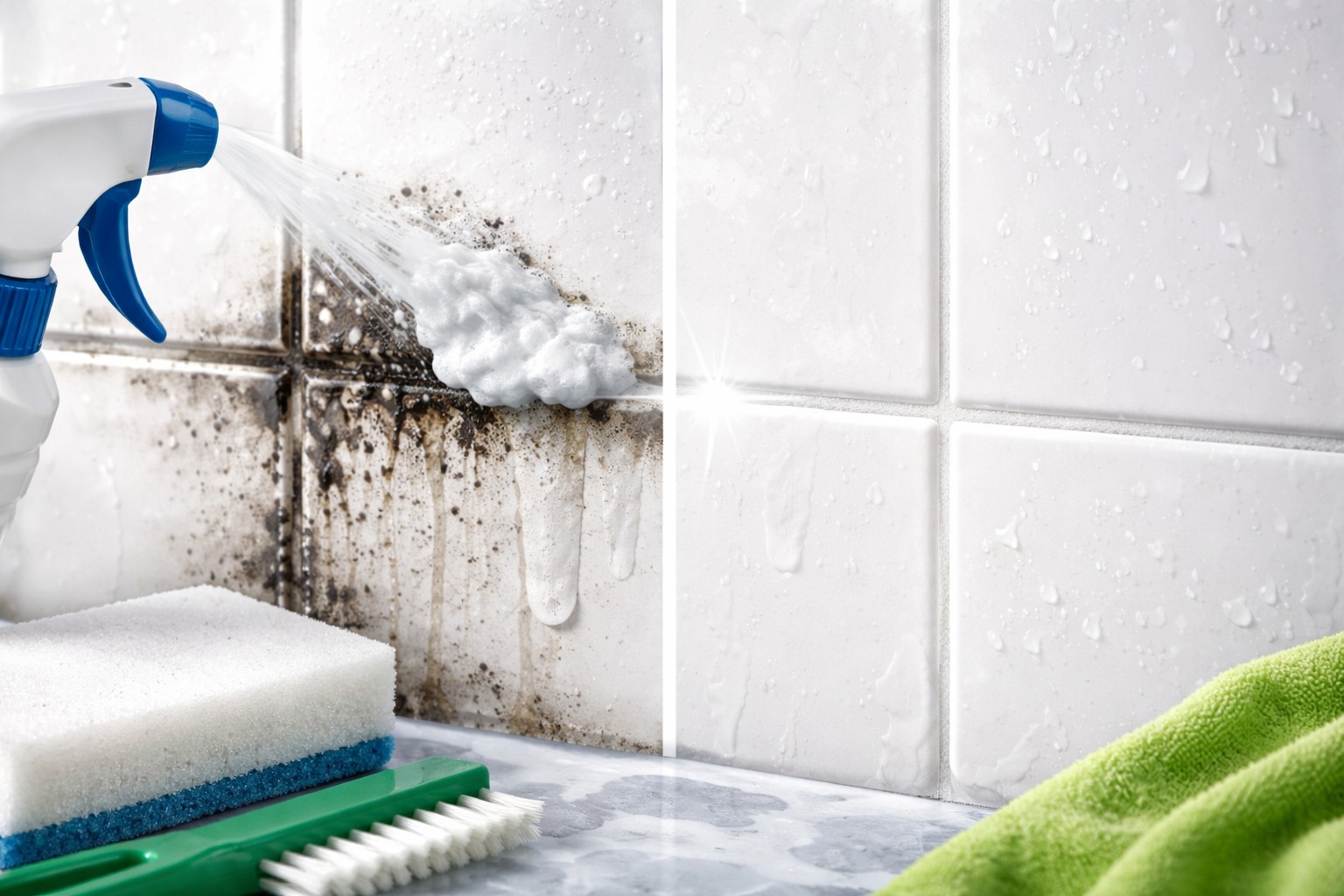
To enhance the effect on old stains, you can use baking soda. First, apply a thick paste of baking soda and water to the seams, and then spray vinegar on top. A chemical reaction will occur, releasing foam, which will mechanically push out the dirt and kill the spores.
Tea tree oil against spores
If you are looking for a natural antiseptic with a long-lasting action, this is ideal tea tree oil. It not only removes visible marks, but also creates a protective film that prevents the blackness from reappearing.
The solution recipe is simple: mix two teaspoons of essential oil with two glasses of water. Apply the mixture to the tiles and grout, but unlike vinegar, no need to wash it off. The specific smell will disappear quite quickly, but the protection will remain for a long time.
Hydrogen peroxide for whitening
It will help restore the whiteness of yellowed or blackened seams 3% hydrogen peroxide. This affordable pharmaceutical product has excellent fungicidal and bleaching properties.
Moisten the seams generously with peroxide and leave for 15 minutes. After this, go over the joints with a stiff brush to remove any remaining plaque. Be careful when using on colored grout as the solution may lighten the pigment slightly.
Heavy artillery: chlorine-containing agents
In advanced cases, when traditional methods are powerless, it comes to the rescue household bleach or “Whiteness”. Chlorine is enemy number one for any organic matter, including mold. Dilute the product with water in a 1:1 ratio, apply to the tiles and wait to dry. After the procedure, be sure to rinse the surface with plenty of water and ventilate the room to remove caustic fumes. It is necessary to work with such compounds strictly in rubber gloves and a mask.
Regular prevention and control of humidity levels will help you forget about black spots on the walls forever. It is enough to leave the bathroom door ajar after a shower and periodically wipe the tiles with antiseptic compounds to maintain perfect cleanliness.
About the Author