
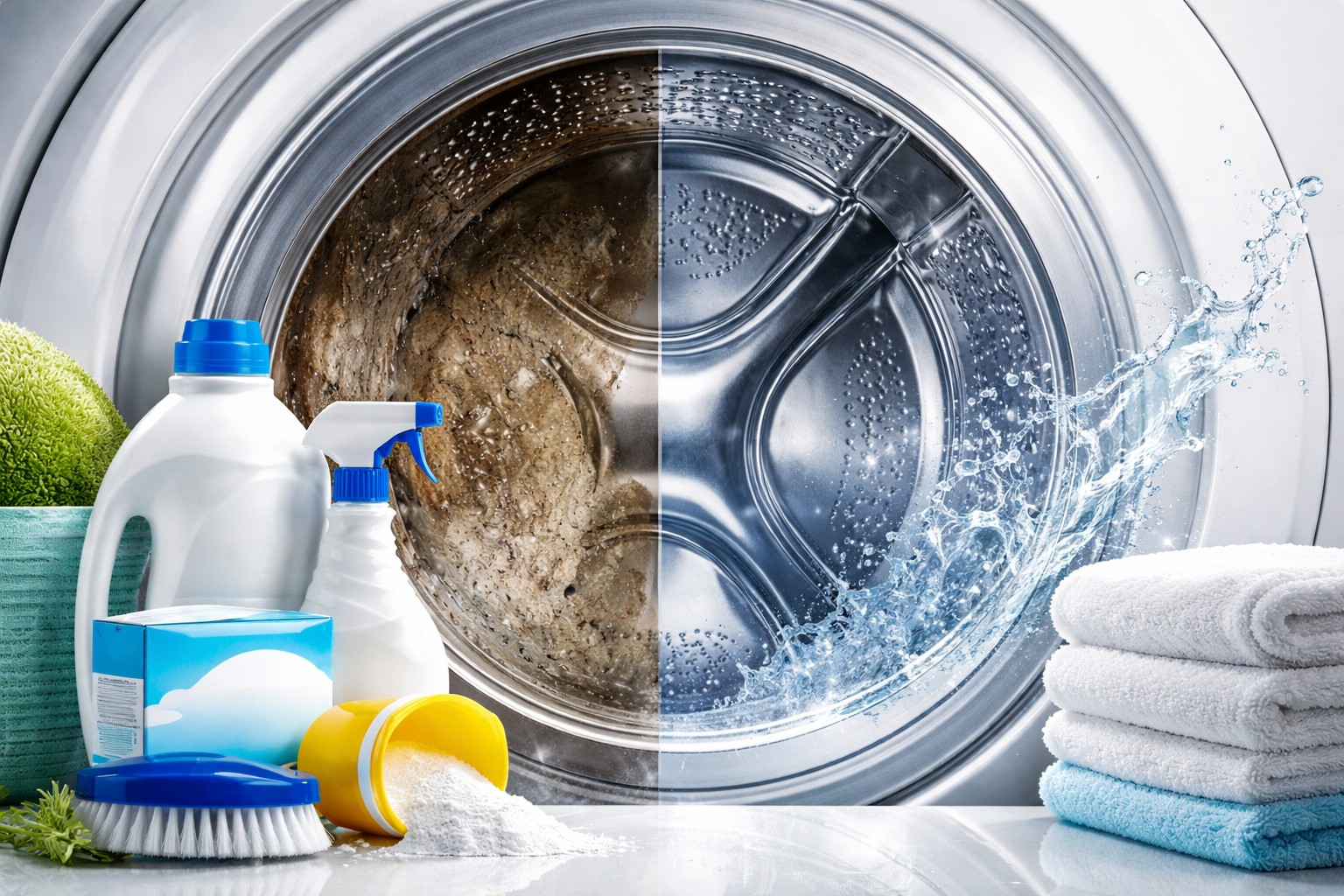
Even if the washing machine looks flawless on the outside, there are often hidden problems inside. scale, mold and detergent residues. Over time, this leads to a musty smell on clothes and can cause equipment breakdowns. There are several proven ways to return your drum to cleanliness without calling a technician or using expensive chemicals.
The most popular and accessible method is to use citric acid. This product perfectly breaks down limescale and eliminates unpleasant odors. To clean, you need to pour about 100 grams of powder directly into the drum or powder compartment and start the wash cycle with maximum temperature (usually 90–95 degrees). It is important that the drum is empty and the mode includes an additional rinse to completely wash out the product.
Well suited for combating severe mold and mildew white vinegar. The liquid is poured into the powder tray (about two glasses), after which the longest wash cycle at high temperature is started. Vinegar not only disinfects surfaces, but also helps soften old deposits. However, it is not recommended to use this method often, as the acid can adversely affect the rubber seals.
An alternative to aggressive acids is baking soda. Mix half a cup of baking soda with a little water to form a paste and place the mixture in the detergent tray. You can add a little vinegar to the drum to enhance the reaction. This composition effectively copes with greasy deposits and dirt that accumulates in hard-to-reach places.
Don’t forget about manual cleaning rubber cuff hatch. It is in its folds that most of the dirt, fur and moisture accumulate, creating an ideal environment for bacteria. Wipe the seal with a damp cloth with a chlorine-containing agent or copper sulfate solution if you notice black spots of mold. After each wash, the door should be left ajar for ventilation.
Regular maintenance of equipment prevents serious contamination and increases its service life.
About the Author