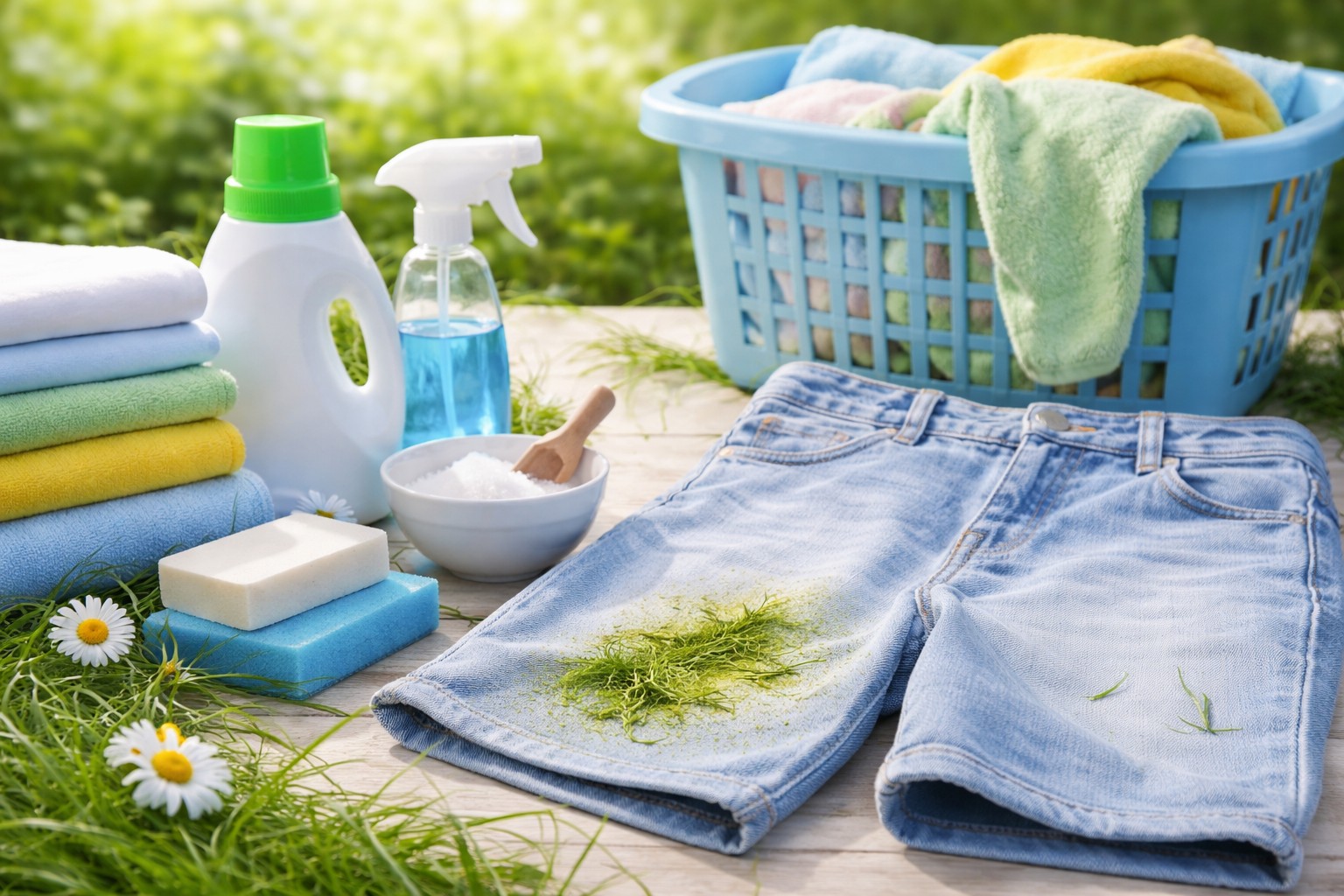
With the onset of warmer weather, many are faced with the problem of dirt on their things after picnics or walks. The grass leaves lasting marks due to the content of a special substance – chlorophyll. In its structure, it resembles a persistent natural dye, which instantly penetrates the fibers of the fabric and is fixed there under the influence of air and light. To save your favorite jeans or T-shirt, it is important to act quickly and not let the pigment dry out.
Boiling water and hot water
This method is great for fresh stains on thick natural fabrics such as cotton or linen. Synthetics and delicate materials cannot be treated this way. The essence of the method is thermal destruction pigment.
-
Stretch the fabric with the stain over a basin or sink.
-
Water the contaminated area with boiling water from a kettle.
-
Immediately after treatment, wash the item in the machine.
Table salt
Regular salt is great absorbentwhich helps draw the dye out of the fibers. This option is safe for most types of fabrics and will not discolor the design.
To prepare the solution, mix a tablespoon of salt with a glass of warm water. Moisten the stain generously with the resulting liquid and leave for 15–20 minutes. After this, rinse the area with cool water and wash the clothes as usual.
Laundry soap
Classic brown soap with high content alkalis (72%) effectively breaks down organic pollution. It works better than many modern powders when it comes to plant stains.
Rub the stained area with a bar of soap and leave the item in warm water for 15-30 minutes. If the stain is old, you can make soap shavings, add a little ammonia and apply this slurry to the fabric. After soaking, be sure to rinse the product thoroughly.
Hydrogen peroxide and ammonia
For light-colored items on which green stains are especially noticeable, you can use pharmaceutical products. They act like soft bleachtherefore, on colored fabrics they should be used with caution, having first been tested on an inconspicuous area.
-
Mix a teaspoon of ammonia with a glass of water.
-
Dampen a cotton pad and gently wipe the stain from the edges to the center.
-
Hydrogen peroxide can be applied neat, but do not let it dry on the fabric to avoid damaging the fibers.
Wine or table vinegar
The acid helps neutralize the green pigment without destroying the structure of the material. The good thing about this method is that vinegar is often on hand in any kitchen. It is important to use clear vinegar and not balsamic or apple cider vinegar, which can leave traces.
Apply a little vinegar directly to the stain and leave for a few minutes. Then scrub the area with a soft brush or sponge. The acidic environment weakens the adhesion of the dye to the fabric, which greatly facilitates subsequent washing in automatic mode.
Timely treatment and the right choice of product will help completely remove contamination without a trace.
About the Author