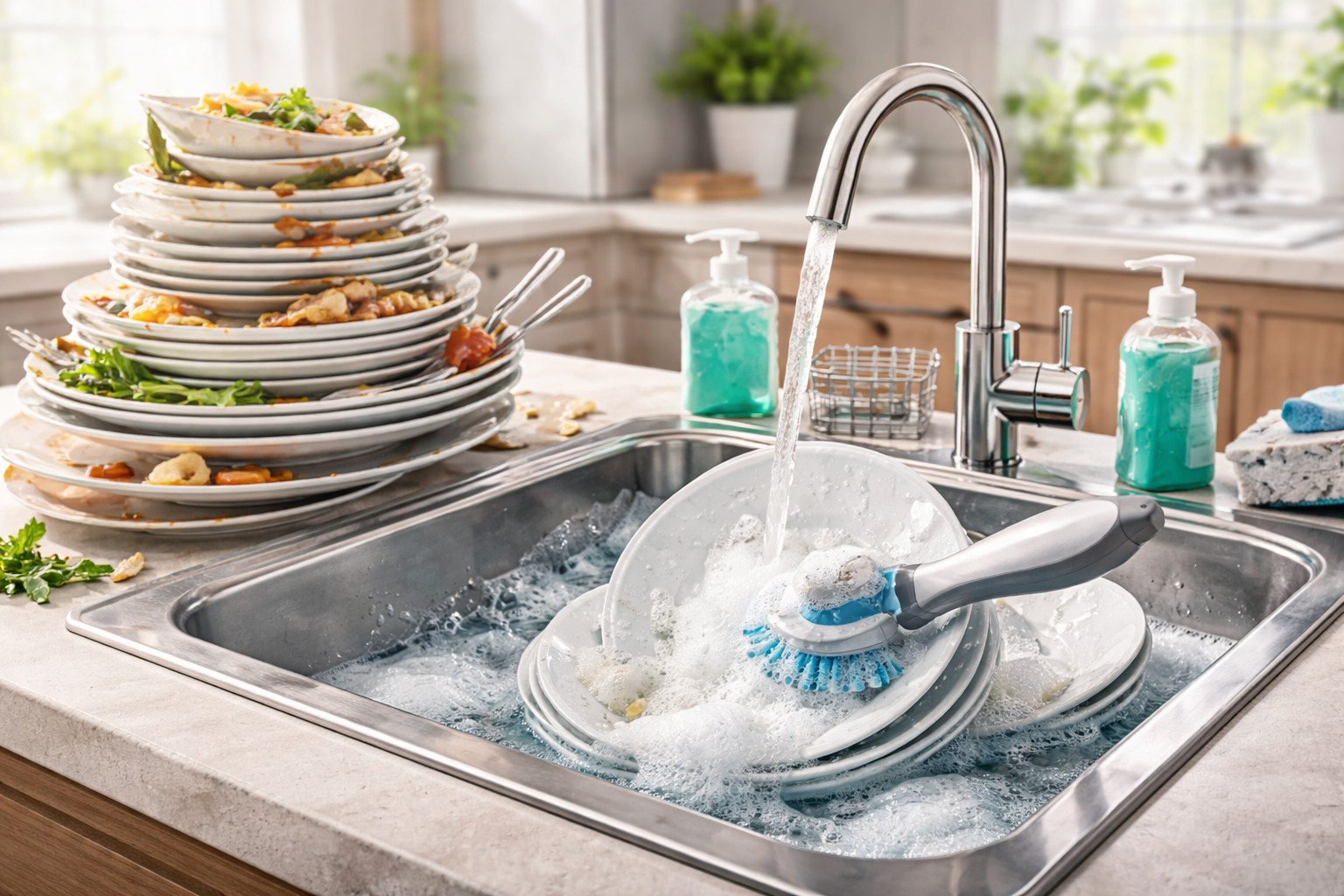
Washing dishes is often perceived as a tedious task that you want to put off until later. However accumulation of dirty dishes only makes the situation worse, creating visual noise and psychological pressure. The main secret of speed lies not in the intensity of friction with a sponge, but in the correct process organization and sequence of actions.
Preliminary sorting of utensils
Chaotic washing of everything that comes to hand significantly slows down your work. The brain spends extra resources switching between types of objects. Before turning on the water, take a minute to grouping of dishes: Stack plates, collect cutlery in a separate container, and place mugs and glasses nearby. Clear one half of the sink (or space next to it) for dirty dishes, so that the other remains free for manipulation. This will create ergonomic space and eliminate unnecessary movements.
Soaking as a way to save energy
Never waste time scrubbing dry food – this is the main reason why washing takes so long. All items with traces of buckwheat, dough or burnt fat must be pour hot water with a drop of detergent at the very beginning. While you wash less dirty items like glasses and spoons, water will do all the hard work for you. For pots and pans this mandatory stagewhich saves not only time, but also the abrasive layer of the dishes.
Conveyor method instead of single wash
Most people make the mistake of completely washing and rinsing each item individually. It is much more efficient to use conveyor principle. First, soap the entire batch of dishes (for example, all the plates), placing them soapy in a pile. Only after the sponge has been put aside, begin the rinsing process under running water. This method allows you to save significantly water and detergentand also speeds up the process due to the uniformity of hand movements.
Temperature conditions and tools
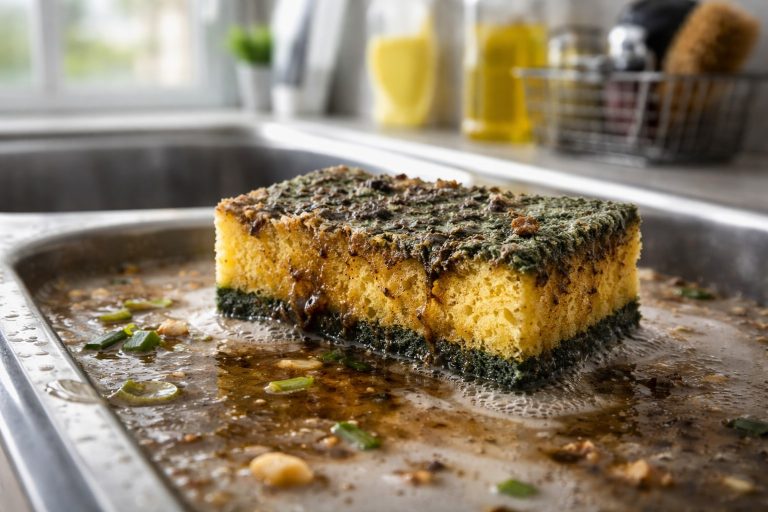
Using cold or lukewarm water is a surefire way to end up standing at the sink for a long time. Fat dissolves much faster at high temperatures. Make the most of it hot waterwhich is comfortable for your hands (or use gloves). In addition, monitor the condition of the sponge: the old accessory does not foam well and does not cope with plaque, forcing you to rub one place several times. Timely replacement of the sponge is a contribution to cleaning speed.
The use of these simple algorithms allows you to turn a chaotic process into a fast and predictable routine that ceases to cause irritation. An organized approach to everyday tasks always produces better results with less effort.
About the Author