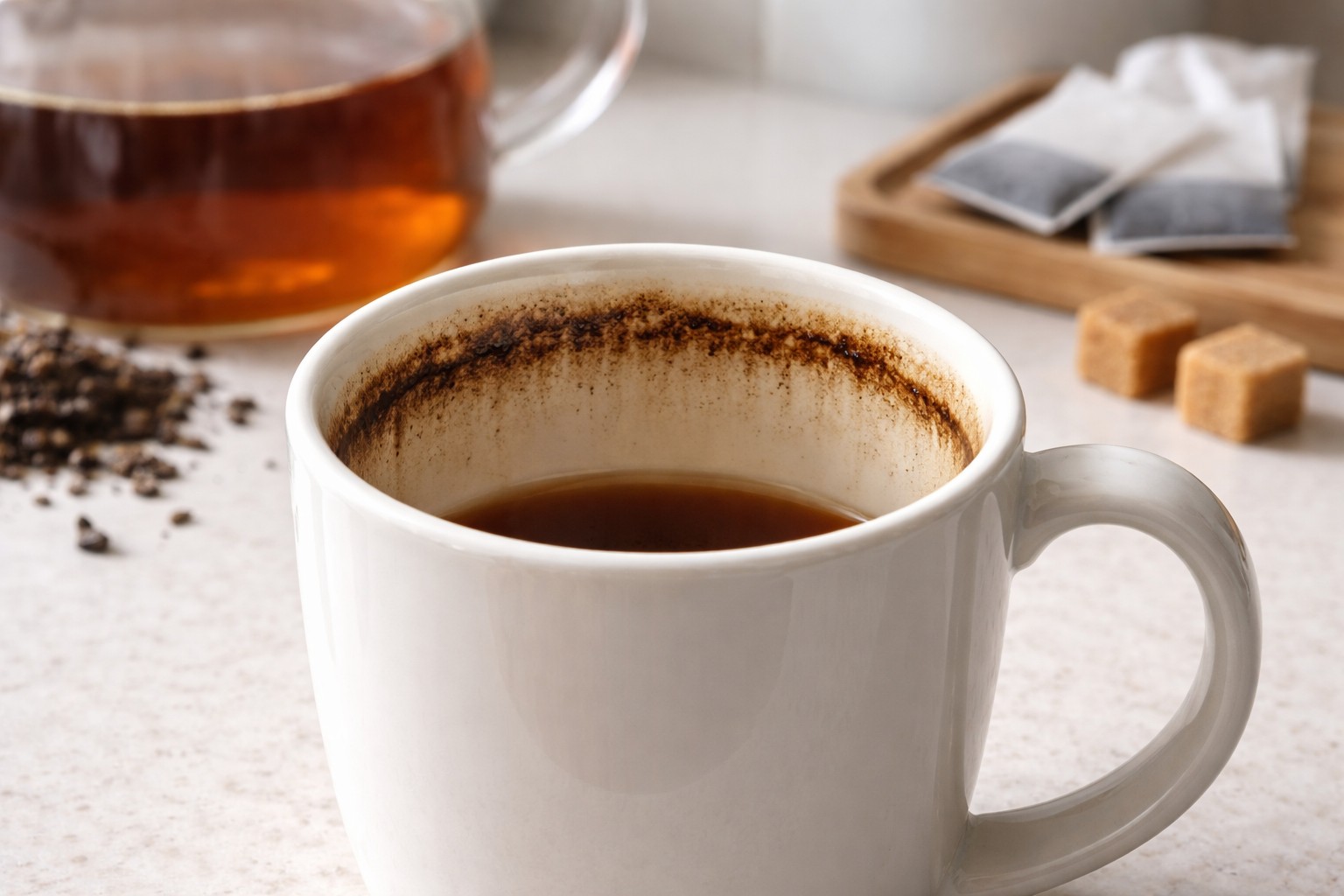
Many tea lovers believe that the dark rim on the walls of the cup is a noble patina, which only confirms the strength and quality of the drink. There is even a myth that you should not wash a teapot or your favorite mug until it squeaks, so as not to spoil the taste. However, hygienists and food safety strongly disagree with this approach, pointing out real risks for the body.
The dark coating that forms on the dishes consists not only of the coloring pigments of the tea leaf. The basis of this film is tannins and essential oils that react with salts contained in tap water. In itself, this mixture may seem harmless, but over time it turns into an ideal environment for the proliferation of microorganisms.
If you examine the structure of plaque under a microscope, you can see a heterogeneous surface. This rough film works like a sponge, absorbing epithelial particles from the oral mucosa, sugar residues and traces of milk. As a result, a stable layer is formed on the walls of the mug. bacterial biofilmwhich cannot be washed off by simply rinsing with water.
Old plaque is especially dangerous for people with sensitive stomachs. Oxidized organic compounds can cause mild digestive upset and affect acidity. In addition, the porous structure of tea stone accumulates detergent odors if you do not rinse dishes well, adding unnecessary waste to your drink. chemical impurity.
The effect on the taste of the tea is another good reason to maintain cleanliness. Old film on the walls of the cup inevitably oxidizes upon contact with air. This gives the freshly brewed drink an extraneous taste, rancidity and unpleasant bitternesswhich are often attributed to poor quality of tea leaves or water.
To remove plaque, it is better to use soft products so as not to damage the enamel. Abrasive sponges and aggressive powders create micro-scratches on the surface of the ceramic, into which dirt gets clogged even deeper. Regular baking soda or citric acid do an excellent job of dissolving pigments and disinfecting the surface without harming the dishes.
Regular washing of cups not only restores their aesthetic appearance, but also ensures that you are drinking tea, and not a cocktail of oxidized remnants of past tea parties. Timely care of your dishes allows you to enjoy the pure and rich taste of your favorite variety.
About the Author