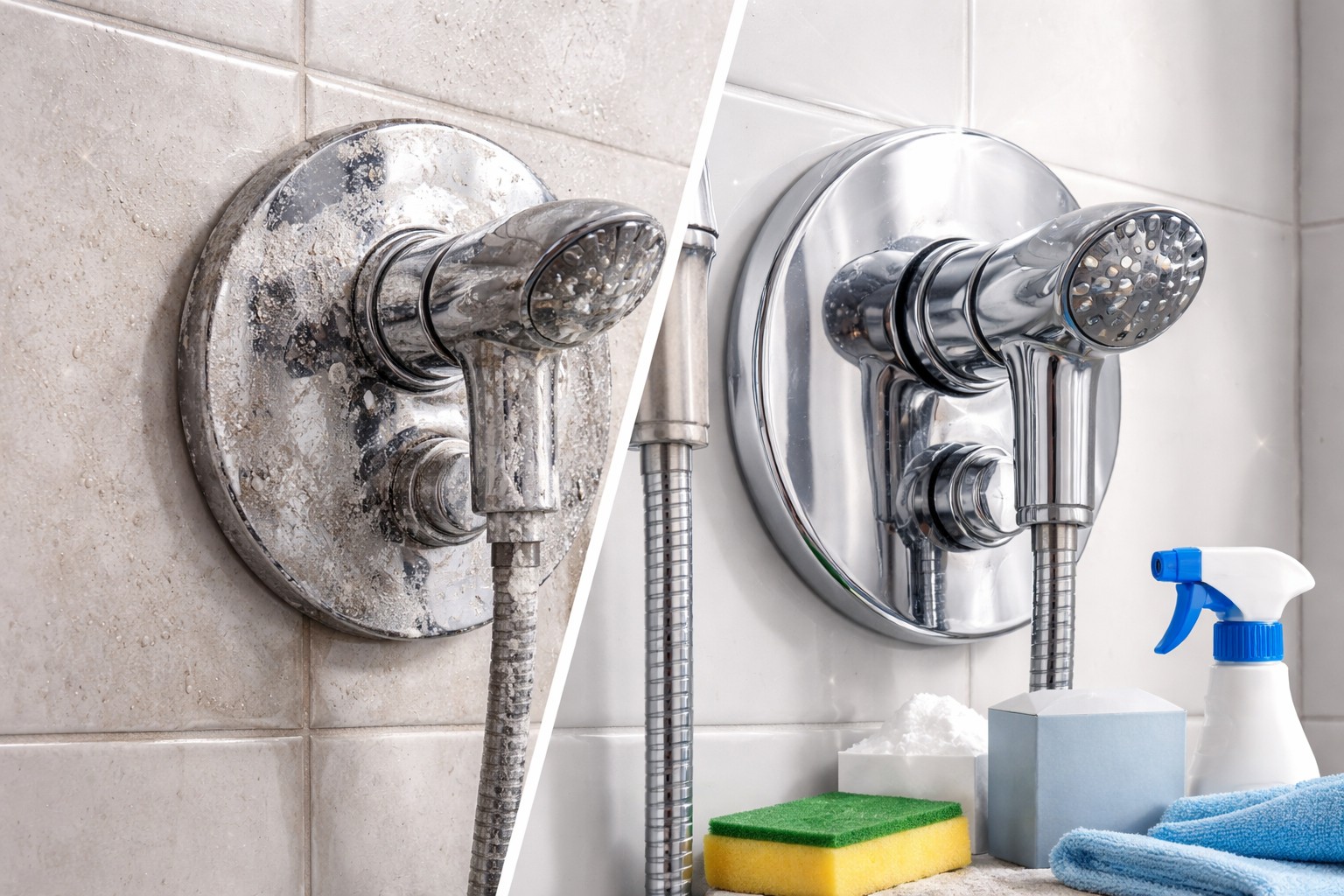
White stains on plumbing fixtures and tiles can spoil the appearance of even the most expensive renovation. Limescale appears due to hard water containing large amounts of magnesium and calcium, which settle on surfaces when drops dry. To restore the original shine to the bathroom and kitchen, it is not at all necessary to buy aggressive household chemicals, because effective cleaning products are often at hand.
Citric acid for stubborn stains
This is one of the most powerful tools for combating mineral deposits. Crystalline citric acid perfectly dissolves stone without damaging most surfaces, if the proportions are respected. It is ideal for cleaning kettles, shower heads and taps.
-
To clean the kettle, pour a packet of acid inside, add water and boil.
-
To clear mixerdissolve 2 tablespoons of acid in a glass of warm water. Soak a rag in the solution and wrap it around the faucet for 30–60 minutes. After this, the plaque can be easily cleaned off with a sponge.
Table vinegar against old plaque
Regular 9% vinegar It works slower than citric acid, but is no less effective at removing old stains. Its main advantage is its liquid form, which allows you to make compresses for vertical surfaces and complex bends of plumbing fixtures.
-
To remove deposits from a shower head, pour vinegar into a sealed bag, immerse the shower head in it, and secure with a rubber band overnight. In the morning the water will flow freely.
-
Glass partitions and ceramic tiles You can spray it with vinegar from a spray bottle, leave it for 15 minutes, then rinse with water and wipe dry.
Baking soda and peroxide for delicate areas
If the use of acids is undesirable, you can use a paste of baking soda. It works as a mild abrasive, mechanically removing dirt, but requires care on glossy surfaces to avoid micro-scratches.
-
Mix baking soda with a small amount of water or hydrogen peroxide until it becomes a paste.
-
Apply the mixture to the contaminated area, leave to dry, and then carefully remove with a damp sponge. This method is well suited for tile joints, where not only lime, but also mold often accumulates.
Specialty Chemistry
In cases where traditional methods are powerless, professional ones come to the rescue. anti-plaque remedies. When choosing, pay attention to the composition: the most effective are products based on sulfamic or phosphoric acid. Be sure to use gloves and ventilate the area, as such gels and sprays can have a strong odor and irritate the skin. It is important to remember that products containing chlorine are practically useless against lime – they only disinfect, but do not dissolve the mineral stone.
The best way to combat lime deposits is timely prevention and the habit of wiping wet areas dry immediately after using water.
About the Author