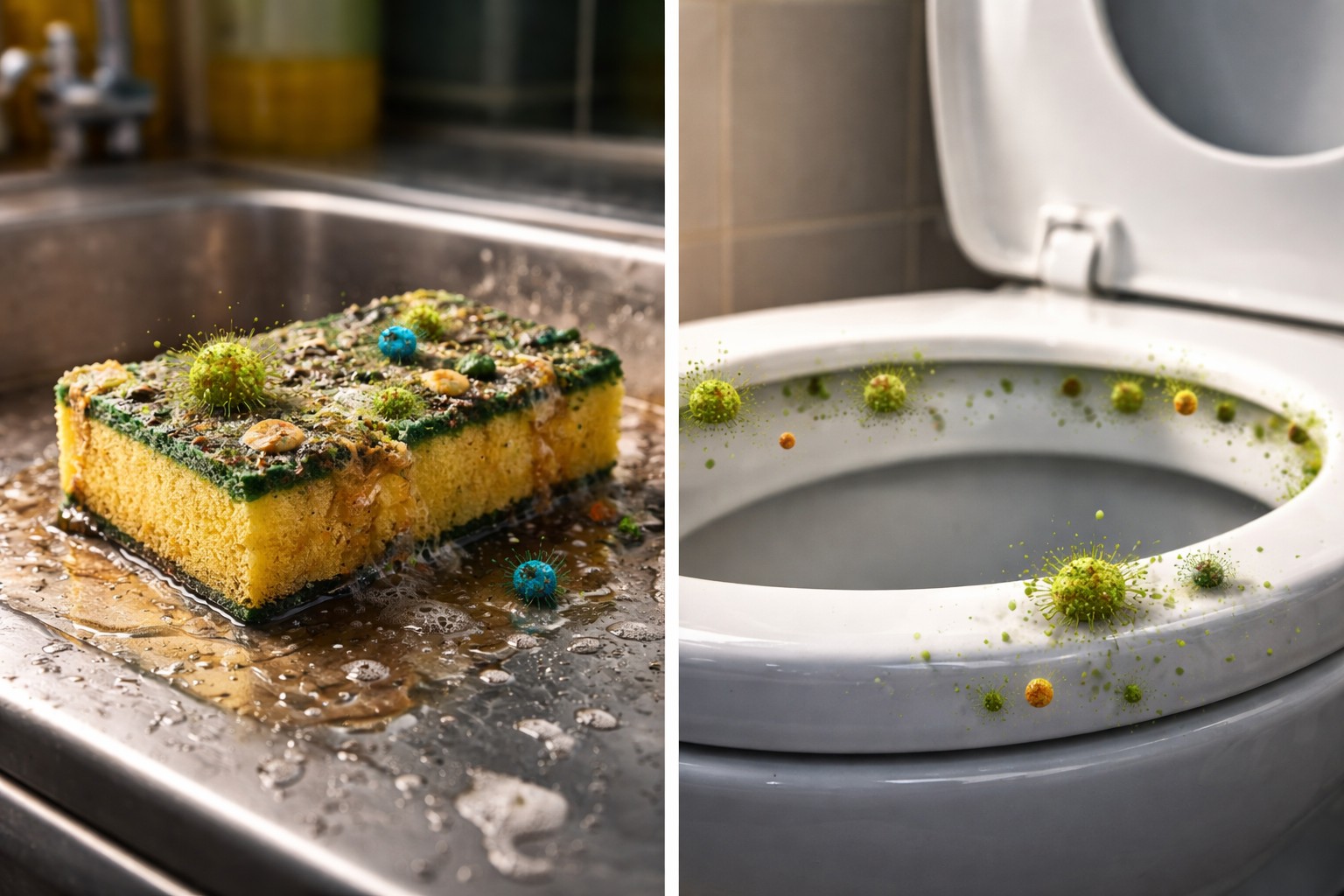
The kitchen is traditionally considered the heart of the home, but it is here that one of the dirtiest items in the home hides. A regular foam sponge that we use to wash dishes often contains more microorganisms than the surfaces in the bathroom. Wet environment and porous structure create an ideal incubator for bacterial growth, and simply rinsing with water is not enough to solve the problem.
The perfect home for microbes
The main problem with kitchen sponges is their structure. Porous material perfectly absorbs moisture and retains small food particles. Combined with the warm temperature in the kitchen, this leads to an explosive growth of the microorganism population. Microbiological research shows that up to 50 billion bacteria can live in one cubic centimeter of used sponge.
Among the invisible inhabitants there are often coli (E. coli), salmonella and campylobacter. These pathogens can cause serious food poisoning and intestinal infections. When you wipe down the counter with a “clean” sponge, you are not removing dirt, but are literally spreading colonies of bacteria across the surface where you are preparing food.
The illusion of disinfection
Many people try to extend the life of a sponge using traditional disinfection methods. Popular methods such as warming up in the microwave or soaking in vinegar actually kills some of the weaker bacteria. However, this frees up living space for pathogens that are stronger and more resistant to aggressive environments. Surviving microorganisms begin to multiply even more actively, occupying the vacated niches in the pores of the material.
How often should you change the accessory?
Hygiene experts agree that the lifespan of a kitchen sponge should be kept to a minimum. Optimal replacement frequency – once a week. If you cook a lot and often wash greasy dishes, this period can be reduced to several days.
There are sure signs that it is time to throw away the sponge immediately:
-
Appeared bad smellwhich indicates waste products of bacteria.
-
The texture has changed, the material has begun to crumble or become sticky.
-
The color has changed, stains have appeared that cannot be washed out.
To reduce risks, it is worth considering alternatives. Plastic or silicone brushes dry much faster and do not have deep pores where organic matter accumulates. Another effective solution is to use thin microfiber cloths that can be washed regularly in a washing machine at high temperature. Replacing cleaning items on time is an easy way to maintain hygiene in the kitchen.
About the Author