
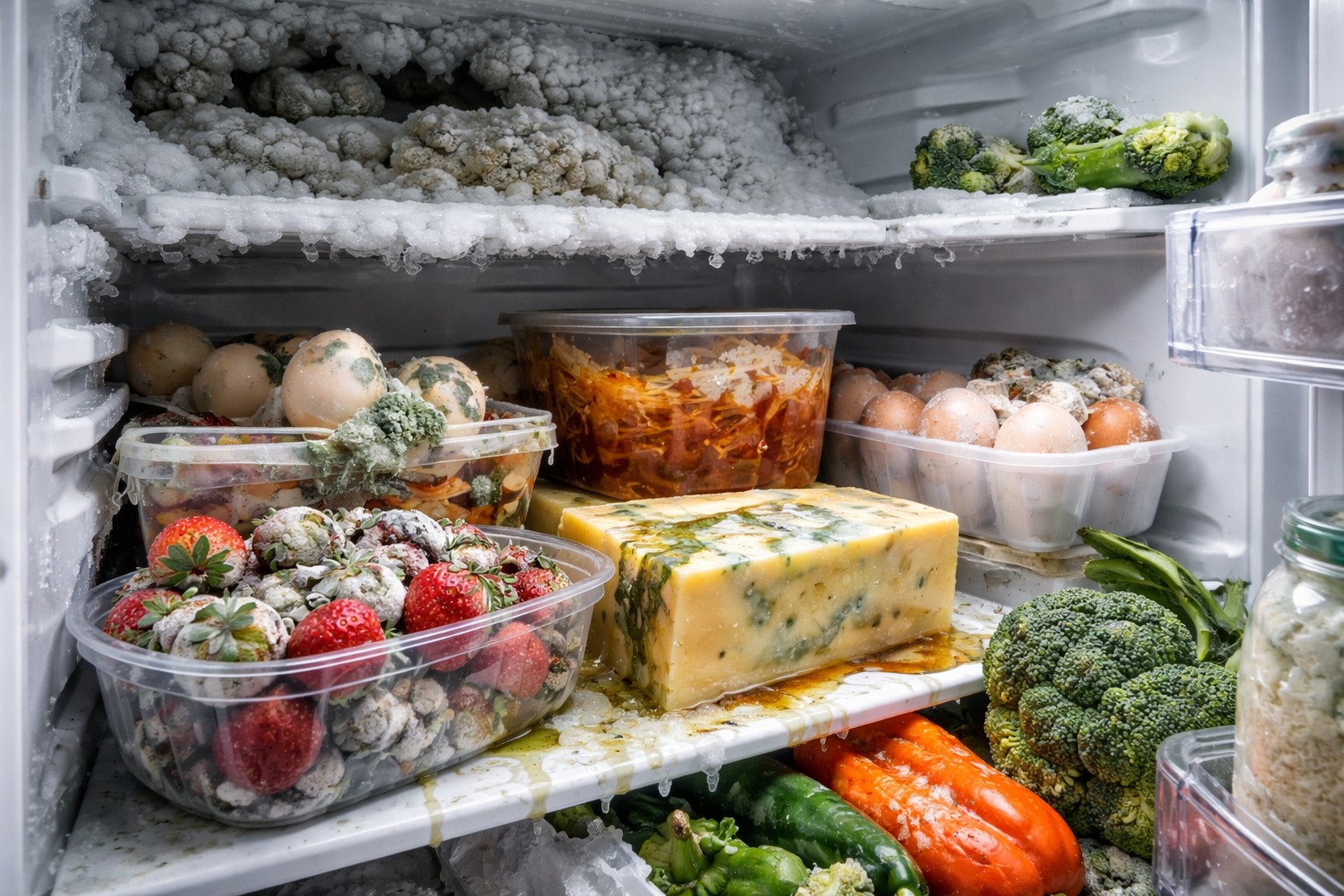
Many people believe that thick layer of ice in the freezer – it’s just an inconvenience that prevents you from pulling out the drawers. However, a snow “coat” on the walls of household appliances carries much more serious risks. Regular defrosting is necessary not only for aesthetics, but also for lower electricity bills and preventing breakdowns.
Ice works great heat insulator. When it builds up on the evaporator or walls, it becomes more difficult for the refrigerator to cool food. The sensors detect the temperature is not low enough and the compressor starts working. for wear and tearpractically without switching off. This leads to two consequences: a sharp increase in energy consumption and overheating of the motor, which can quickly fail.
Another non-obvious problem is quality of food storage. Violation of heat exchange leads to the fact that the temperature inside the chamber is distributed unevenly. In some areas, food may freeze, while in others it may not be sufficiently cooled, which speeds up the spoilage of supplies.
In layers of ice and old moisture they often develop bacteria and mold. Even at low temperatures, some microorganisms are able to survive, accumulating in hard-to-reach places and drainage holes. Defrosting allows you to completely rinse all surfaces, get rid of unpleasant odors and ensure hygienic cleanliness.
For owners of equipment with the system No Frost Don’t relax either. Although these models do not require frequent deicing, a maintenance shutdown once a year is useful for cleaning hidden components and checking seals.
Proper care of equipment ensures that it will last for many years without costly repairs, and food will always remain fresh and safe for the whole family.
About the Author