
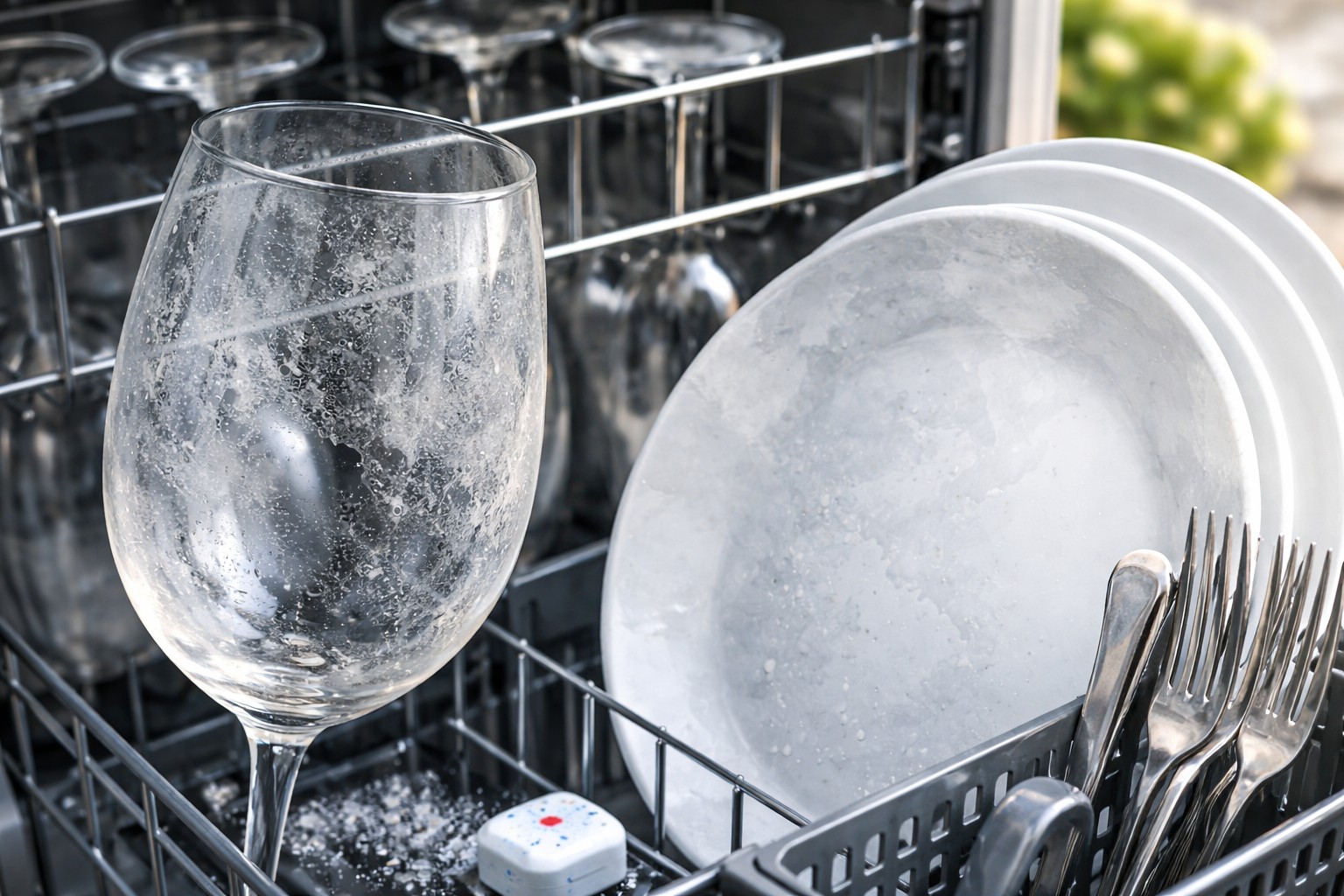
Everyone has encountered a situation where, after washing, your favorite glasses look as if they had not been cleaned at all. Instead of a perfect shine, the glass becomes covered with a whitish film, streaks, or becomes rough to the touch. This problem is often blamed on a bad detergent, but the real cause usually lies in the chemical processes occurring inside your dishwasher or sink.
Effect of hard water
The most common culprit of clouding is hard water. It contains a high concentration of minerals such as calcium and magnesium. When dry, the water droplets evaporate, leaving behind microscopic particles that accumulate over time and form a permanent limescale. If you don’t use special salt to soften the water in your dishwasher or you don’t set the hardness settings correctly, this deposit will turn clear glass into a frosted glass.
Excess detergent
Paradoxically, the desire to wash dishes better often leads to the opposite result. If the water in your area is soft and you use too much all-in-one powder or tablets, a chemical reaction occurs called leaching. The aggressive alkaline environment literally corrodes the top layer of glass. Unlike mineral deposits, this damage is irreversible: such turbidity can no longer be washed off or wiped off, since the structure of the material is damaged.
Temperature
Glass is a capricious material. Regular washing at too high temperatures can cause cloudiness due to thermal shock or acceleration of chemical reactions of detergent components. For crystal and thin glass, modes above 60 degrees are destructive. Over time, microcracks are filled with particles of food and detergents, creating a dirty surface effect that is not eliminated by regular rinsing.
How to determine the cause of a plaque
To understand whether the dishes can be saved, carry out a simple vinegar test. Soak a rag in regular table vinegar and wipe the cloudy area.
-
If the stain disappears and the shine returns, the problem was hard water. You need to descale the dishwasher, add rinse aid and adjust the salt supply.
-
If the turbidity remains, it is most likely glass corrosion. In this case, it will no longer be possible to restore transparency, but you can prevent damage to the rest of the dishes by reducing the dosage of detergent.
Cleanliness Prevention
To maintain shine, it is important to keep your dishwasher filters clean. The filter, clogged with grease and food debris, circulates dirty water in a circle, and greasy film settles on the walls of the glasses. Regular cleaning of the internal elements of equipment and the correct selection of household chemicals will help avoid unpleasant residue. Timely diagnosis of water quality and correct equipment settings guarantee ideal results.
About the Author